
Last updated November 3, 2026
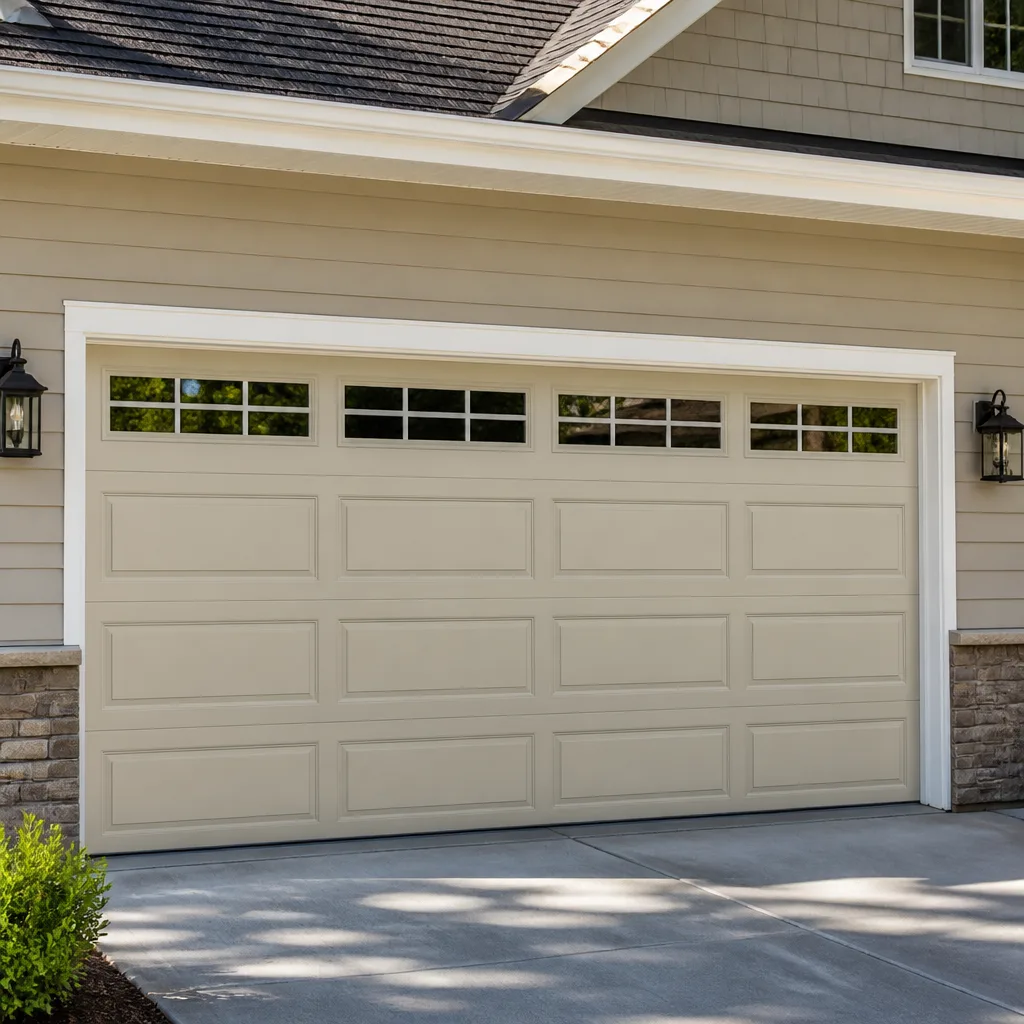 Raised-panel steel
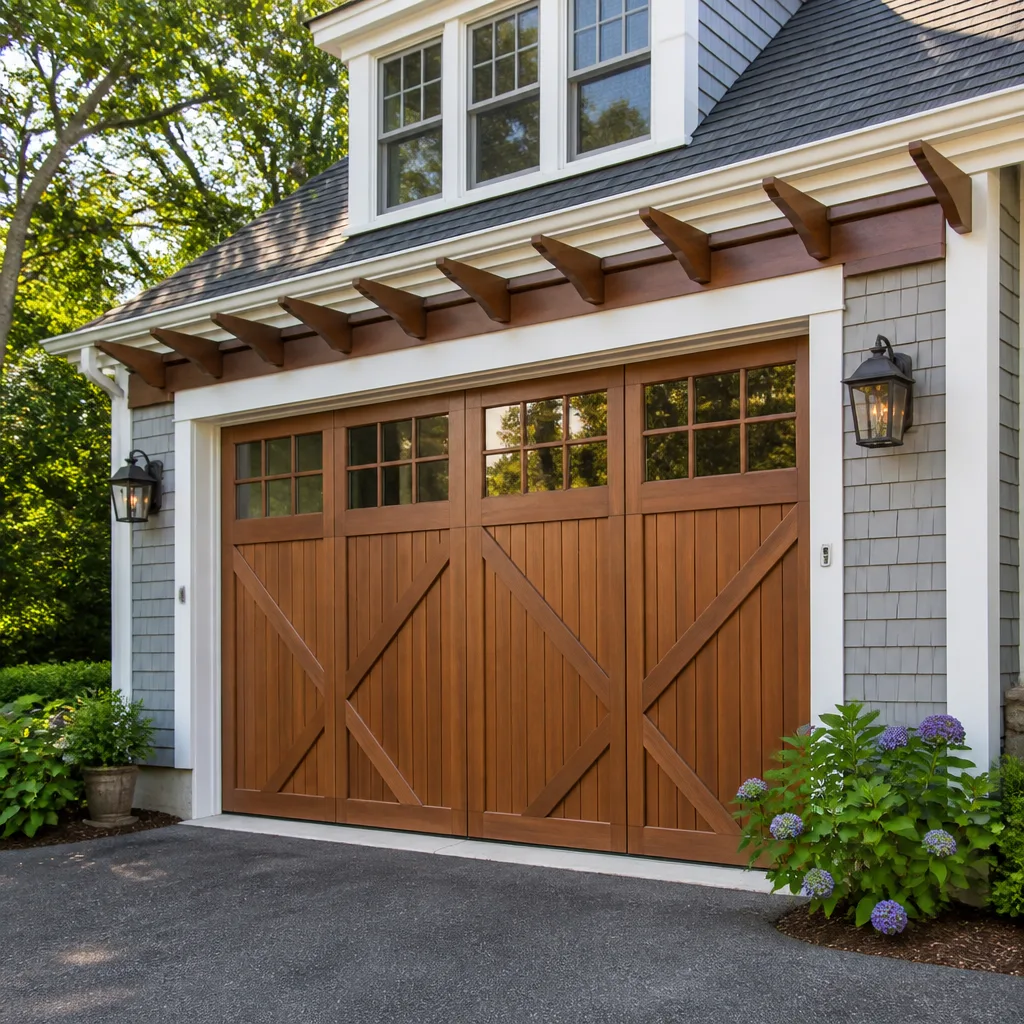 Carriage house
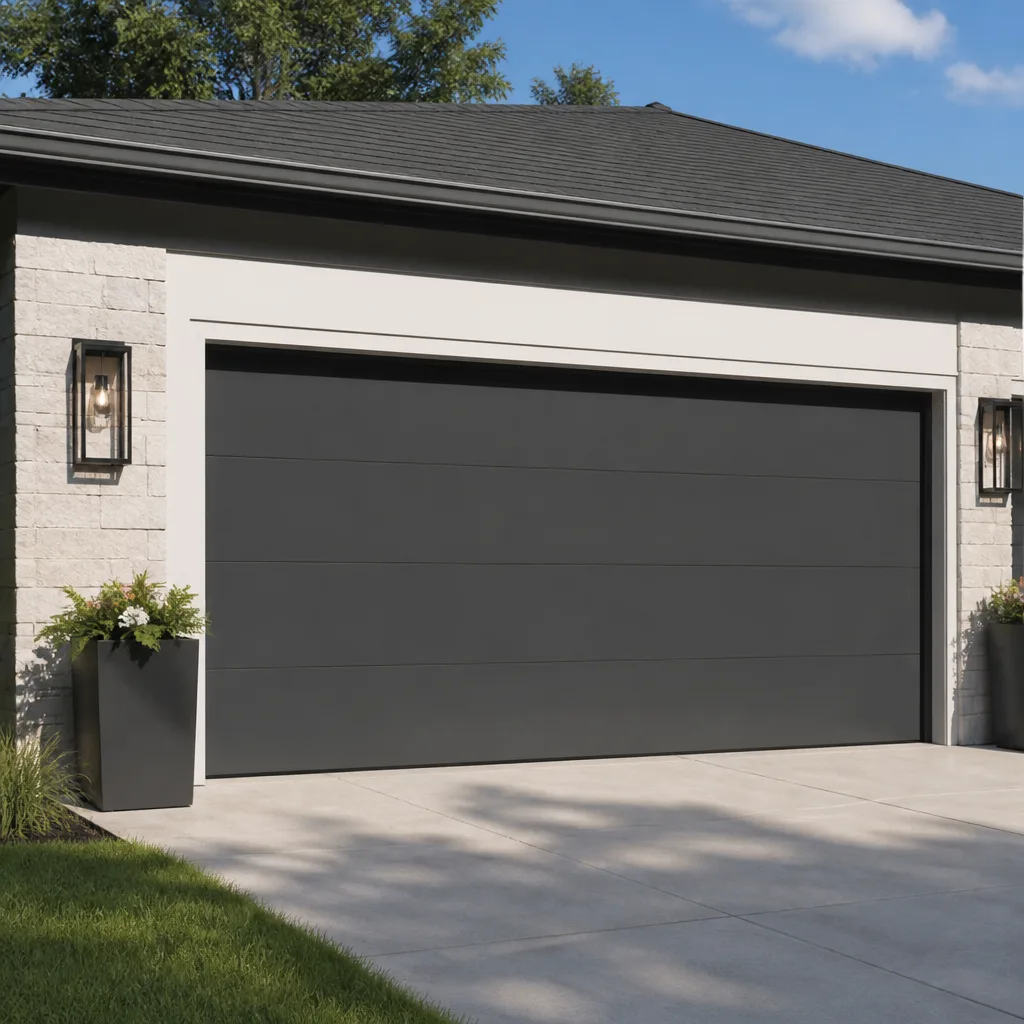 Modern flush
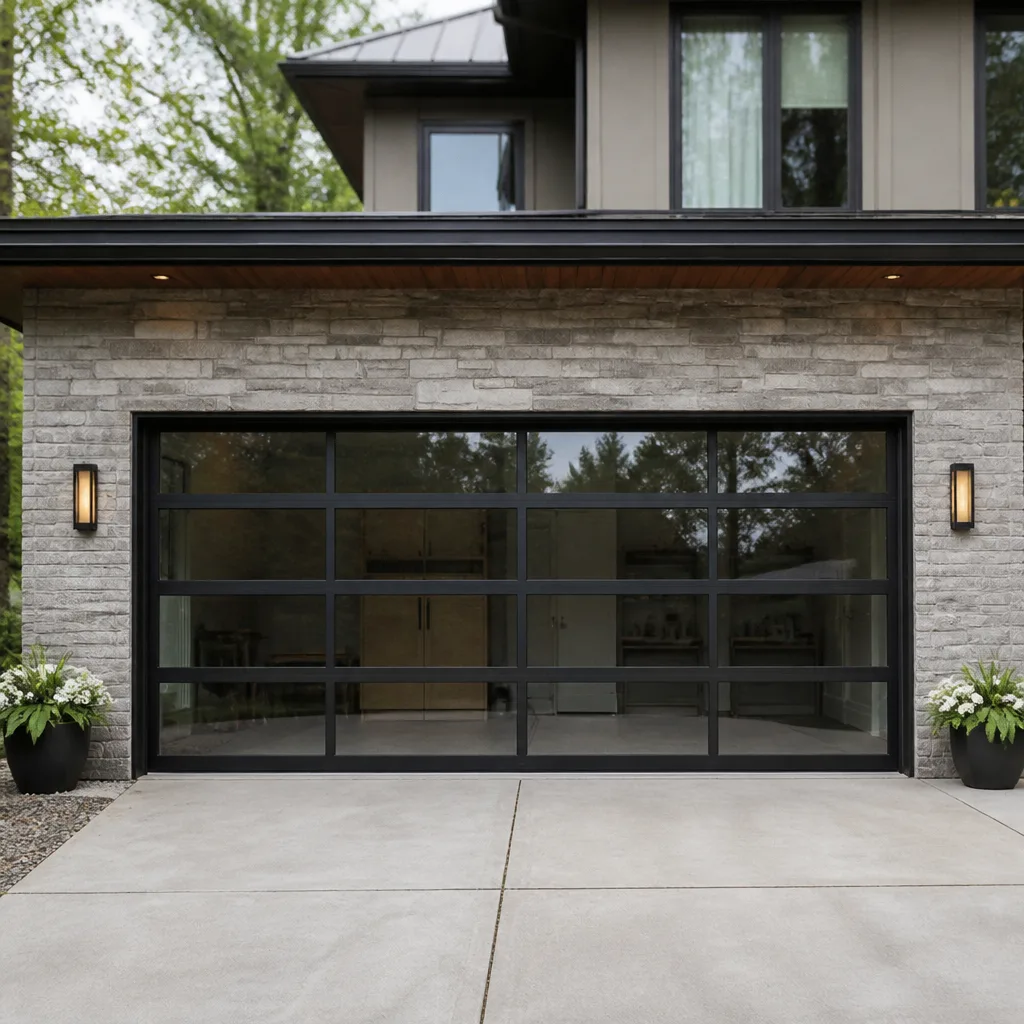 Full-view glass
 LiftMaster openers
 Chamberlain openers
Full 25-point door and opener safety check with every visit - springs, cables, rollers, tracks, and your LiftMaster or Chamberlain opener included
You get a price before we start. It does not change when the truck arrives.
Get your free estimateThe Complete Garage Door Repair Guide for Castro Valley Homeowners
Most garage door repair guides read like they were written for a house in Arizona. Flat lot, dry air, predictable temperatures. But Castro Valley doesn’t work that way. A torsion spring cable that lasts twelve years in Livermore can corrode and snap in six here, not because the hardware is worse, but because the marine layer rolls over the hills most mornings and leaves a fine film of moisture on everything metal. This guide is different. We’re going to walk through how Castro Valley’s specific geography and climate shape your garage door’s failure patterns, how to diagnose problems at the system level instead of guessing at parts, and when a repair is something you can handle versus something you should absolutely leave to a professional with the right training and tools.
Quick Answer
Garage Door Repair services in Castro Valley typically cost between $125 and $450 depending on whether the issue is a broken spring, snapped cable, bent track, or failed opener. Most repairs can be completed the same day a technician arrives, and the single most important thing you can do before calling is document your door’s spring type, cable drum size, and opener model so you can compare quotes accurately. The most dangerous repair, torsion spring replacement, should never be attempted as a DIY project.
Styles & brands we work with
- Raised-panel steel
- Carriage house
- Modern flush
- Full-view glass
- LiftMaster openers
- Chamberlain openers
Table of Contents
- How Castro Valley’s Climate Damages Garage Doors Differently
- The Four-Component Diagnostic Sequence: Springs, Cables, Tracks, Opener
- Hillside Lots, Palomares Corridor Shifts, and Uneven Floor Gaps
- Which Repairs Are DIY-Safe and Which Are Not
- How to Document Your Door’s Specs Before Calling Any Technician
- Common Mistakes to Avoid
- When to Call a Professional
- Frequently Asked Questions
How Castro Valley’s Climate Damages Garage Doors Differently
Castro Valley sits in a transition zone. The coastal fog that pours through the Golden Gate and down the Bay often gets stopped by the East Bay hills, but the western edges of town, along the lower slopes near Lake Chabot and the canyon mouths, catch enough marine-layer moisture to matter. The eastern portions near Palomares Road and Crow Canyon get more sun and less fog, but they also experience wider temperature swings between day and night. Both patterns create problems for garage hardware.
Here’s what we see most often, and why it’s specific to Castro Valley’s geography:
- Cable corrosion from fog-driven humidity: Garage door lift cables are typically galvanized steel, but galvanization is a coating, not immunity. In neighborhoods where morning fog lingers until ten or eleven, cables absorb moisture into their windings and around the drum. The constant wet-dry cycle breaks down the protective layer faster than dry heat ever could. A cable that looks fine from the outside can be rusted thin at the drum anchor point, where it flexes most.
- Spring fatigue from temperature cycling: Torsion springs are rated for a number of cycles, usually 10,000 for standard springs. But temperature swings affect the metal’s elasticity. Castro Valley’s inland pockets can see a 35-degree spread between a cold winter night and a warm afternoon. Over thousands of cycles, that expansion and contraction accelerates metal fatigue, effectively shortening the spring’s lifespan compared to the same spring in a more thermally stable coastal city like Alameda.
- Salt-air influence from the Bay: You wouldn’t think of Castro Valley as a salt-air environment, but on days when the wind comes up the San Lorenzo Valley corridor from the Bay, it carries fine salt particulates. These settle on opener rails, hinge pins, and roller bearings. The effect is subtle but cumulative, especially on exposed metal in garages without finished ceilings or good ventilation.
- Bottom seal degradation from moisture and UV: The rubber gasket along the bottom of the door takes punishment from both sides. Moisture from the ground keeps it damp from below, while Castro Valley’s strong summer sun bakes it from above. The result is cracked, warped seals that let water and debris under the door, which then accelerates rust on the bottom brackets.
Understanding these environmental factors matters because it changes your maintenance priorities. In Castro Valley, you should inspect cables and bottom brackets twice a year, not once. And when a repair involves a component that has been corrosion-compromised, replacing the adjacent hardware at the same time, rather than just the failed part, is often the difference between a fix that lasts and a callback three months later. A Compass Garage Door Repair home guide to what we see in the field is built on these local patterns, not generic assumptions.
The Four-Component Diagnostic Sequence: Springs, Cables, Tracks, Opener
When a garage door fails, the symptom is usually obvious: it won’t open, it makes a terrible noise, it binds halfway up. But the cause is often one step removed from what you’d guess. A door that jerks and stalls is usually blamed on the opener, when the real culprit is a dying torsion spring that’s lost its lift capacity and is forcing the opener motor to work against gravity. Misdiagnosis leads to replacing the wrong part. Here’s the sequence we use, and the one you should follow before you touch anything:
Step 1: Check the springs first, always
Stand inside the garage and look up. If you have torsion springs above the door, check for a visible gap in the coil, usually about a quarter-inch, which means the spring has snapped. If you have extension springs along the horizontal tracks, check whether one is broken or obviously stretched. Springs fail before cables and openers in most cases. If a spring is broken, stop. Do not attempt to open the door with the opener. The door is now a dead weight, and the opener can strip its gear or snap a cable trying to lift it.
Step 2: Inspect the cables at the drum and bottom bracket
Lift cables wrap around a drum at each end of the torsion bar. Look for fraying, rust discoloration, or loose wraps. Then look at the bottom corners of the door, where the cables attach to L-shaped brackets. In Castro Valley, this is the most common corrosion failure point. If you see rust-colored staining on the cable or bracket, the cable is likely compromised even if it hasn’t snapped. A frayed cable under tension is a hazard, not just an inconvenience.
Step 3: Check track alignment and roller condition
The vertical and horizontal tracks guide the door, and the rollers ride inside them. Listen for grinding or squealing as the door moves. Look for visible gaps between the door edge and the track, which indicates a bent track or loose mounting bolts. Bent tracks happen more often in Castro Valley than in flat suburban grids because hillside garages experience more foundation movement, which shifts the track mounts over time.
Step 4: Test the opener with the door disconnected
Pull the red emergency release handle. This disconnects the door from the opener carriage. Now try to lift the door manually. It should move smoothly with reasonable effort, about ten to twenty pounds of lift at the handle. If it’s heavy, sticky, or won’t stay up, the problem is the door itself: springs, cables, tracks, or rollers. If the door moves fine by hand, the problem is the opener or the carriage assembly. This single test eliminates half the possible causes immediately, and it’s the first thing a trained technician on a Garage Door Repair in Castro Valley call will do.
Hillside Lots, Palomares Corridor Shifts, and Uneven Floor Gaps
Castro Valley isn’t flat. Drive up Redwood Road toward the canyon, or along Crow Canyon Road on the east side, and you’ll see garages cut into hillsides, pad foundations on slopes, and driveways that pitch at angles you never see in the Tri-Valley. Hillside construction changes how garage doors wear and fail.
When a house sits on a slope, the garage slab and the surrounding soil move at slightly different rates. This is called differential settlement. Over time, the concrete pad the garage door closes against can shift by as little as a quarter inch. That doesn’t sound like much, but it changes everything about how the door seals and sits.
Here’s what happens on hillside lots specifically:
- Uneven floor gaps under the door: One corner of the door might close tight against the floor while the other leaves a half-inch gap. The bottom seal can’t compensate for that much variance. You get water intrusion, rodent access, and leaf litter build-up along the low side. In Castro Valley’s canyon neighborhoods, we regularly see doors where the gap is visible from outside, and the seal is worn thin on one side only.
- Bottom bracket stress asymmetry: When the door closes on an uneven surface, the bottom brackets don’t hit the stop bolts evenly. One bracket takes the full impact while the other floats. This concentrates stress on the low-side bracket and its cable anchor. The bracket can bend, the cable can kink, or the anchor bolt can work loose. Flat driveways distribute this load evenly. Hillside garages don’t.
- Track mount loosening: The vertical tracks are bolted to the door frame studs. When the slab shifts, the door pulls slightly against the tracks every cycle. The mounting bolts loosen gradually, and the track drifts out of true. You may not notice until the door starts scraping or the rollers pop out. Checking track bolt torque should be part of your annual routine if you live in the hills above Castro Valley Boulevard.
- Header movement above the door: The torsion spring header bracket mounts above the door opening. If the wall framing shifts, even slightly, the spring line tilts. A torsion bar that’s out of level puts uneven tension on both springs and both cables. This is a subtle problem that most homeowners won’t notice until a spring breaks or a cable jumps the drum.
None of this means hillside homes have bad garage doors. It means they need more attentive maintenance and, when replacement components are chosen, sometimes heavier-duty hardware. If you live on a slope, ask your technician to check the door’s balance on both sides, not just in the center. That’s a diagnostic step that separates a careful full-scope specialist from someone doing a quick visual check.
Which Repairs Are DIY-Safe and Which Are Not
We’re going to be direct about this because the injury risk is real and it’s not overstated. Torsion springs kill people. They store enough energy to lift a 150-pound door, and when they release that energy uncontrolled, it’s not a bad bruise. It’s severe blunt trauma, lacerations, and broken bones. Every year, homeowners end up in emergency rooms because a winding bar slipped. We won’t give you step-by-step instructions for torsion spring work in this guide, and we’d be doing you a disservice if we did.
That said, there are a handful of garage door maintenance and minor repair tasks that are genuinely safe for a homeowner with basic tools and good judgment:
- Lubricating rollers, hinges, and springs: Use a garage-door-specific lubricant, not WD-40, which is a solvent and dries out metal. Spray the roller bearings, hinge pins, and the spring coils. This should be done twice a year in Castro Valley’s climate, ideally in April and October.
- Tightening loose hinge and track bolts: With the door closed and the opener disconnected, use a socket wrench to snug any visibly loose bolts on the hinge plates and the vertical track brackets. Do not over-tighten; you want them firm, not distorted.
- Replacing the bottom seal: This requires sliding out the old rubber seal from the retainer channel on the bottom of the door and sliding in a new one. It’s a ten-minute job and the seal itself costs less than forty dollars. Get the right profile for your door, whether it’s a T-style or a bulb-style.
- Cleaning and aligning photo-eye sensors: The safety sensors at the bottom of each track get dust, spider webs, and debris on their lenses. Wipe them with a dry cloth. If one is out of alignment, gently adjust the bracket until the indicator light turns solid. Don’t bend the bracket; they’re designed to be adjusted with the thumbscrew.
- Programming a new remote or keypad: If your opener is a Chamberlain, LiftMaster, Genie, or Craftsman, the programming instructions are in the manual and available online. This doesn’t require mechanical disassembly and is safe.
What’s not safe: anything involving torsion spring replacement, cable replacement under tension, opener gear replacement, or track removal. Those tasks require specialized tools, calibrated torque settings, and the experience to know when a component is about to fail. We work on all Garage Door Opener Repair in Castro Valley issues, including brand-specific failures on Genie, LiftMaster, and Chamberlain openers, precisely because opener repair requires separating mechanical issues from electrical ones without guessing.
How to Document Your Door’s Specs Before Calling Any Technician
When you call a garage door company for a quote, the person on the phone is going to ask questions. The better you answer those questions, the more accurate your quote will be, and the more prepared the technician will be when they arrive. Here’s how to gather the information that matters before you dial:
1. Identify your spring type and size
Look above the door. If you see two springs on a bar parallel to the door, those are torsion springs. Note the color painted on the end of each spring, typically red, green, gold, or blue. That color indicates the spring’s wire gauge and lift capacity. Also measure the inside diameter: most residential torsion springs are two inches. If you can safely reach the spring without a ladder, look for a stamped number or a painted stripe. Write it down.
2. Note your cable drum diameter
The cable drums are the round metal spools at each end of the torsion bar. They come in standard sizes, usually four inches for most residential doors. Measure the diameter if you can do so safely from the floor with a tape measure. This matters because the drum size affects cable length and how many turns are required for proper tension.
3. Find your opener model number
LiftMaster, Chamberlain, and Genie openers have a model number printed on a label on the motor housing. It’s typically on the side or back. For LiftMaster, it often starts with a sequence like 41A or 41C. Chamberlain model numbers include letters and numbers like WD832KEV. Genie openers have model names like SilentMax or IntelliG. Write down the exact model. This tells the technician what replacement parts might be needed and whether the opener is compatible with current wall control units.
4. Check your door manufacturer and material
Look for a brand sticker on the interior face of the door, usually near the bottom or top panel. Clopay and Amarr both put their name on a sticker or embossed plate. Wayne Dalton doors often have a distinctive panel pattern and a stamped logo on the bottom fixture. Knowing whether you have a steel, aluminum, or wood composite door matters for panel replacement and spring matching.
5. Count the panels and measure the door
A standard residential door is seven feet high and eight to eighteen feet wide, but don’t assume. Measure the width from inside edge to inside edge of the opening, and the height from floor to top of the opening. Count the number of horizontal panels, typically four. This helps the technician prepare the right replacement parts and calculate spring torque requirements.
Having this information in hand means when you call for a Garage Door Installation in Castro Valley quote, you can describe your system accurately. It also means the technician arrives with the right parts on the truck instead of making a second trip. We carry compatible parts for all major brands, including Genie, Clopay, and Amarr equipment, because we know that a half-day delay on a repair is a real cost to you.
Common Mistakes to Avoid
- Replacing the opener when the spring is the problem: This happens all the time. The door stops opening, the homeowner assumes the motor died, and a new opener goes in while the worn-out spring keeps doing damage. Always test the door manually first. If it’s heavy or unbalanced, the spring is the likely culprit, not the opener.
- Lubricating the tracks: The tracks do not need lubrication. Putting grease or oil on the tracks collects dirt and grit, making roller movement worse. Lubricate the rollers, hinges, and springs. Leave the tracks dry or use a very light silicone spray to clean them at most.
- Ignoring a noisy door until it stops working: A garage door that grinds, pops, or squeals is telling you something. In Castro Valley’s humidity, a squealing roller means the bearing is rusting and will eventually seize. Addressing it early costs a few dollars for a new roller. Ignoring it can warp the track or damage the panel.
- Attempting to brace a broken spring with vice grips or clamps: This is not a repair. It’s an accident waiting to happen. When a torsion spring breaks, the residual tension can still be enough to cause serious injury if the spring is disturbed. Call a professional.
- Adjusting spring tension by feel: Torsion springs require precise winding, usually a specific number of quarter-turns based on door height and spring size. Guessing at the tension leads to doors that slam, doors that won’t stay open, and premature spring failure. Proper tension isn’t something you eyeball.
- Skipping the annual balance test: Disconnect the opener and manually lift the door halfway. It should stay in place. If it drifts up or down, the spring tension is off. Most Castro Valley homeowners never do this check, and then they’re surprised when a spring fails during the busiest week of the year.
When to Call a Professional
Any time a torsion spring snaps, a cable frays under tension, a track bends, or an opener begins smoking or buzzing without movement, the correct move is to call a trained technician. These are not problems that get better with patience. A broken spring leaves your door unusable and your garage unsecured. A frayed cable can snap and send the door off-balance, damaging panels and potentially injuring anyone nearby. Opener electrical issues carry fire risk if the motor or capacitor is failing. If you’ve done the manual lift test and the door is heavy, sticky, or binding, stop and call. Compass Garage Door Repair offers free estimates in Castro Valley, call (855) 356-4948 to describe your issue and get an honest assessment before any work begins. Diagnose before we quote is how we operate.
Frequently Asked Questions
Most garage door repairs in Castro Valley fall between $125 and $450, with spring replacement on the higher end of that range and minor fixes like sensor alignment or roller replacement on the lower end. The price is always quoted and agreed before any work starts, and a Garage Door Repair in Castro Valley estimate from a brand-agnostic specialist should tell you exactly what’s wrong and what it costs to fix with no surprise add-ons. Call (855) 356-4948 for an exact quote, estimates are free.
Yes, most garage door repairs in Castro Valley can be completed the same day a technician arrives, and we prioritize emergency situations where your car is trapped or your home is unsecured. The key variable is parts availability, which is why documenting your door’s spring type, cable drum diameter, and opener model before you call helps us arrive with what’s needed. Call (855) 356-4948 and describe what you see, we’ll tell you honestly when we can be there.
Castro Valley catches marine-layer fog that rolls through the San Lorenzo Valley corridor, leaving condensation on metal components in garages that aren’t climate-controlled, which accelerates galvanization breakdown on lift cables and bottom brackets. Inland East Bay cities like Livermore and Dublin have drier air and wider temperature swings but far less ambient moisture, so their cables corrode primarily from heat cycling rather than humidity. The practical takeaway is that Castro Valley homeowners should inspect cables twice a year and replace them at the first sign of rust staining.
No, torsion spring replacement is not a DIY job, and the risk of serious injury from a slipping winding bar is real and well documented. Extension springs are slightly less dangerous but still under enough tension to cause severe lacerations if they snap during installation. Call (855) 356-4948 and have a trained technician do it safely, the cost of a spring replacement is modest compared to an emergency room visit.
No, not if you’re working with a company that quotes honestly from the start. At Compass Garage Door Repair, we diagnose before we quote, and the price we give you is the price you pay unless we discover significant additional damage that you approve before any work continues. You’ll always know the number before we turn a wrench. Call (855) 356-4948 to describe your issue and get a straight answer.
Yes, our technicians carry a broad inventory of repair parts compatible with LiftMaster, Chamberlain, Genie, Clopay, Amarr, Wayne Dalton, Craftsman, and Raynor equipment, so most repairs in Castro Valley are completed in a single visit. We’re a brand-agnostic specialist, which means we stock for what’s actually installed in local garages, not just a single manufacturer. Call (855) 356-4948 with your door’s specs and we’ll confirm parts availability before we arrive.
The Bottom Line
A garage door in Castro Valley is a mechanical system shaped by fog, hills, and salt air. Understanding those environmental forces changes how you maintain it, how you diagnose failures, and how you choose a repair company. For The Complete Guide to Garage Door in Castro Valley, see our dedicated resource. The diagnostic sequence, from springs to cables to tracks to opener, prevents costly misdiagnosis. Documenting your door’s specs before you call makes every quote more accurate. And knowing which repairs are safe to handle yourself versus which ones require professional training protects your hands, your time, and your property. When in doubt, we’re here. Compass Garage Door Repair serves Castro Valley with free estimates and brand-compatible repairs for the systems you actually own.
Written by the team at Compass Garage Door Repair, serving Castro Valley since 2018.
See the difference
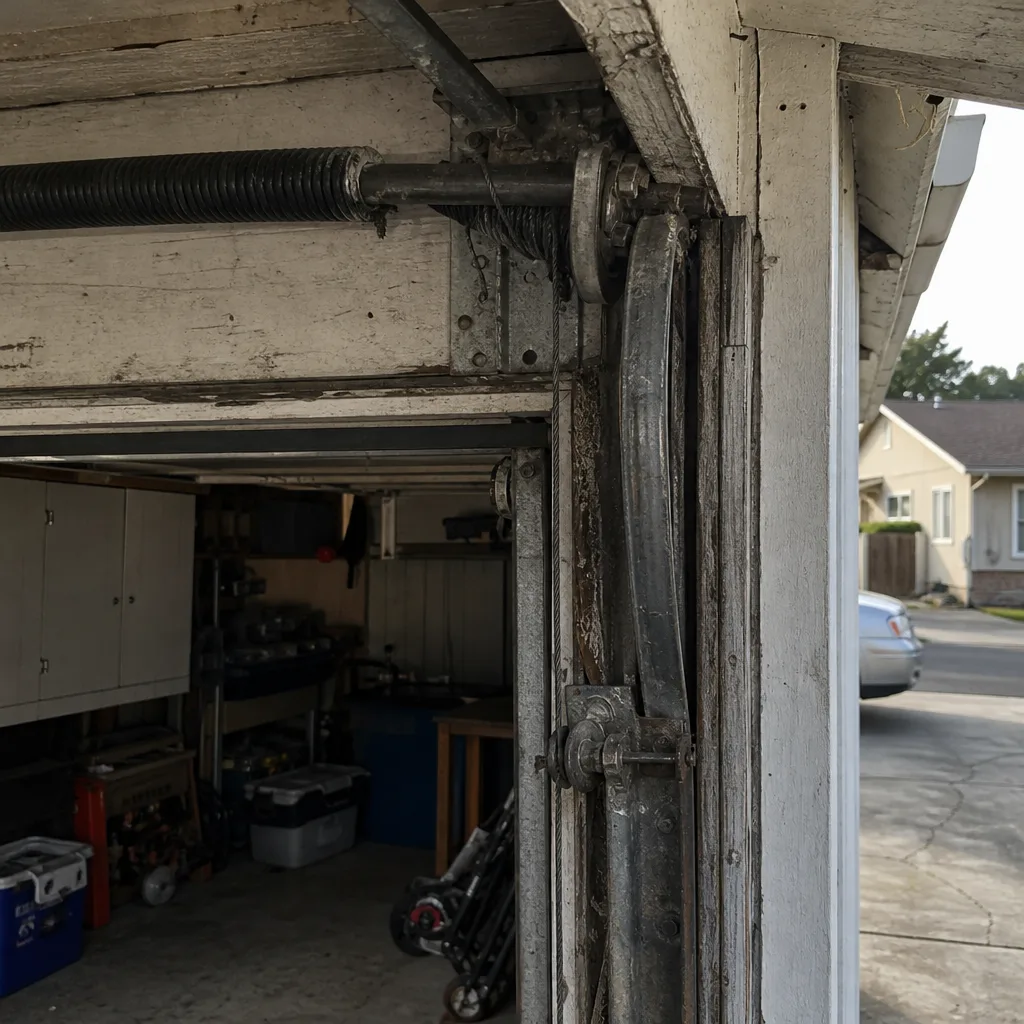
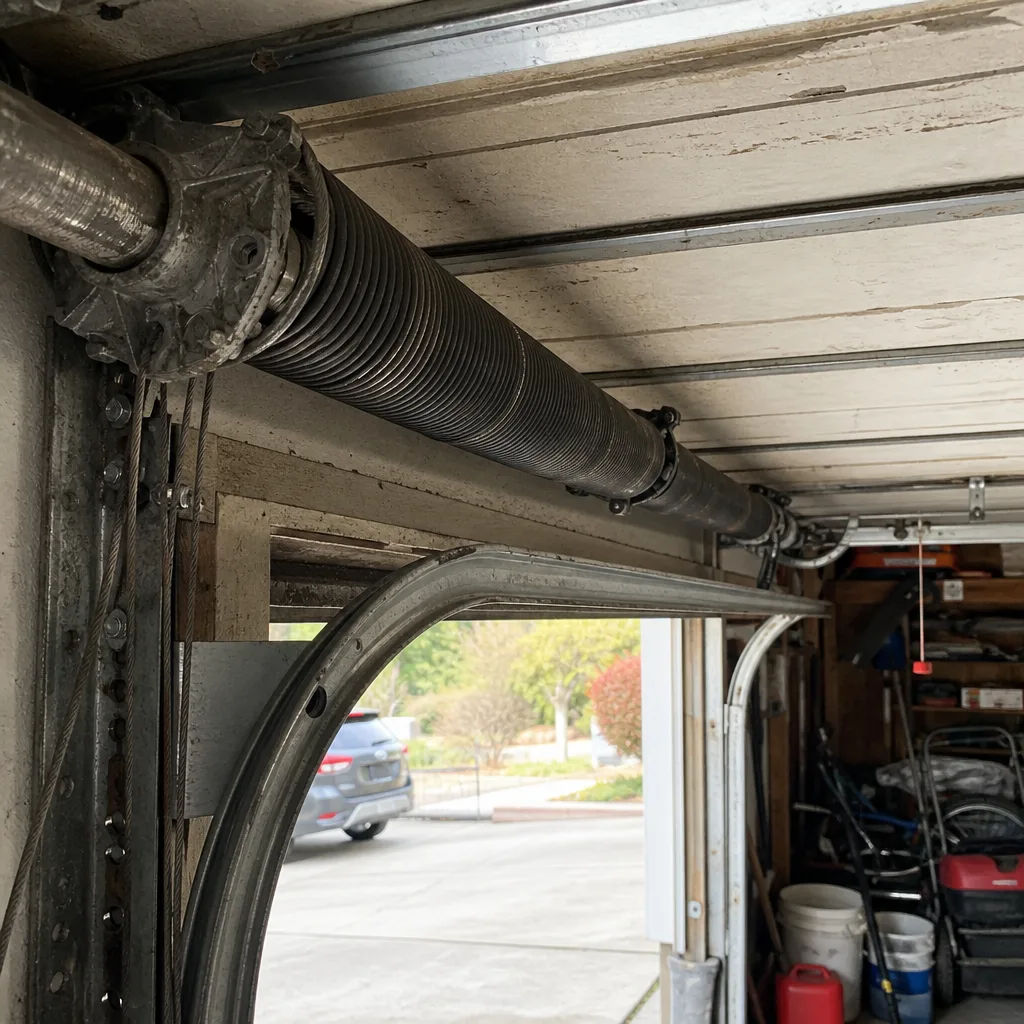
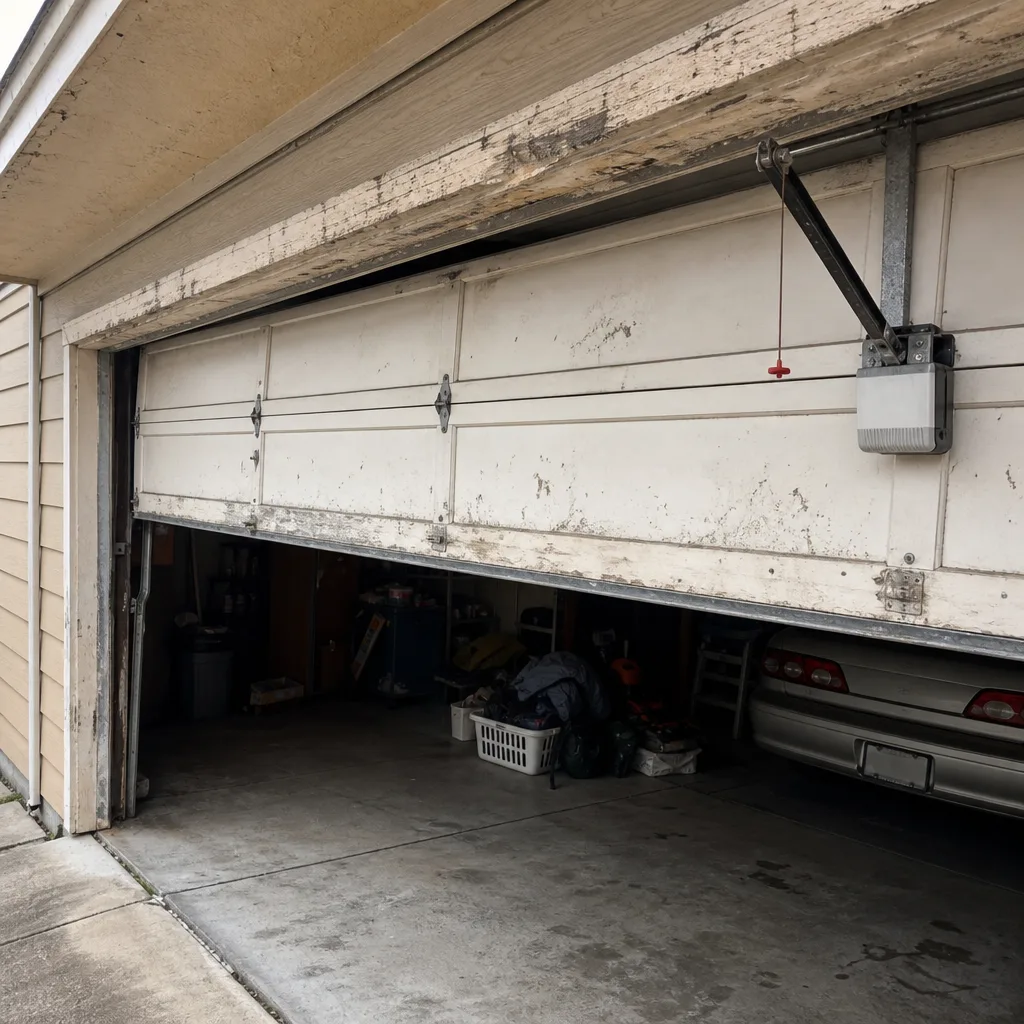 Before
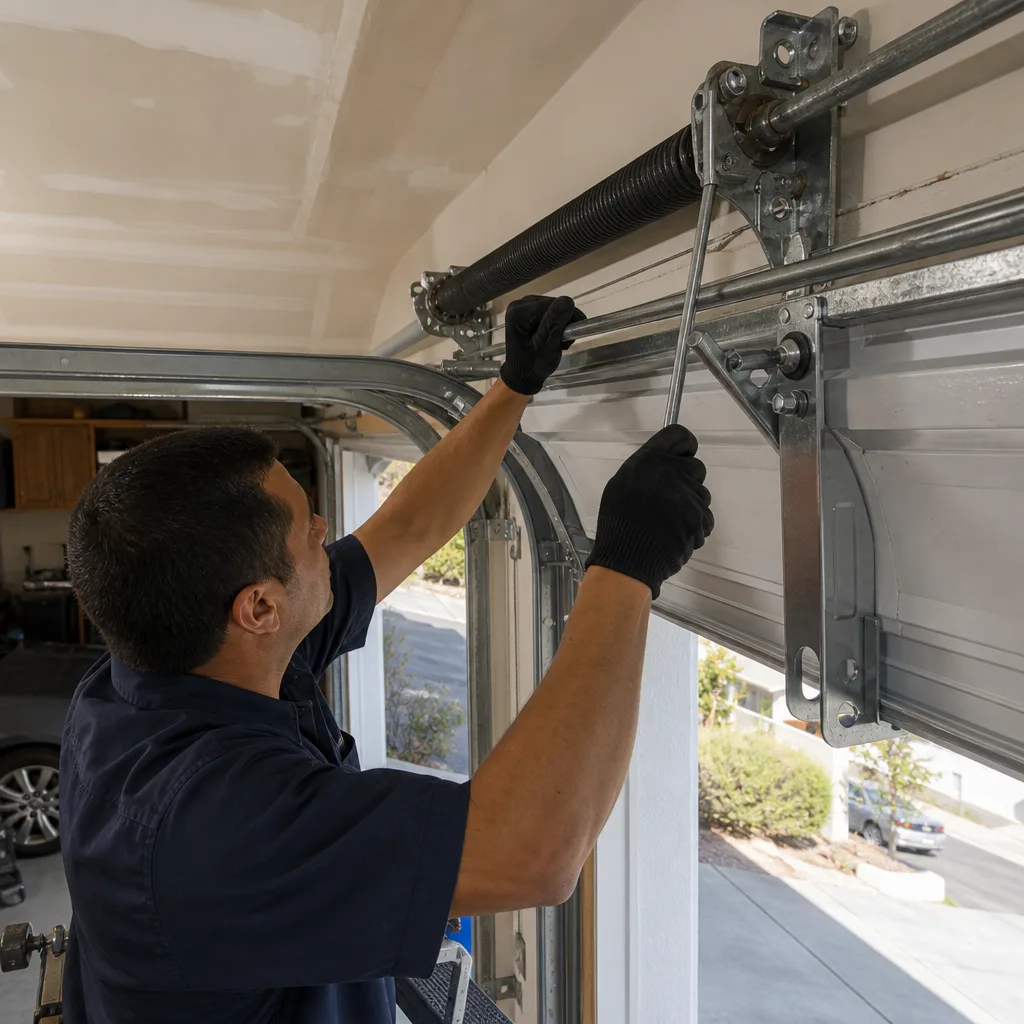
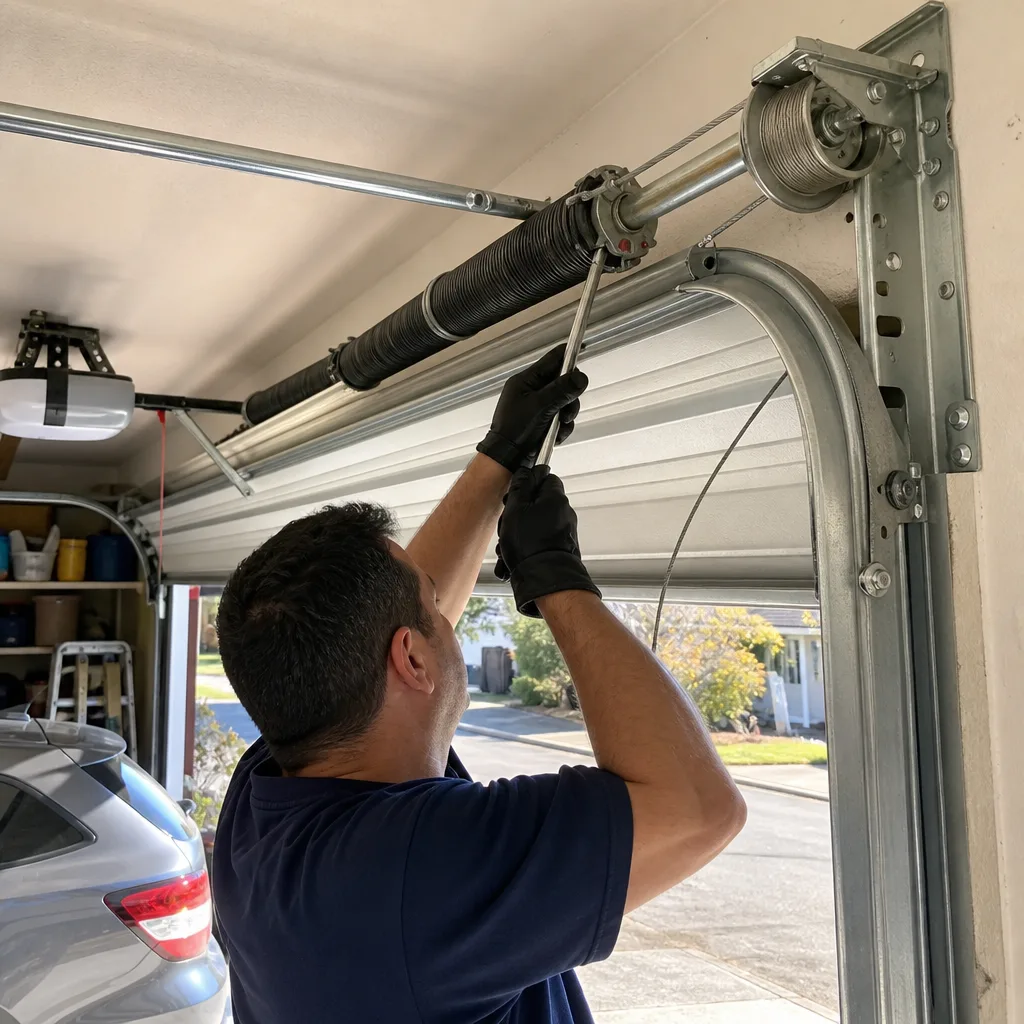
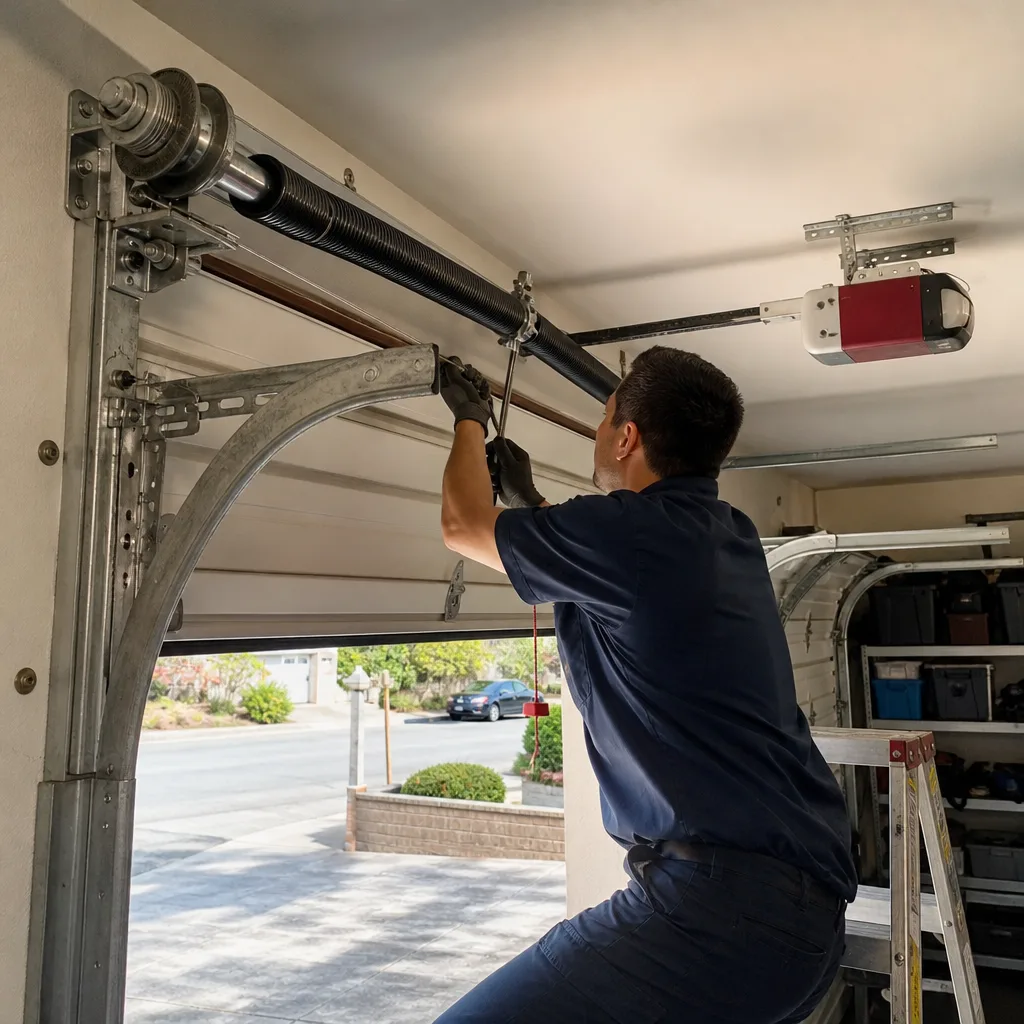 After
 Before
 After
 Before
 After