
Last updated November 2, 2026
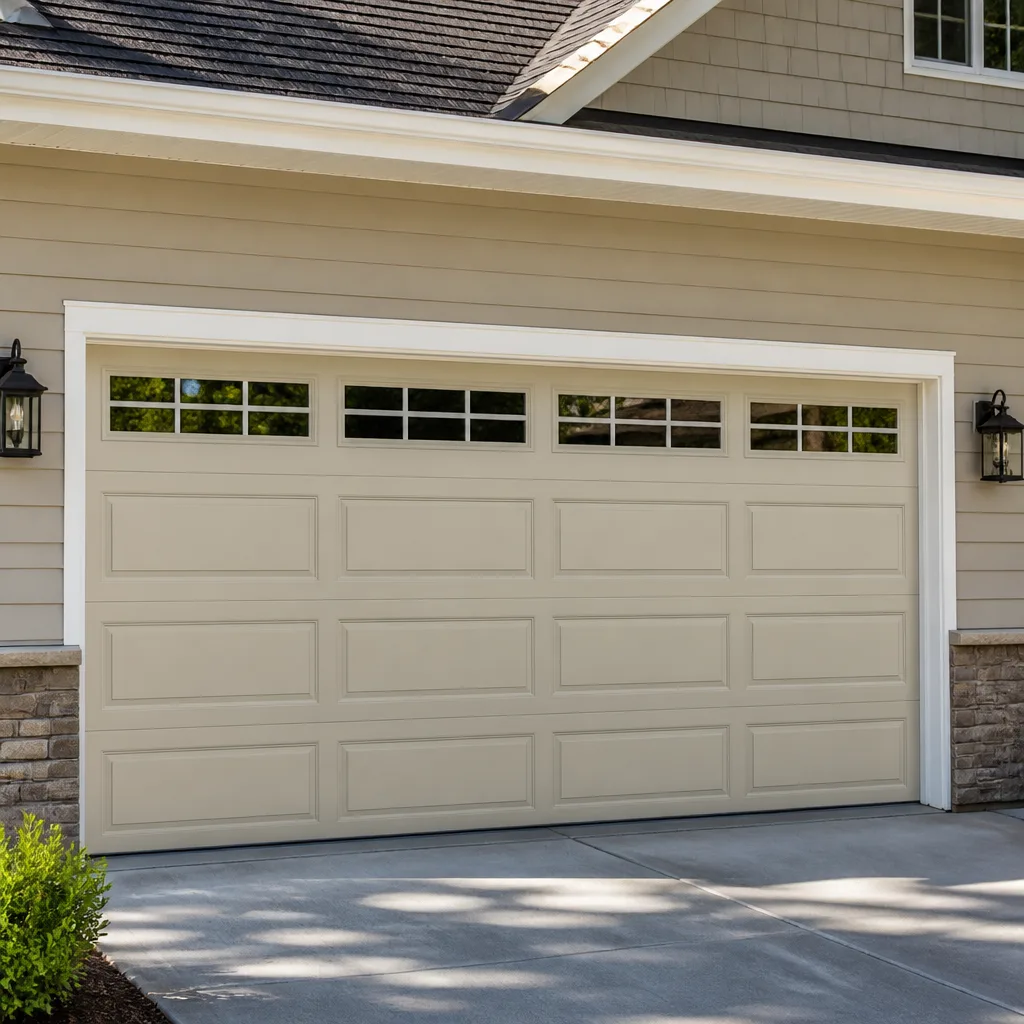 Raised-panel steel
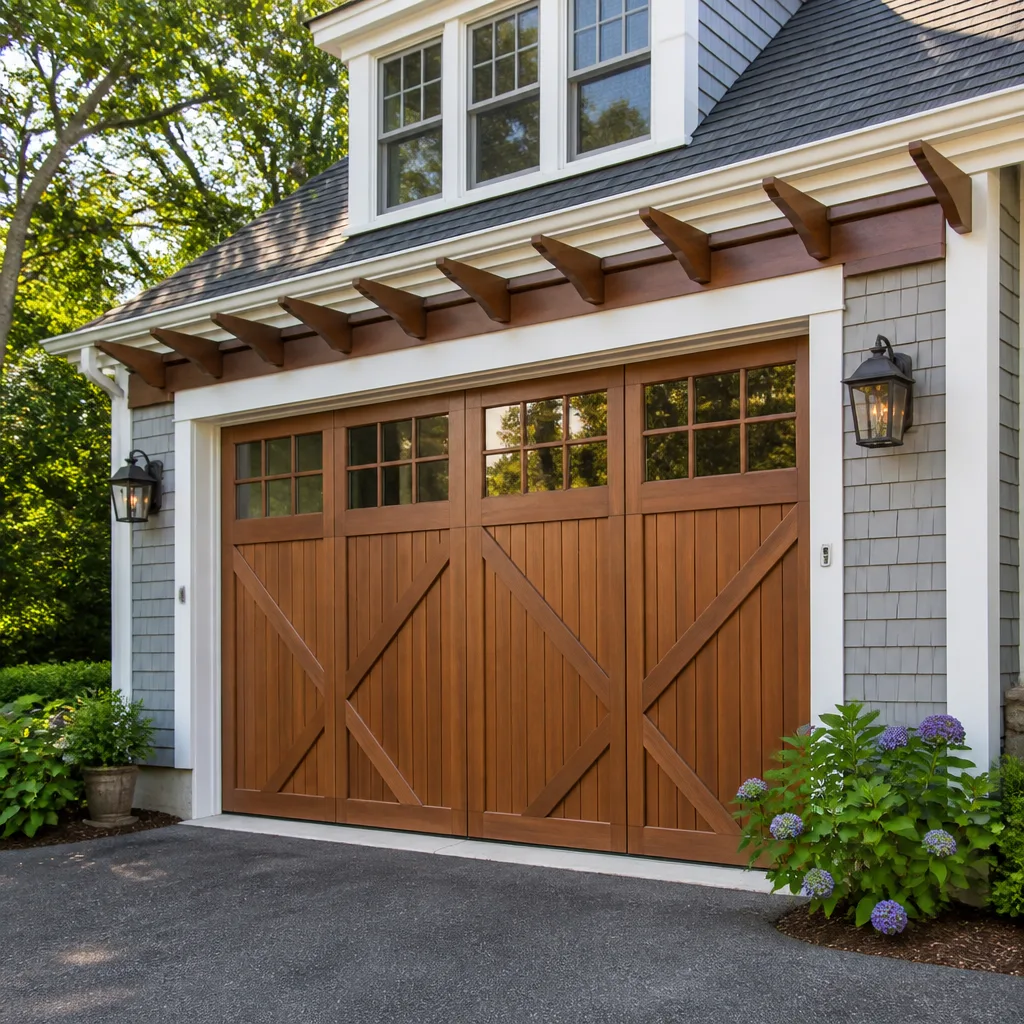 Carriage house
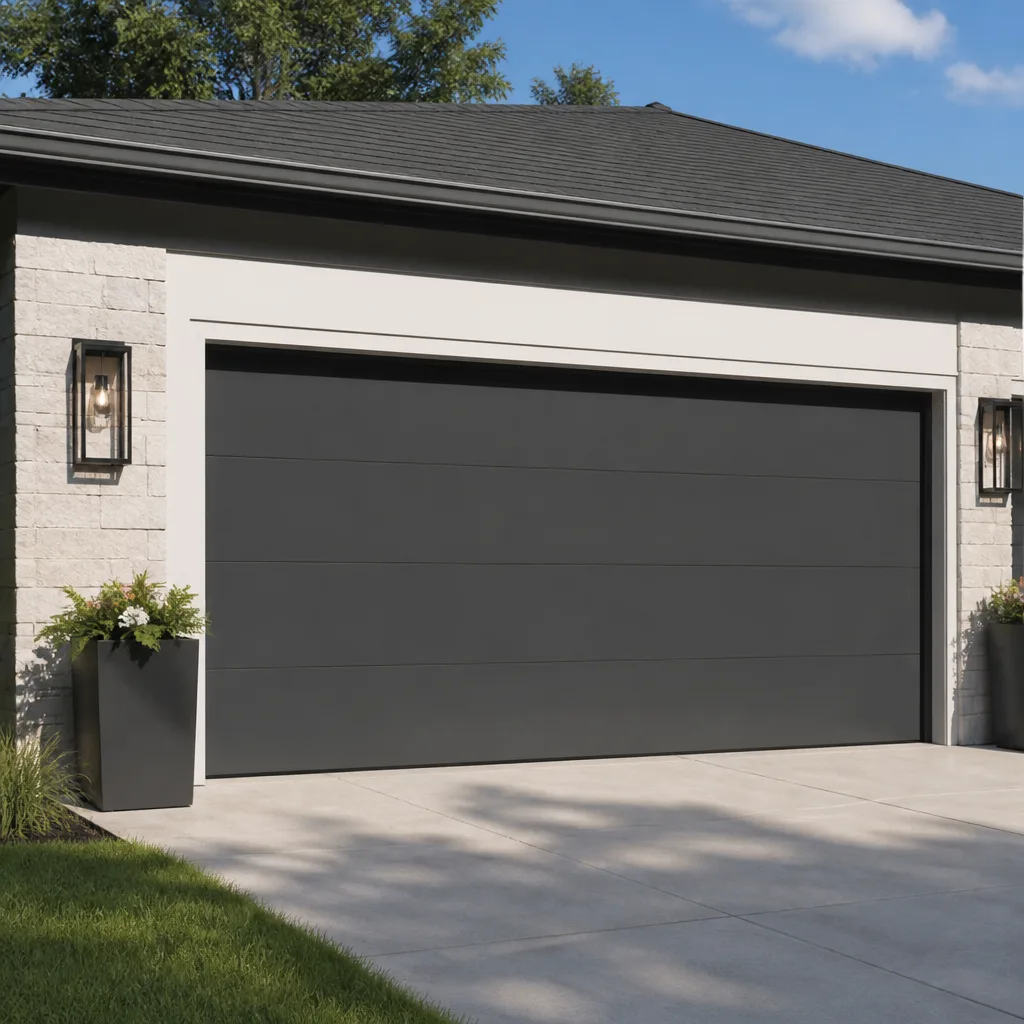 Modern flush
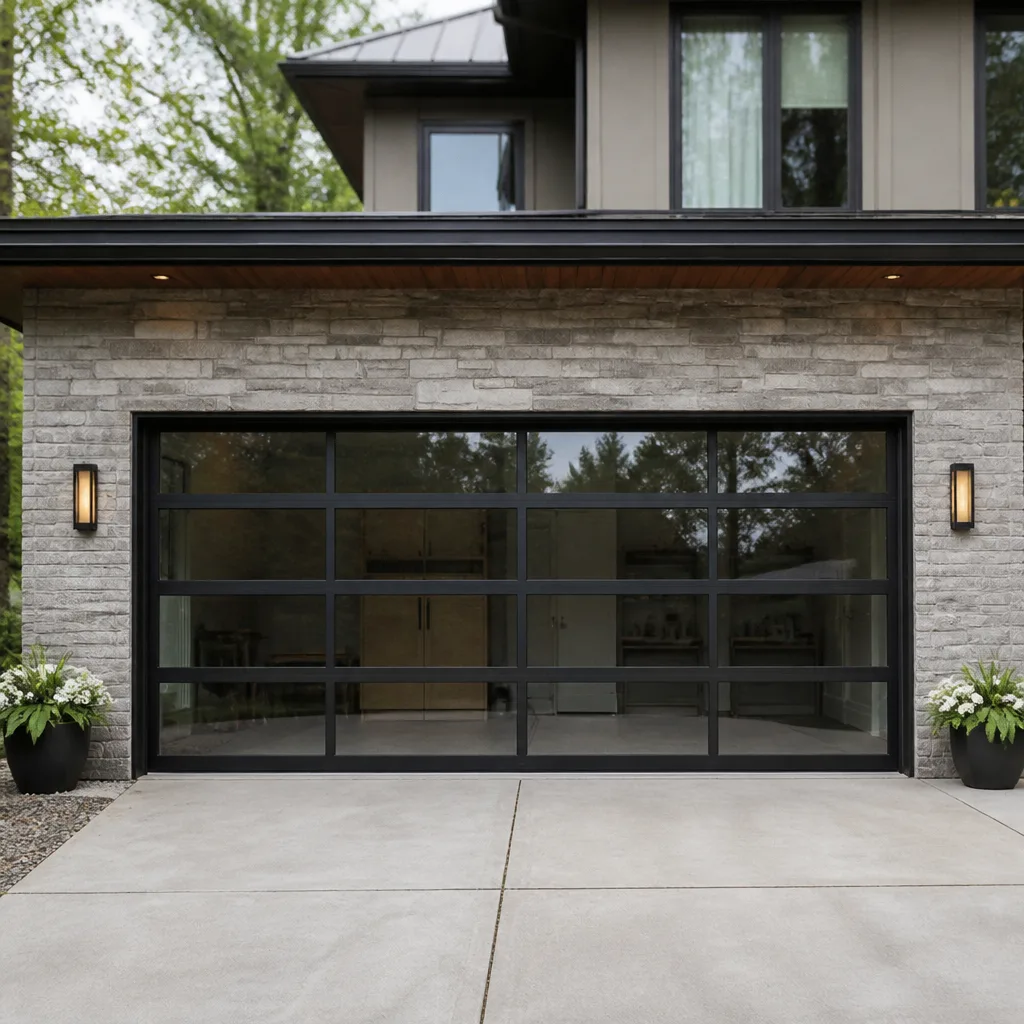 Full-view glass
 LiftMaster openers
 Chamberlain openers
Full 25-point door and opener safety check with every visit - springs, cables, rollers, tracks, and your LiftMaster or Chamberlain opener included
You get a price before we start. It does not change when the truck arrives.
Get your free estimateGarage Door Cost Breakdown: The Castro Valley Homeowner’s Reference for 2026
The $150 difference between two spring replacement quotes in Castro Valley usually comes down to one spec: cycle rating. A 10,000-cycle spring costs more than a 5,000-cycle spring, and the contractor who doesn’t mention cycle count on the invoice is almost certainly installing the cheaper one. Most published garage door pricing hides this variable entirely. This guide names the actual cost drivers in the East Bay market so you can read a quote line by line and know exactly what you’re paying for, whether you’re fixing a snapped cable on a 1970s ranch in Castro Valley or pricing a full replacement for a newer build in Palomares Hills.
Quick Answer
Garage door repair in Castro Valley typically runs $95 to $380 for most mechanical fixes, with spring replacement landing between $180 and $340 depending on spring cycle rating and door weight. Full door replacement on a standard single-car garage in Castro Valley runs $1,200 to $2,800 installed, while double doors range from $1,800 to $4,500 depending on material, insulation, and opener work. Opener replacement adds $350 to $750 on most Castro Valley homes.
Styles & brands we work with
- Raised-panel steel
- Carriage house
- Modern flush
- Full-view glass
- LiftMaster openers
- Chamberlain openers
Table of Contents
- Spring Replacement Cost in Castro Valley
- Cable Repair and Replacement Costs
- Garage Door Opener Installation Costs
- Panel Replacement Pricing
- Full Door Replacement by Material and Size
- The Hidden Cost Drivers Most Quotes Omit
- Service Call Fees and How Legitimate Contractors Handle Them
- How to Read a Garage Door Quote Line by Line
Spring Replacement Cost in Castro Valley
A torsion spring replacement on a standard single-car garage in Castro Valley runs $180 to $280, including labor and parts. Double-car doors with two springs run $280 to $340. If you’re quoted under $150 for a single spring replacement, ask about the spring’s cycle rating before you agree because that’s where the cost gets cut.
Torsion springs are rated by cycles, which means how many open-and-close operations they’re built to survive. A standard 10,000-cycle spring pair costs roughly $50 to $70 more than a 5,000-cycle pair at wholesale. The labor to install either is identical. So the contractor who quotes you $129 for a spring replacement is using a low-cycle spring, and if your household opens the door four times a day, you’ll be calling again in three to four years instead of eight to ten.
Here’s what the spring replacement quote should include:
- Spring pair, not a single spring: both springs wear at the same rate. Replacing one creates an imbalance that wears out the new spring faster.
- Cycle rating on the invoice: if the number isn’t listed, ask. 10,000 cycles is the minimum you want for a door that sees daily use.
- Wire size and inside diameter: these determine the spring’s torque. A wrong-size spring produces a door that slams or won’t stay up.
- Labor including adjustment and balance testing: the spring install itself takes 30 to 45 minutes. The balance test takes 10 more. If a contractor skips the balance test, the door wears unevenly from day one.
In Castro Valley specifically, we see a lot of older homes with single springs on double doors. That was standard practice in the 1980s and 1990s, but modern doors need a two-spring system for safe, even lift. If your quote proposes keeping a single spring on a double door in 2026, that’s a shortcut that will save $60 now and cost a rail or roller replacement within 18 months.
Cable Repair and Replacement Costs
Garage door cable repair in Castro Valley runs $130 to $220 per cable, depending on whether it’s a simple bracket cable on a standard track system or a torsion cable that requires releasing and resetting spring tension. Most homes need both cables replaced at the same time, since uneven cable wear creates a door that rises crooked and scrapes the track.
Cable gauge matters more than homeowners realize. A standard residential garage door needs 1/8-inch galvanized aircraft cable. Some low-bid contractors install thinner cable that frays within a year. The part difference is under $10, but the labor to replace it again is the same $100-plus you paid the first time. Ask about cable gauge before you authorize the work.
Here’s what drives cable cost in Castro Valley:
- Door weight: a solid wood door on a 1960s ranch needs thicker cable and more tension, which adds $20 to $40 to the job.
- Drum condition: if the cable drum that holds the cable is worn or chewed up, replacing the cable without replacing the drum leads to fraying within months. A new drum set adds $60 to $90.
- Track alignment: if the tracks are out of parallel, the cable rubs against the track rail every time the door cycles. You’ll see a fresh cable start to feather within weeks. Realigning tracks adds $40 to $80.
The Castro Valley climate matters here. The marine air that drifts in from the Bay produces more rust and corrosion on exposed cable than you’d see in, say, Livermore or Tracy. Galvanized aircraft cable handles it fine. Cheap unrated cable doesn’t, and you’ll see it in the form of rust blooms and snapped strands within two winters.
Garage Door Opener Installation Costs
Garage door opener installation in Castro Valley runs $350 to $750, including the opener unit and labor. The spread depends on drive type, horsepower, and whether the opener includes smart-home connectivity. Chain-drive openers sit at the low end. Belt-drive and smart units with backup batteries land at the top of the range.
Horsepower matters more than brand name. A 1/2-horsepower opener struggles with insulated double doors, and when an opener is undersized, it overheats the motor and eats through gears. For most Castro Valley homes, a 3/4-horsepower belt-drive unit is the right match. That means the $120 difference between a 1/2-HP chain unit and a 3/4-HP belt unit isn’t just about quieter operation, it’s about whether the motor lasts six years or twelve.
Here’s a practical breakdown of opener options in 2026:
- Chain-drive, 1/2 HP: $350 to $420 installed. Loud and fine for a detached garage, but underpowered for insulated doors.
- Chain-drive, 3/4 HP: $400 to $480 installed. Noisier than belt drive but handles heavier doors.
- Belt-drive, 3/4 HP: $480 to $650 installed. The standard-bearer for attached garages where the master bedroom sits above the bay. Much quieter, longer-lasting gears.
- Smart opener with battery backup: $600 to $750 installed. Adds app control and a backup battery that opens the door when PG&E cuts power during fire season. That’s a real consideration in Castro Valley, where PSPS events have become regular since 2019.
One of the most common things we see in Castro Valley is a homeowner with a LiftMaster opener that’s 15 years old and still running, paired with a door that’s started sagging. The opener takes the blame, but the real issue is door weight distribution. Before you spend $500 on a new opener, check whether the door itself balances correctly. If it doesn’t, a new opener will burn out on the same problem.
Compass Garage Door Repair works on LiftMaster, Chamberlain, Genie, and Craftsman openers, plus the door systems from Wayne Dalton, Clopay, Amarr, and Raynor. That brand coverage matters because opener replacement is rarely just an opener. It’s the opener, the sensors, the rail, the logic board, and the door it’s attached to. When one company knows the whole system, you don’t end up with two different contractors pointing at each other.
Panel Replacement Pricing
Replacing a single garage door panel in Castro Valley runs $200 to $450 for the panel itself, plus $100 to $160 for labor. Full-section replacements, where you swap all four or five panels but keep the existing track and springs, run $800 to $1,400. Whether a single-panel swap makes sense depends on the door’s age and manufacturer.
The biggest variable here is manufacturer match. A Wayne Dalton panel from 2008 is often still available from distributors in 2026. A no-name panel from a builder-installed door that was never tied to a brand is practically impossible to source. If your door has no visible manufacturer marking, expect to either replace the entire door or live with a mismatched panel.
Here’s the step-by-step decision process we recommend for Castro Valley homeowners with a dented or cracked panel:
- Check the manufacturer. Look for a label on the inside face of the door or the edge of a panel. Clopay, Amarr, Wayne Dalton, and Raynor all stamp their doors.
- Check the door age. Panels fade. If your door is over 10 years old, a new panel will be visibly lighter than the rest of the door, even if it’s the same color code.
- Check the spring condition. If the springs are nearing the end of their cycle life, replacing the panel buys you two years before you’re spending another $250 on springs. Bundle them now if the tech recommends it.
- Weigh panel cost against full replacement. If a single panel runs $300 and the door is 15 years old, a partial replacement buys time but not much of it. A full replacement runs $1,500 to $2,200 on a standard single door and resets every wear component at once.
Insulated doors complicate panel replacement. An insulated panel carries an R-value rating, and if the replacement panel’s insulation density doesn’t match the original, the door is heavier on one side and pulls unevenly. In Castro Valley’s mild climate, insulation is less about temperature and more about noise reduction and door rigidity, especially for attached garages on the steep lots along Lake Chabot Road.
Full Door Replacement by Material and Size
A full garage door replacement in Castro Valley runs $1,200 to $2,800 for a single-car door and $1,800 to $4,500 for a double-car door, installed. The range is driven by material, insulation, window count, and whether the existing track and opener are reused or replaced.
Castro Valley’s housing stock is a mix of 1950s to 1970s ranchers in the flatlands, 1980s to 1990s developments in the hills, and a growing number of 2000s-plus builds clustered around Palomares Hills and Five Canyons. Check our Garage Door Permits, Codes & Inspections in CA: What You Need to Know to see whether your replacement triggers a permit requirement. The mid-century homes often have original single-car doors that are narrower than modern standard widths, which affects replacement cost because the track system often needs full replacement rather than a simple panel swap.
Here’s what to budget in 2026 by door type:
- Steel, non-insulated, single-car: $1,200 to $1,800 installed. Standard for detached garages or doors that don’t face living space.
- Steel, insulated, single-car: $1,600 to $2,400 installed. The right choice for attached garages. Adds R-9 to R-12 insulation and roughly 20 to 30 pounds of weight that the springs must be sized for.
- Steel, insulated, double-car: $2,000 to $3,200 installed. The most common replacement on Castro Valley homes built since 1990.
- Composite or wood-look steel, single-car: $2,000 to $2,800 installed. The visual upgrade for homes where the garage faces the street.
- Solid wood, single-car: $2,500 to $4,000 installed, often more for custom sizes. Genuinely beautiful on the right home, but heavy enough to require upgraded springs, cables, and often a new opener with more horsepower.
- Double-car with windows and insulation: $2,800 to $4,500 installed. Windows add $200 to $600 depending on the count and glass type.
If you’re considering full replacement, read the full breakdown on our Garage Door Installation in Castro Valley page, which covers measuring, material selection, and permit considerations for hillside lots.
The Hidden Cost Drivers Most Quotes Omit
This is where Castro Valley homeowners either save a thousand dollars or get quietly overcharged. Most published cost guides quote national averages and ignore the four variables that actually move the number. Here they are, named and explained.
- Spring cycle rating. We covered this in the spring section, but it bears repeating as the single biggest hidden variable. Same installation, different part quality, $100 to $150 price difference. Always ask what cycle spring goes on the door.
- Roller material grade. Standard rollers are steel with ball bearings and no tire. Premium rollers have nylon-coated wheels that run quieter and wear the track less. The part difference is $8 to $15 per roller, and a 16-foot door has 10 to 12 rollers. That’s a $150 difference in the quote that most contractors never mention. Nylon rollers are worth it for attached garages.
- Opener horsepower versus door weight. A 1/2-HP opener on an insulated double door fails within a few years. The correct 3/4-HP unit adds $100 to $120 to the quote. If your quoted opener price looks low, check the horsepower rating.
- Cable gauge. Thin cable is a classic low-bid shortcut. The correct 1/8-inch aircraft cable costs a few dollars more and lasts for years. Incorrect cable fails visibly within 12 to 18 months, and you’ll pay the labor cost again.
These aren’t edge cases. We see quotes in Castro Valley that differ by $400 for the same nominal job, and the entire difference traces back to these four specs. The contractor quoting $129 for a spring replacement and $349 for an opener install is almost certainly using a 5,000-cycle spring, steel rollers, 1/2-HP opener, and thin cable. The $380 spring and $550 opener quote is the honest market price for parts that last.
Service Call Fees and How Legitimate Contractors Handle Them
Garage door service call fees in Castro Valley run $45 to $95. The practice varies, and understanding the difference between fee structures tells you a lot about the company you’re dealing with.
A legitimate garage door specialist charges a service call fee for diagnosis, then applies it toward the repair cost if you approve the work. So if the service call is $65 and the spring replacement is $220, you pay $220 total, not $285. The fee is simply a deposit against your time being spent on a diagnosis that doesn’t lead to a job.
Volume-discount operations work differently. They advertise a $19 or $29 “service call” and then price the repair higher to compensate. Or they charge the fee and don’t apply it to the work. The advertised number gets you in the door, and the invoice makes up the difference.
Here’s how to tell what you’re dealing with:
- Ask directly: “Does the service call fee apply toward the repair if I approve the work?” A legitimate contractor says yes without hesitation.
- Ask for the diagnosis before the quote: “Can you tell me what’s wrong before we talk price?” If the tech wants to quote a repair before examining the door, that’s a red flag.
- Check whether the quote matches the diagnosis: if the tech says the spring is fine but the cable needs replacement and then quotes you for a spring and cable bundle, question it.
Our approach is straightforward: the diagnostic visit tells you what’s wrong, the price is quoted and agreed before any work starts, and the quoted price is the price. No surprises on the invoice. If you want to understand what a specific problem looks and sounds like before you even book, our Garage Door Repair in Castro Valley page breaks down the most common issues homeowners call about.
How to Read a Garage Door Quote Line by Line
A trustworthy garage door quote lists parts and labor separately, specifies part grades and specs, and includes a final price that won’t shift when the invoice arrives. Our Garage Door Repair Maintenance Checklist for Castro Valley Homeowners covers the specs to verify before approving any work. A quote that bundles everything into one line with no specs is either lazily written or intentionally vague.
Here’s what a legitimate repair quote should itemize:
- Part description with spec: not just “spring” but “10,000-cycle torsion spring, .225 wire, 1.75″ inside diameter.” The spec is your proof that you’re getting a quality part.
- Labor as a separate line: this isn’t a trick. It shows the contractor calculated the time the job takes. A $220 spring replacement should show roughly $100 to $120 in parts and $100 to $120 in labor.
- Any additional parts with specs: rollers, bearings, drums, or brackets should be listed individually, not absorbed into a vague “materials” total.
- Total, clearly stated: the final number you’re asked to approve, with no asterisks or tbd line items.
What a suspicious quote looks like:
- A single line that says “repair door” with a price: no specs, no parts list, no labor transparency. You’re approving a number without knowing what it buys.
- An itemized list where one line looks dramatically high or low: a $20 spring with $300 labor means the part is cheap and the labor is padded. A $300 spring with $20 labor means the contractor is using a premium part but not being honest about the time.
- A quote that doesn’t include the service call fee: if the final price doesn’t mention whether the fee was applied, ask. Unapplied fees are a quiet way to add $50 to $90 to the invoice.
We write quotes the way we’d want to read them: every part named, every spec included, the final price stated, and no change between the number you approve and the number on the invoice. You shouldn’t need a background in garage door repair to understand what you’re paying for.
Common Mistakes to Avoid
- Approving a spring replacement without knowing the cycle rating. This is the single most expensive shortcut in the business, and it hides inside a $100 lower quote. Always ask.
- Replacing an opener when the door is the problem. A door that doesn’t balance puts uneven strain on the opener motor. If you replace the opener without fixing the balance, the new one wears out early. A competent diagnostic visit checks the door before quoting the opener.
- Buying the cheapest opener and calling it done. A 1/2-HP chain-drive unit on an insulated double door is a mismatch from day one. The $120 you save gets eaten the first time the gear strips.
- Ignoring rust and corrosion on cables and hardware. Castro Valley’s marine-influenced air is a real factor. Galvanized hardware lasts. Unrated steel doesn’t. Ask what grade of cable and hardware goes on the door.
- Skipping a balance test after a spring or cable job. The door should stay in place when opened halfway. If the tech doesn’t test this before leaving, you won’t know there’s a problem until the door slams or refuses to close.
- Treating every quote as an apples-to-apples comparison. A $129 spring quote and a $280 spring quote are not the same job. The difference is in the parts, and the cheap quote compounds into repeat calls.
See the difference
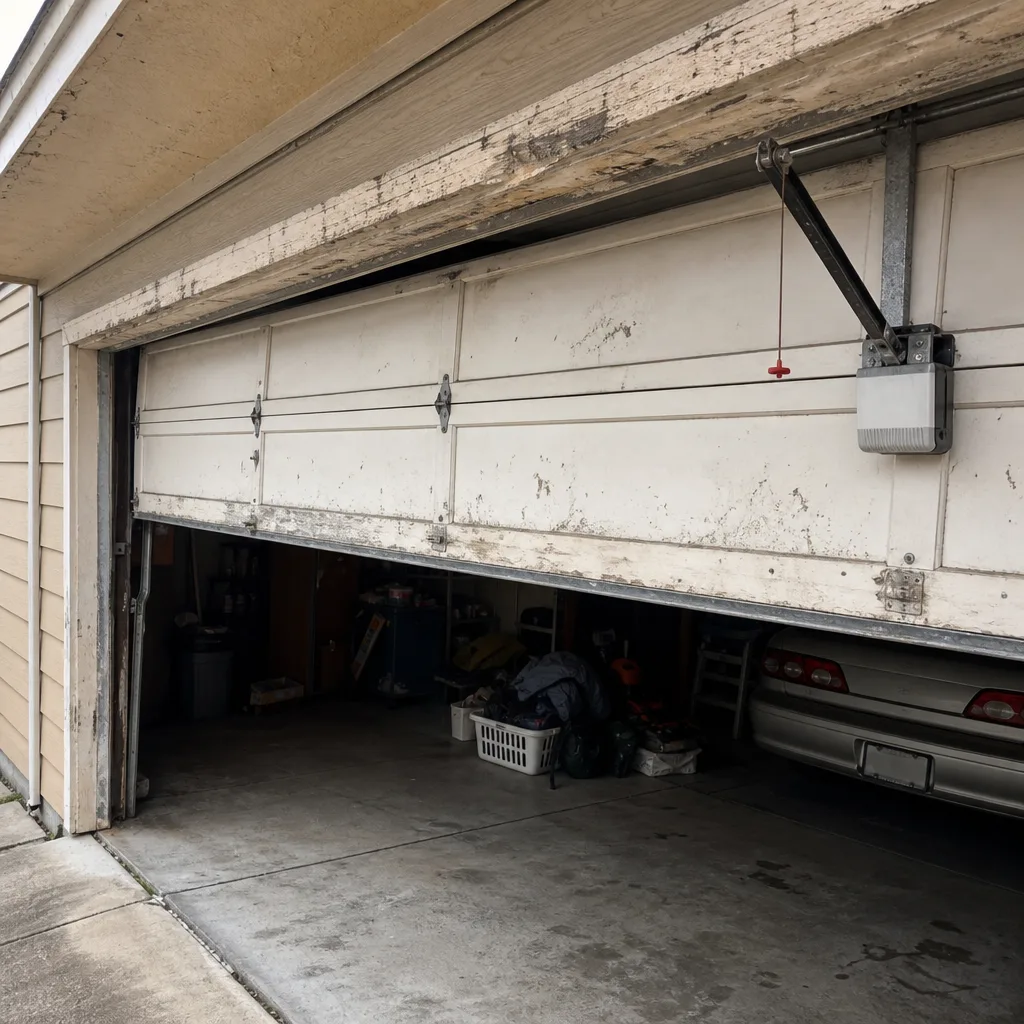 Before
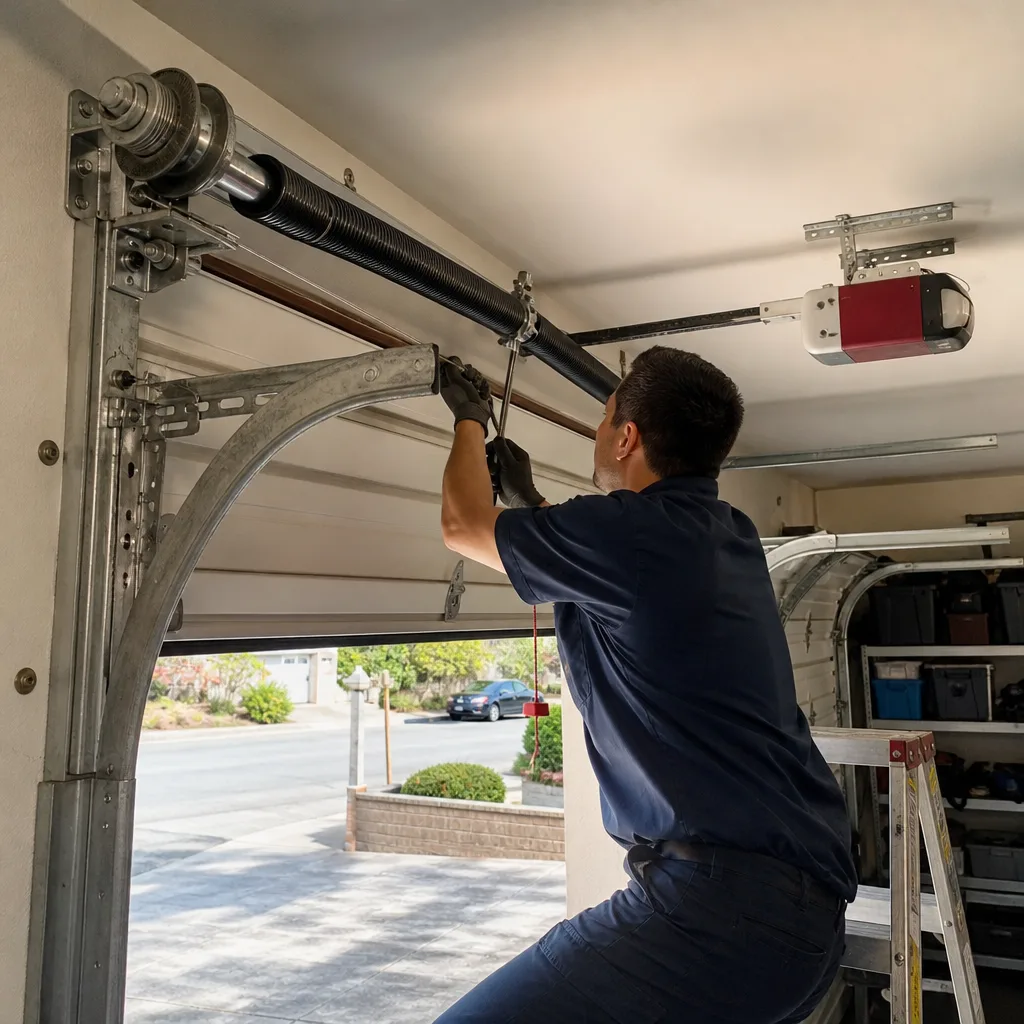 After
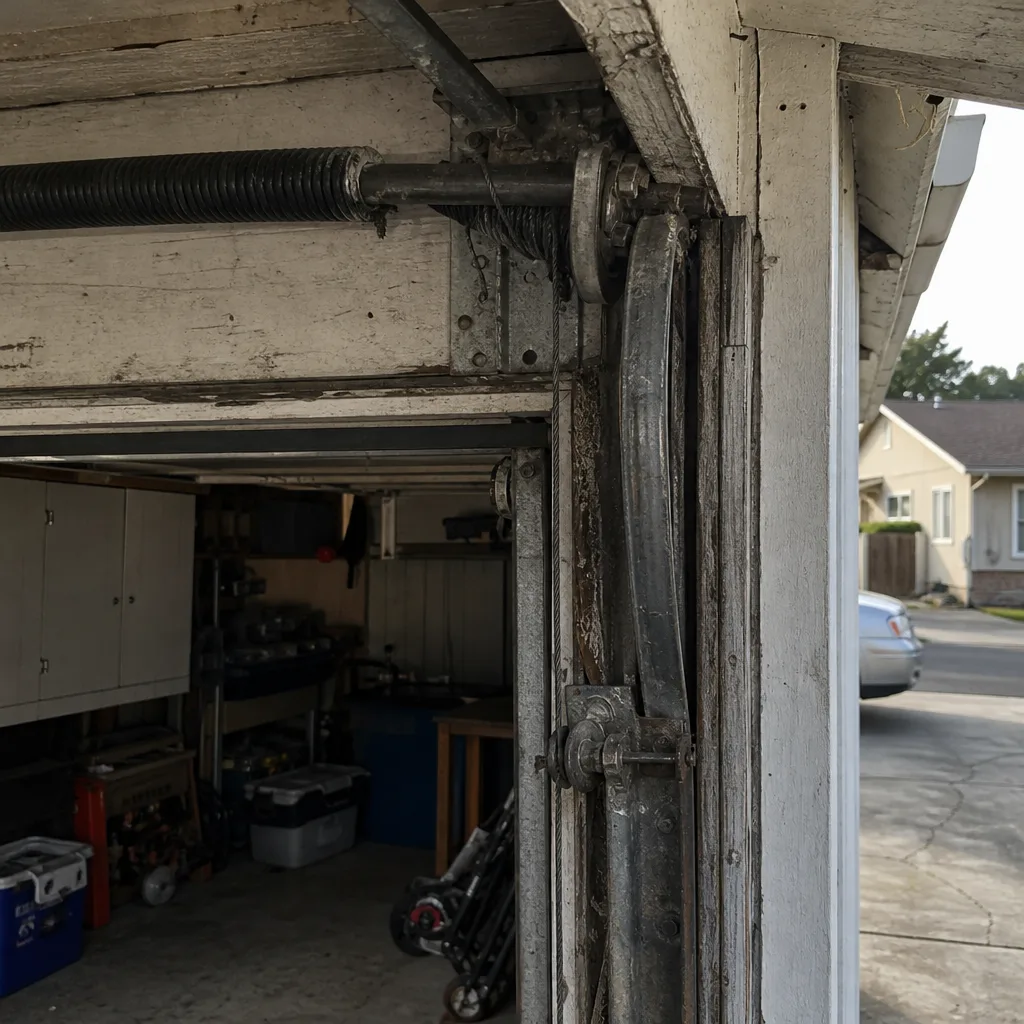 Before
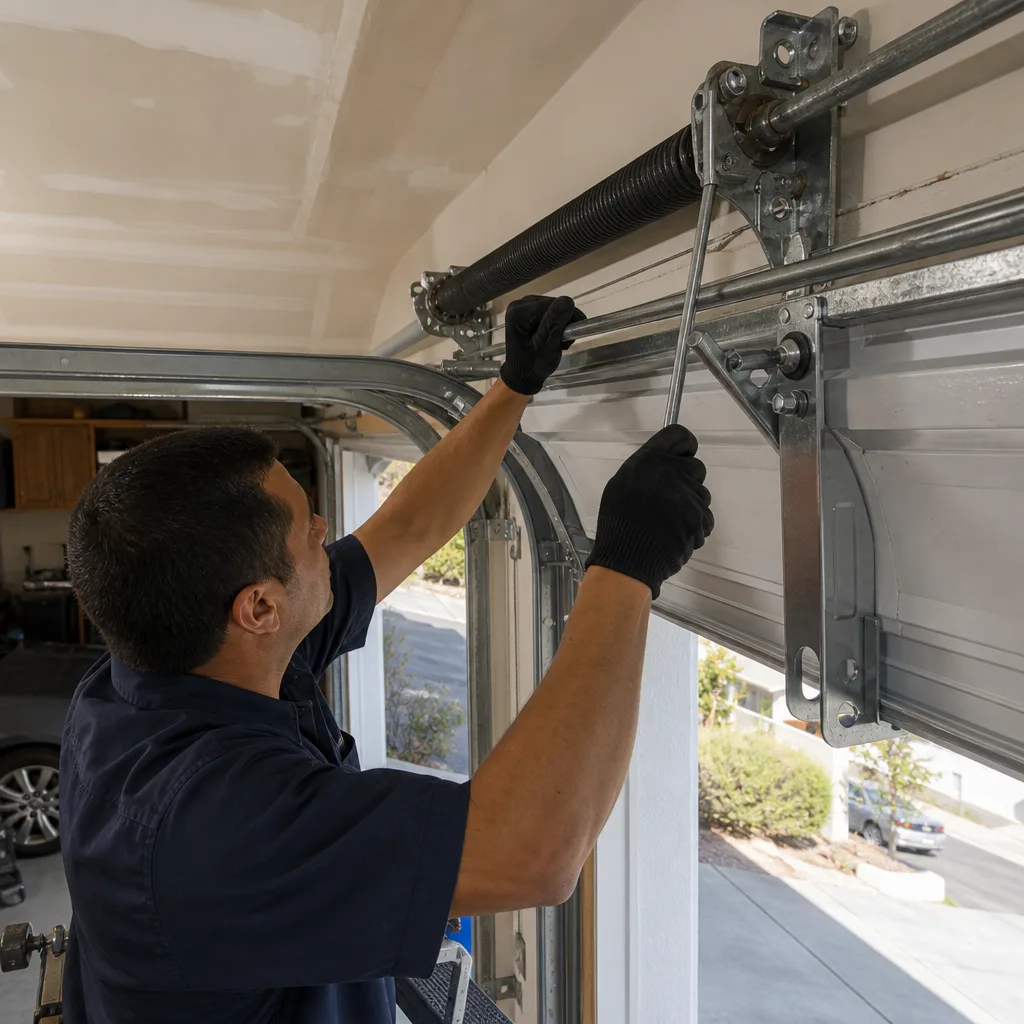 After
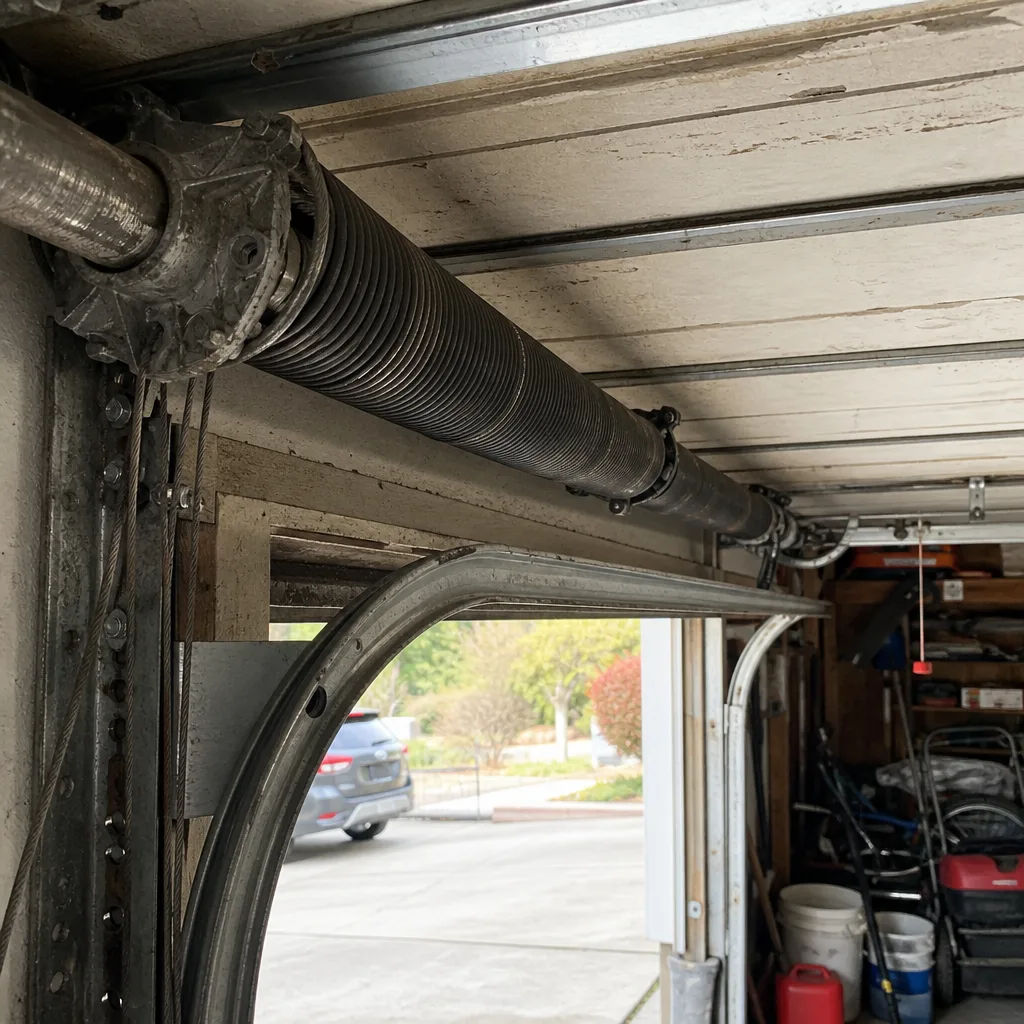 Before
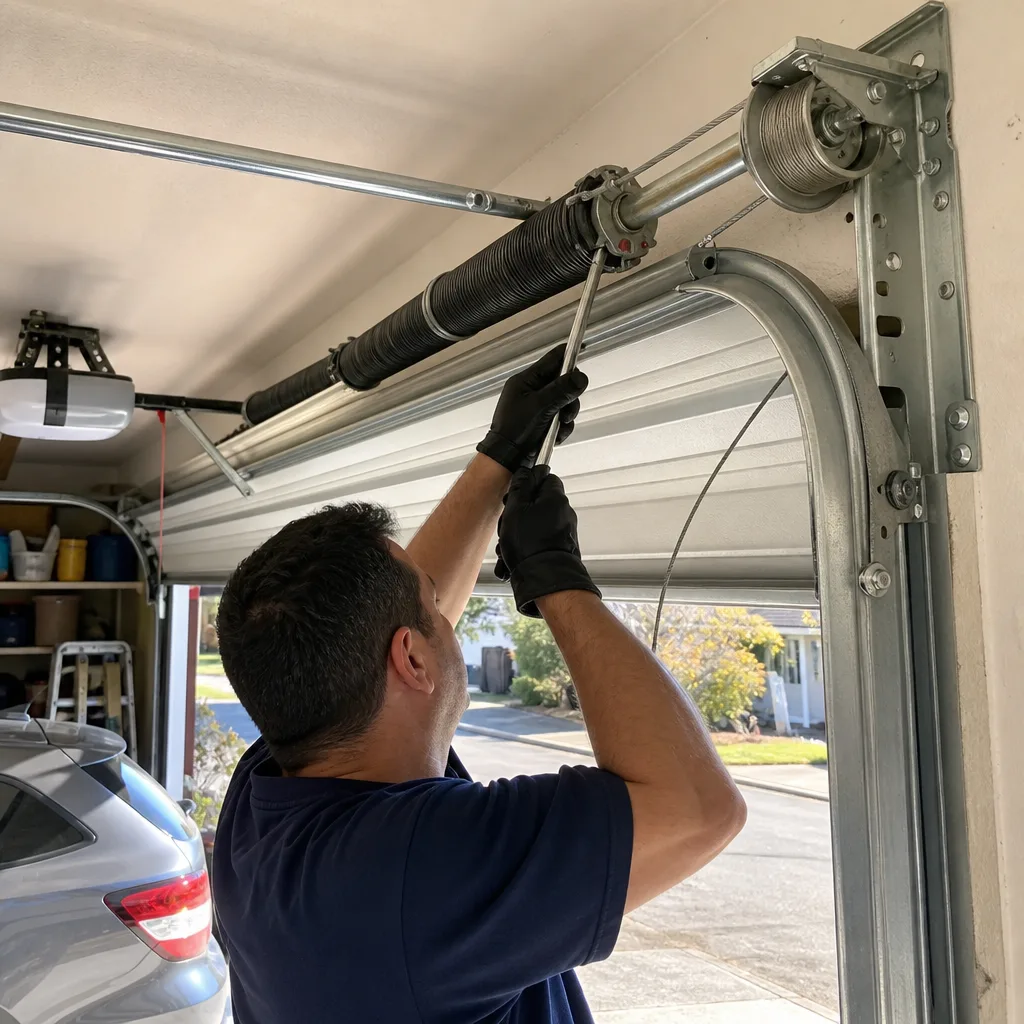 After
When to Call a Professional
Garage door springs are under enough tension to cause serious injury if released incorrectly. If your spring has snapped, the door won’t open, the cable has come off the drum, or the door sits crooked in the track, don’t attempt a DIY fix. The job requires specific tools, careful tension release, and an understanding of how the whole system balances. A trained professional can diagnose the problem and quote the repair in one visit. Compass Garage Door Repair offers free estimates in Castro Valley. Call (855) 356-4948 and we’ll tell you what’s wrong and what it costs before any work begins, or review our Garage Door Emergency Preparedness Guide for Castro Valley Homes to learn what to do before the technician arrives.
Frequently Asked Questions
Most garage door repairs in Castro Valley run $95 to $380, with spring replacement at $180 to $340 and cable repair at $130 to $220. The final number depends on part specs like spring cycle rating and cable gauge, which is why two quotes for the same job can differ by $150 or more. Call (855) 356-4948 for a free estimate on your specific door.
A new garage door in Castro Valley runs $1,200 to $2,800 for a single-car door and $1,800 to $4,500 for a double-car door, installed. Steel non-insulated doors sit at the low end, while insulated steel and wood-look composite doors with windows land at the top. Your home’s specific track setup and whether the opener gets replaced are the biggest variables.
Yes, most spring, cable, and roller repairs can be done the same day, since the parts are standard inventory on a well-stocked truck. Full door replacements take longer because the door is measured, ordered, and scheduled. If your door won’t open, call (855) 356-4948 and we’ll tell you whether it’s a same-day fix or a scheduled replacement.
No. The price is quoted and agreed before any work starts, and the number you approve is the number on the invoice. The diagnostic visit exists to determine what’s wrong and what it costs, not to open a negotiation after the door is apart.
Yes, our trucks carry the common spring sizes, cable gauges, rollers, bearings, and brackets needed for most residential door repairs on the brands we service, including LiftMaster, Chamberlain, Genie, Clopay, Amarr, Wayne Dalton, Craftsman, and Raynor. That’s how same-day repair works: the part is already on the vehicle.
Opener repair in Castro Valley runs $120 to $280 for logic board, gear, sensor, or rail fixes, and $350 to $750 for full opener replacement if the unit is beyond repair. The diagnostic visit tells you which side of that divide you’re on. Read more on our Garage Door Opener Repair in Castro Valley page.
The Bottom Line
Garage door pricing in Castro Valley isn’t as confusing as the quote spread makes it look. The variables are knowable: spring cycle rating, cable gauge, roller material, opener horsepower, and door weight. Know those five specs and you can read any quote with confidence. The contractor who lists the specs and itemizes the parts is almost always the contractor who does the job right. The contractor who won’t answer a cycle-rating question before the work starts won’t be answerable after it. Get the diagnosis, get the spec, get the number, and approve the work only when all three line up. For additional help, explore more guides & resources on reading quotes and maintaining your door.
Contact Compass Garage Door Repair at (855) 356-4948 for a free estimate in Castro Valley. We’ll tell you what’s wrong, what it costs, and what parts go on the door before any work begins.
Written by the team at Compass Garage Door Repair, serving Castro Valley since 2018.