
Last updated November 2, 2026
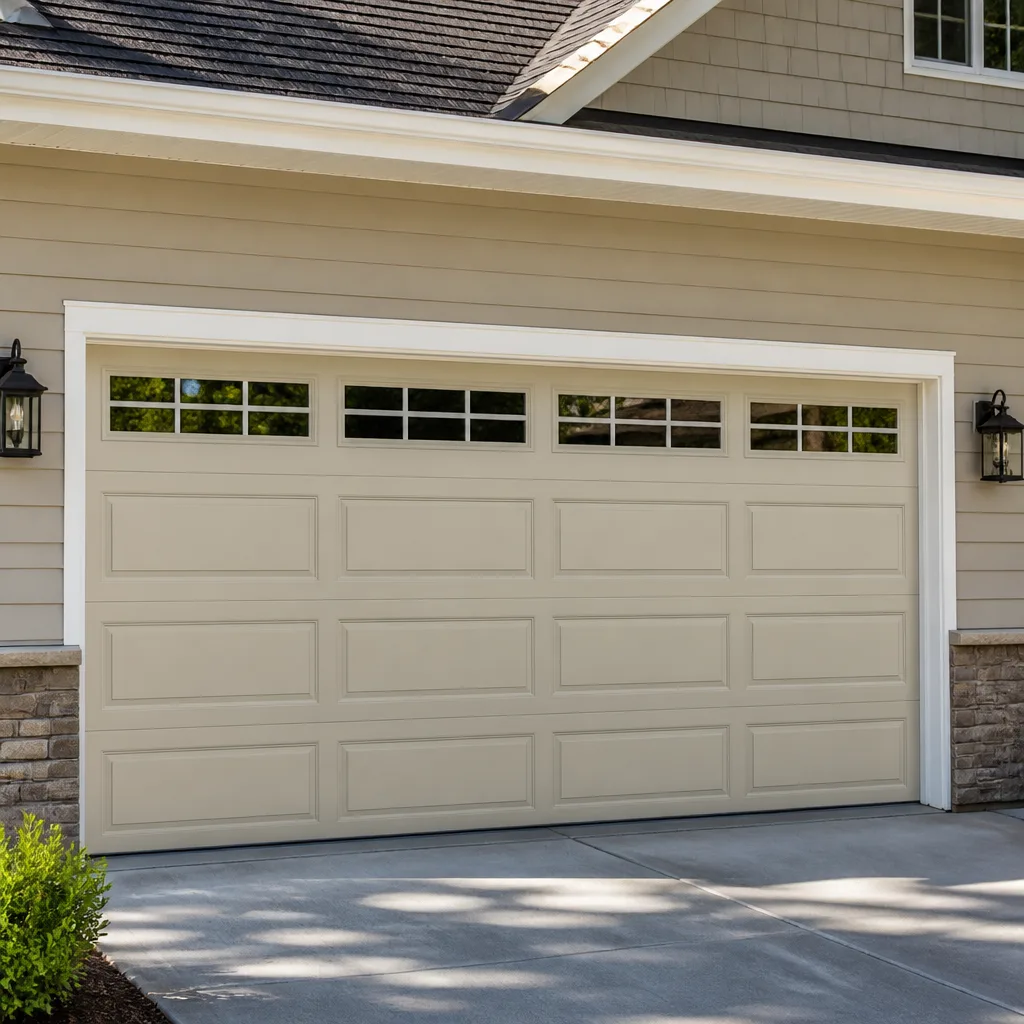 Raised-panel steel
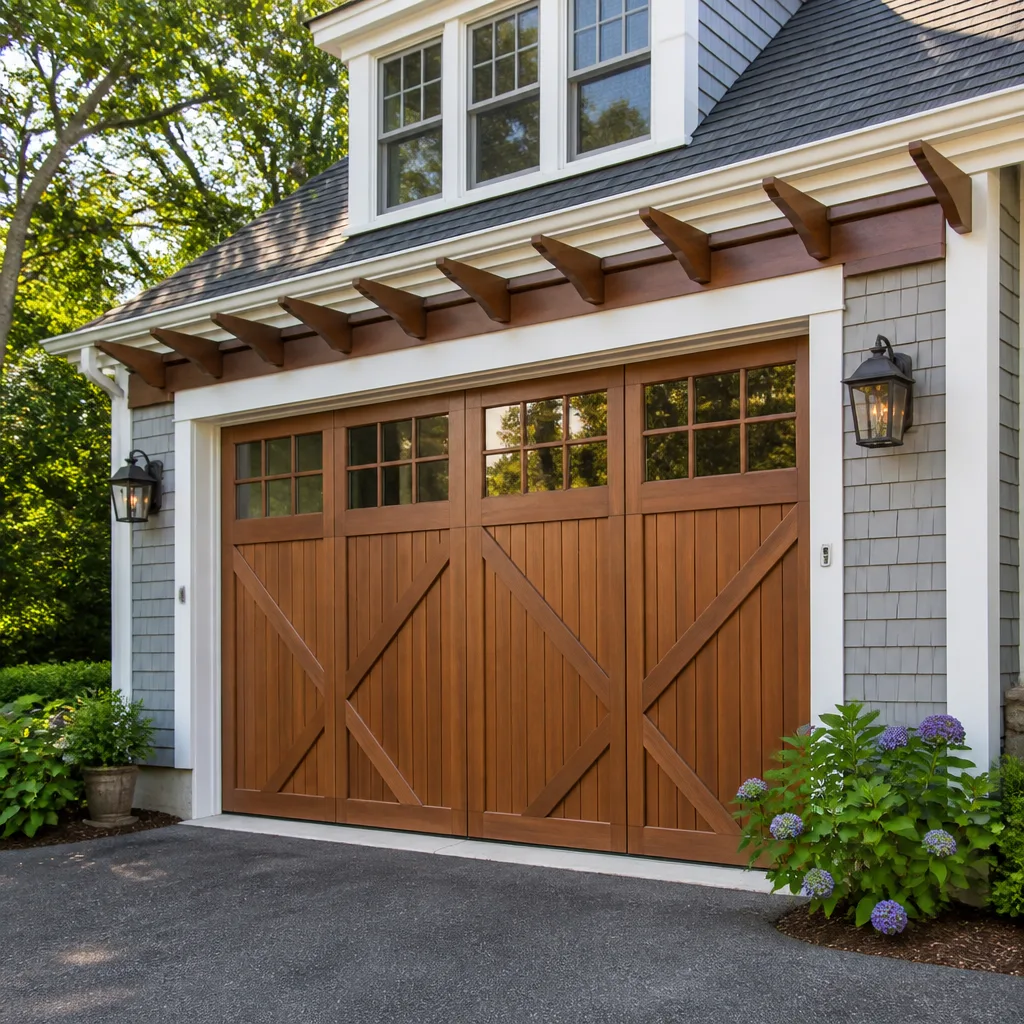 Carriage house
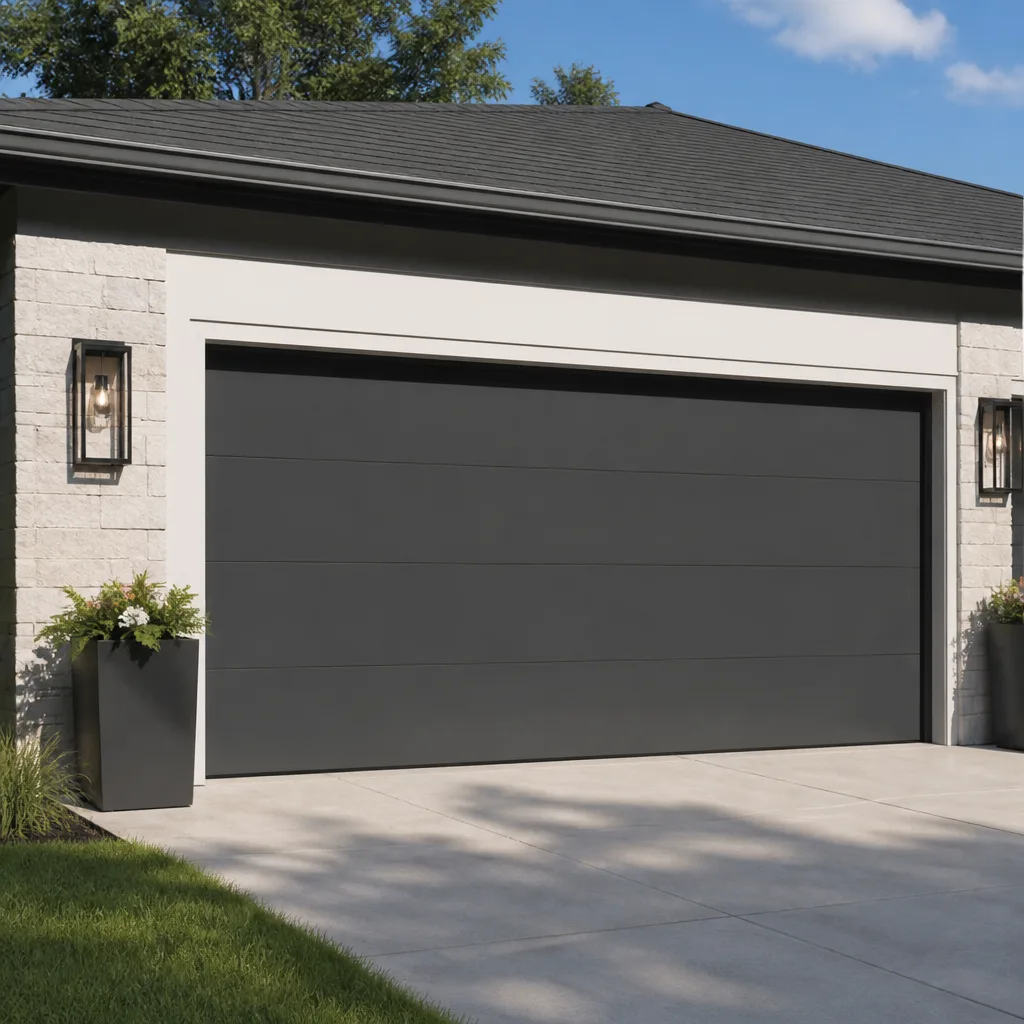 Modern flush
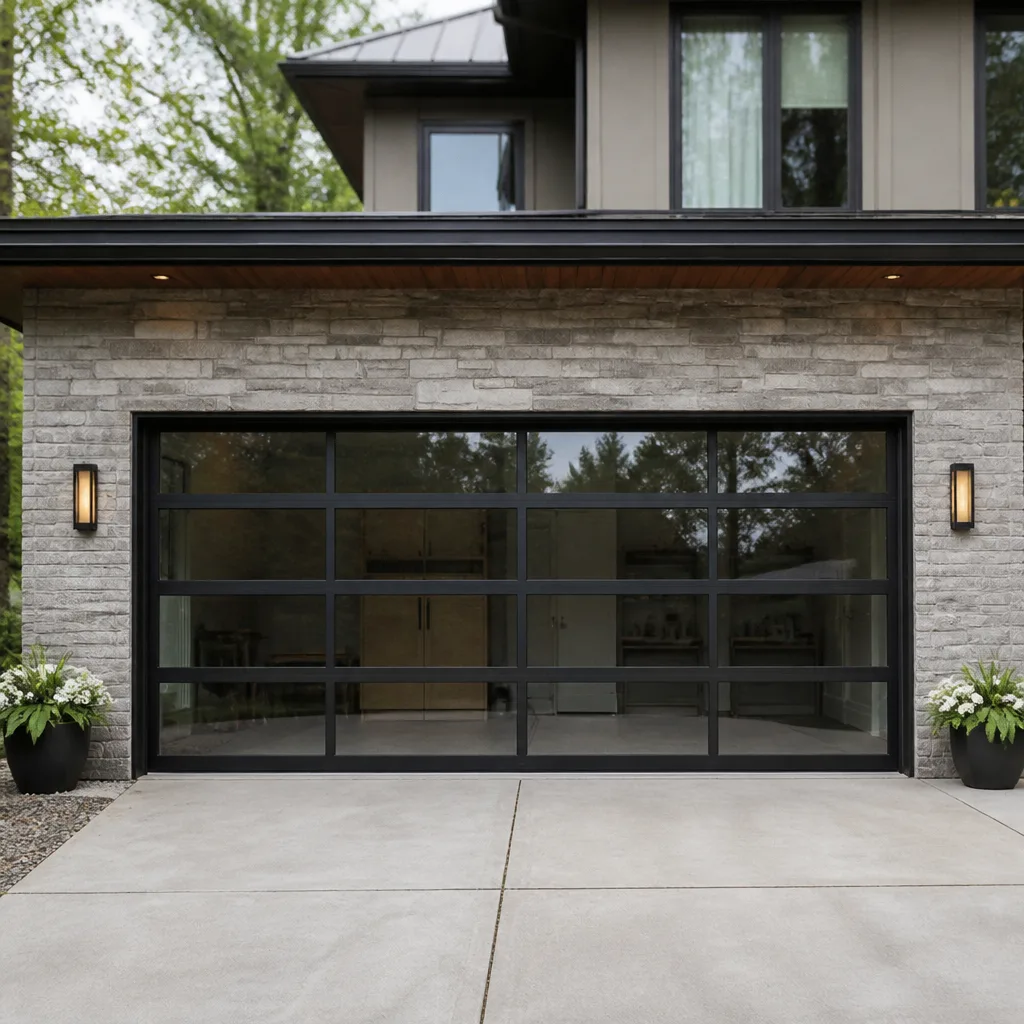 Full-view glass
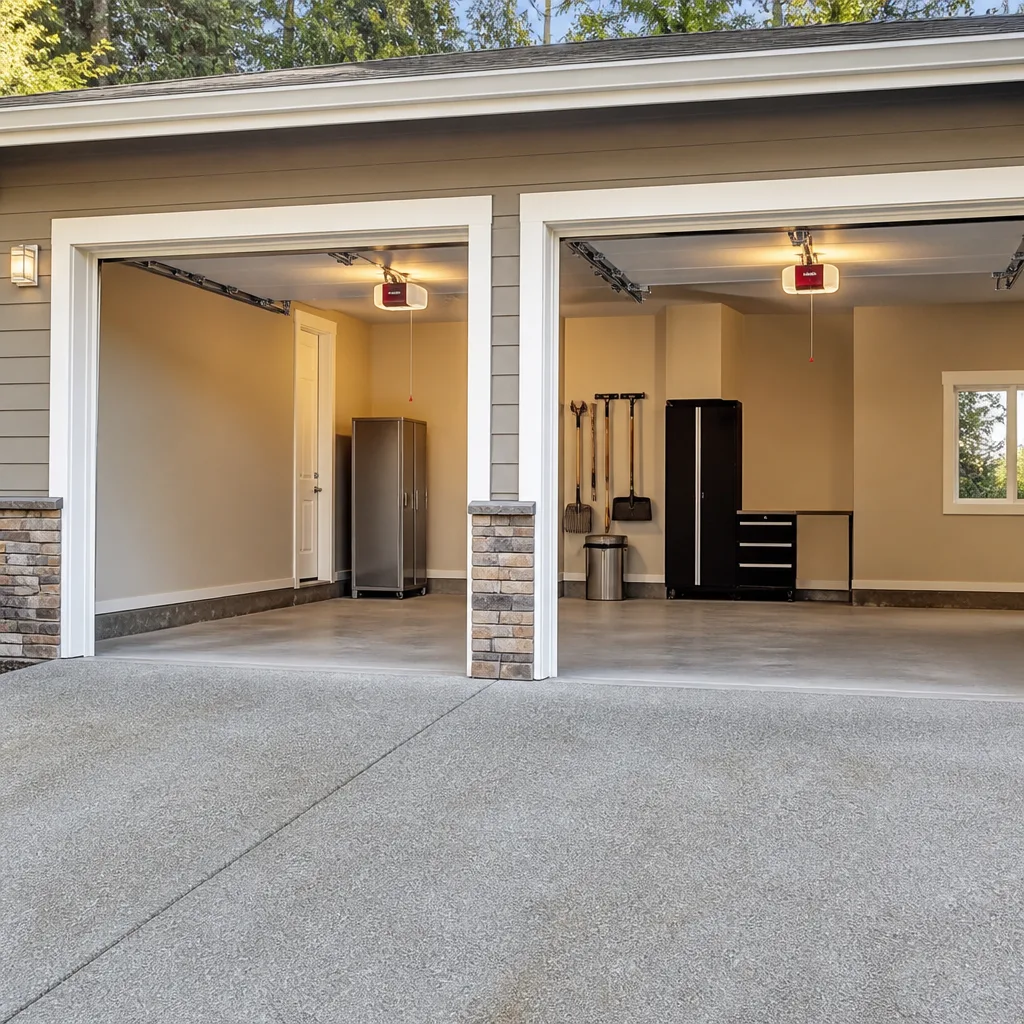 LiftMaster openers
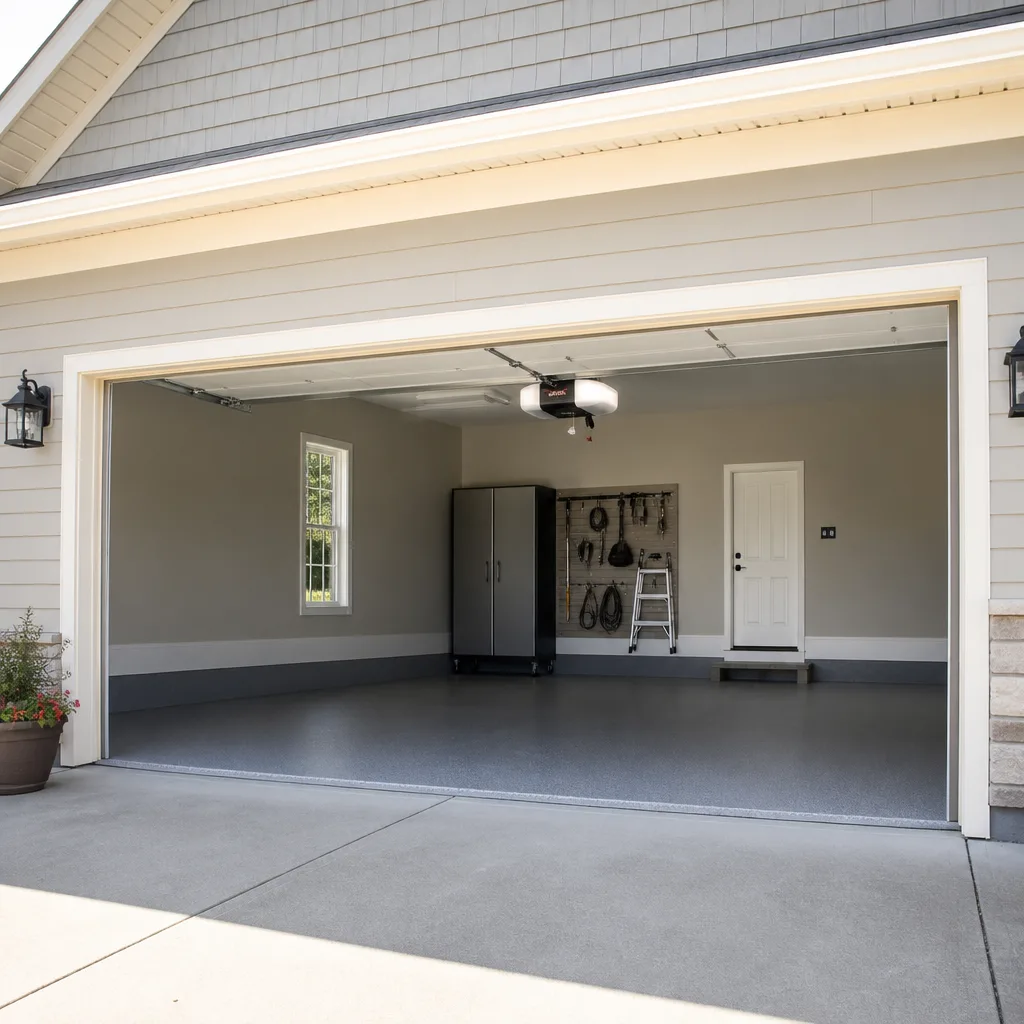 Chamberlain openers
Full 25-point door and opener safety check with every visit - springs, cables, rollers, tracks, and your LiftMaster or Chamberlain opener included
You get a price before we start. It does not change when the truck arrives.
Get your free estimateGarage Door Warning Signs: A Castro Valley Homeowner’s Reference Guide
Most garage door failures don’t happen suddenly. They announce themselves weeks or even months in advance through symptoms that are easy to misread or dismiss. A garage door that ‘just seems slower’ is one of the most commonly ignored warning signs in Castro Valley homes, and it’s also one of the most diagnostic: it can indicate a dying opener capacitor, a spring losing tension, or rollers seizing in their tracks. Each of those requires a completely different fix, and treating the wrong one wastes time and money. This reference guide walks you through what to look for, what you’re hearing, and what each symptom actually means for the components in your garage.
Quick Answer
The most common warning signs of garage door trouble include slow or jerky movement, grinding or squealing noises, a door that reverses without hitting anything, visible gaps in torsion spring coils, and a door that hangs unevenly when partially open. In Castro Valley, where temperature swings between the bay fog and inland heat affect metal components differently throughout the year, these symptoms tend to show up seasonally. Most of them are repairable same-day if caught before a complete failure.
Styles & brands we work with
- Raised-panel steel
- Carriage house
- Modern flush
- Full-view glass
- LiftMaster openers
- Chamberlain openers
Table of Contents
- Noise as a Diagnostic Tool: What Your Garage Door Is Telling You
- Movement Symptoms: Speed, Jerking, and Uneven Travel
- Torsion Spring Warning Signs: What to Look For Without Touching Anything
- When the Door Reverses for No Reason: Sensor vs. Force Setting vs. Motor Board
- Lubrication vs. Mechanical Failure: How to Tell the Difference
- The 5-Minute Visual Inspection Every Castro Valley Homeowner Should Know
- How Castro Valley’s Climate Affects Your Garage Door
- Common Mistakes to Avoid
- When to Call a Professional
- Frequently Asked Questions
Noise as a Diagnostic Tool: What Your Garage Door Is Telling You
Sound is the most underused diagnostic information a garage door gives you. Every noise your door makes corresponds to a specific type of wear, and learning to read those sounds tells you whether you’re dealing with a five-minute adjustment or a component nearing the end of its service life. In our experience working on doors throughout Castro Valley, from the hillside homes near Lake Chabot to the flatlands off Castro Valley Boulevard, we hear the same handful of noises week after week, and they almost always point to the same underlying issues.
Here’s a symptom-to-cause reference table based on what we encounter most often:
- High-pitched squealing or squeaking: Rollers wearing against metal hinges or a track that’s dry. Nylon rollers with worn bearings can also produce this sound. If lubrication quiets it temporarily, the roller bearings are likely shot and lubrication is only buying you a few weeks. The fix is roller replacement, not more spray.
- Grinding or metallic scraping: The door is dragging against something it shouldn’t be. This usually means the track is misaligned, a hinge has come loose, or the door itself has shifted on its mounts. Left alone, grinding wears grooves into the track and eventually causes the door to bind completely.
- Rumbling or vibrating: The opener’s drive system is straining. On chain-drive LiftMaster and Chamberlain openers, this often means the chain has stretched and needs tensioning. On belt-drive units, a rumbling motor can indicate a failing capacitor or worn internal gears.
- Popping or snapping sounds during operation: Section joints binding and releasing. This happens when hinges are dry or the door sections are misaligned. It’s a sign the door is fighting itself, which puts extra load on everything else in the system.
- A single loud bang followed by the door refusing to move: This is almost always a torsion spring failure. The spring snaps under tension, and the door becomes too heavy for the opener to lift safely. If you hear this, do not attempt to open the door with the opener. The Garage Door Repair in Castro Valley team fields calls like this regularly, and the first thing we tell homeowners is to leave the door in place and call us.
- Rhythmic thumping as the door moves: A roller has a flat spot or a hinge is loose. The door is literally bouncing over a defect on every cycle. This accelerates wear on the track and stresses the opener.
What makes noise tricky is that two different components can produce very similar sounds. A grinding noise from a misaligned track and a grinding noise from a failing opener gear sound nearly identical to an untrained ear. That’s where diagnosis matters more than guesswork. We always recommend homeowners note when the noise happens (during travel, at the top of the cycle, at the bottom), whether it’s constant or intermittent, and whether it’s louder when the door is cold. Those details narrow down the cause quickly.
Movement Symptoms: Speed, Jerking, and Uneven Travel
A garage door doesn’t just make noise when something is wrong. It moves differently. These movement changes are sometimes subtler than an audible problem, but they’re often more serious. When a door starts moving differently, it means the balance of the system has shifted, and that imbalance puts every component under stress.
Watch for these movement warning signs:
- Slower travel in one direction only: If the door goes up fine but creeps down, or vice versa, the problem is usually with the opener’s force settings or a spring that’s lost tension on one side. A door that’s slow in both directions points to the opener motor itself, often a capacitor wearing out on Genie or Chamberlain models.
- Jerky, stop-start motion: The door hesitates and catches as it moves. This typically means a roller is binding in the track, a hinge is failing, or the track itself has a bend or obstruction. On openers, jerky motion can also indicate a worn drive gear, especially on older Chamberlain and LiftMaster chain units.
- The door sags or hangs unevenly when partly open: If one side of the door is visibly lower than the other at the halfway point, you have a spring issue. Extension springs wear unevenly, and torsion springs lose tension on one side. This unevenness is a warning sign that a complete spring failure is coming, and it’s one of the clearest pre-failure indicators we see in Castro Valley garages.
- The door closes too fast or slams at the bottom: The spring system is no longer providing proper counterbalance. The door’s full weight is doing more of the work, which means the springs are weakening. A door that slams down is also a safety hazard, especially for kids or pets.
- The door drifts down after stopping: You close the door partway, release the opener, and the door continues to sink. This is a textbook sign of spring fatigue. The springs can’t hold the door’s weight anymore, and the opener’s brake (if it has one) is working harder than it should.
In the hillside neighborhoods of Castro Valley, where many homes are built into slopes, garage floors sometimes have a slight grade. Homeowners in those homes often attribute slow or drifting doors to the slope, and we’ve seen cases where that’s partly true. But a sloped floor doesn’t cause a door to hang unevenly or drift after stopping. Those are spring and balance issues, full stop. If you notice any of these movement changes, have the door inspected before the spring gives out entirely. A full spring replacement is more expensive than a tension adjustment, and a snapped spring can damage the door panels if it lets the door drop.
Torsion Spring Warning Signs: What to Look For Without Touching Anything
Torsion springs are the most dangerous component on any residential garage door. They’re under hundreds of pounds of tension, and when they fail, they release that energy instantly. The good news is that torsion spring failure almost never happens without visible warning. You can spot the signs without ever touching the hardware, and we recommend you never touch torsion spring hardware yourself.
Here’s what to look for:
- The gap in the coil: A healthy torsion spring is one continuous coil with no visible breaks. As the spring nears failure, a small gap starts to open in the coil, usually near the center of the spring or at the ends. This gap is the single most reliable pre-failure indicator. If you see daylight through a coil gap that wasn’t there before, the spring is in its final stage of fatigue. Do not attempt to close the gap or adjust the spring yourself. A torsion spring under tension can cause serious injury if mishandled. Call a trained professional who works with these components daily.
- Rust and corrosion on the spring surface: Castro Valley’s marine-influenced air, especially in the western parts of town toward the bay, accelerates rust on exposed metal. Surface rust isn’t always fatal, but pitting and flaking are. Once the metal starts to flake, the spring’s structural integrity is compromised and failure is a matter of time.
- The spring appears stretched or deformed: Torsion springs should look uniform. If one section appears wider than another, or the spring looks like it’s separating, the metal has permanently deformed.
- One side of the door sits lower at rest: When a torsion spring loses tension on one side, the door reflects that imbalance. If the door looks crooked when fully closed or when partially open, the spring is telling you something.
- You can hear the spring creaking or ticking when the door moves: Ticking is often the sound of coils binding and releasing as the spring rotates. It’s a warning that the spring’s internal structure is starting to fail.
We tell every homeowner we work with in Castro Valley the same thing: look, don’t touch. Visual inspection of a torsion spring from a safe distance is fine. Attempting to adjust, loosen, or remove a torsion spring is how people get hurt. The spring’s tension is what carries the door’s weight, and releasing that tension improperly is genuinely dangerous. If you see any of the signs above, call for service. The spring will need to be replaced, and it’s a job that requires specialized winding bars and experience with the specific spring size and wire gauge on your door.
Most residential doors in Castro Valley use either a single center-mounted torsion spring or a pair of springs. Doors with two springs offer a design advantage: if one spring fails, the other provides enough counterbalance to keep the door from free-falling. Doors with a single spring have no such backup. If your door has one spring and you see the coil gap, treat it as urgent.
When the Door Reverses for No Reason: Sensor vs. Force Setting vs. Motor Board
A garage door that reverses without hitting anything is one of the most common complaints homeowners bring to us, and it’s also one of the most misdiagnosed. The automatic reversal is a safety feature, required by federal law since 1993, and it means the door thinks it has encountered an obstruction. But what triggers that false obstruction reading can be one of three very different problems.
Here’s how to tell them apart:
- Photo-eye sensor misalignment: The two sensors sit near the floor on either side of the door opening, usually about six inches up. Each has a small light. If the lights are off, blinking, or one is on and one is off, the sensors are misaligned or obstructed. This is the most common cause of unexplained reversals, and it’s usually the simplest fix. Check for dirt on the lens, spider webs (a real thing in Castro Valley garages), or a sensor that’s been bumped out of position by a car bumper or a garbage bin. The sensors must face each other perfectly to complete their beam.
- Force setting too sensitive: Every opener has an adjustable force setting that tells the motor how much resistance is too much. If the setting is too low, the opener interprets normal door weight as an obstruction and reverses. This happens more often in winter, when cold temperatures make the door’s metal and the track contract slightly, increasing rolling resistance. A door that reverses only in cold weather usually has a marginal force setting. Adjusting the force setting is a technical fix that should be done carefully, as setting it too high disables the safety reversal.
- Failing motor board or logic board: If the sensors check out and the force setting is within spec, the problem may be in the opener’s control board. This is more common on older Genie and Chamberlain openers, especially those that have been through power surges. The Alameda County foothills see their share of electrical storms and grid fluctuations, and a surge can damage the board’s sensor input circuit without killing the opener entirely. This presents as intermittent reversals that seem random, sometimes working fine for weeks and then misbehaving.
There’s also a fourth cause we see less often but still regularly enough to mention: a failing capacitor in the opener motor. When the capacitor weakens, the motor can’t deliver consistent torque, and the opener’s control board interprets the fluctuating power draw as an obstruction. A capacitor is an inexpensive part, but diagnosing it requires knowing how to isolate it from the other potential causes. If you’re dealing with an unexplained reversal on a Chamberlain belt-drive or a Genie screw-drive unit and the sensors look fine, capacitor health is worth checking. Our Garage Door Opener Repair in Castro Valley service handles these diagnostics daily.
Lubrication vs. Mechanical Failure: How to Tell the Difference
One of the most common pieces of DIY advice homeowners hear is “just lubricate it.” And sometimes that’s right. But lubrication is also the most common way people mask a mechanical problem until it becomes a bigger, more expensive one. Knowing the difference saves you money and prevents a false sense of security.
Here’s the rule: lubrication resolves friction-based noise. It does not resolve wear-based noise.
If your door squeaks and the squeak goes away completely for weeks after lubricating the hinges and rollers, you had a legitimate friction issue. Dry metal on metal, a hinge pin that needed oil, a track that was causing roller resistance. That’s a maintenance fix, and you did it right.
But if the noise returns within days, or if the noise changes character after lubrication, you have a mechanical problem. Here’s what that looks like:
- A squeal that returns within a week of lubricating: The roller bearing is shot. The bearing is sealed, and no amount of external lubricant penetrates it. The roller needs replacement, not more spray.
- A grinding noise that gets quieter but doesn’t disappear: The track may be misaligned enough that the roller is shaving metal off the inside of the track. Lubrication reduces the grinding sound temporarily, but the roller and track are continuing to damage each other.
- A clicking or ticking that doesn’t change with lubrication: This is usually a hinge that’s starting to fail or a spring issue. Lubricant won’t address structural metal fatigue.
- A door that’s still slow or jerky after lubricating: Lubrication addresses friction, not weight. If the door is still sluggish, the spring tension is wrong or the opener is struggling.
Castro Valley’s dry summers mean garage door hardware dries out faster than coastal towns, and lubrication is genuinely useful preventative maintenance here. We recommend homeowners lubricate hinges, rollers, and the spring surface with a silicone or lithium spray about twice a year. But lubrication is maintenance, not repair. If you’ve lubricated and the problem persists, stop lubricating and start diagnosing. Continuing to run a door with a mechanical defect accelerates the damage and increases the repair bill.
The 5-Minute Visual Inspection Every Castro Valley Homeowner Should Know
You don’t need to be a technician to catch most garage door problems early. A short visual inspection, done every few months, covers the failure-prone points on any residential door system. Here’s the inspection we teach to homeowners throughout Castro Valley:
- Look at the springs (15 seconds): With the door closed, stand inside the garage and look up at the spring assembly. Check for the coil gap, rust flaking, or any visible deformation. Don’t touch anything. Just look.
- Run your eyes along the tracks (30 seconds): Look at the vertical and horizontal track sections. Check for bends, dents, loose mounting bolts, or gaps where track sections meet. A track that’s pulled away from the wall or ceiling is a problem.
- Check the rollers (30 seconds): Look at each roller where it meets the track. Rollers should sit centered in the track. A roller that’s sitting at an angle, wobbling, or that has visible flat spots on the wheel needs attention. Nylon rollers with visible cracks in the plastic are also failing.
- Examine the cables (30 seconds): The lift cables run along the sides of the door. Check for fraying, rust, or any sign that the cable is unwinding from the drum at the top. A frayed cable is a pre-failure warning and should be replaced immediately. Cables are under tension and should not be handled directly.
- Test the balance (1 minute): Pull the emergency release cord (with the door closed) and manually lift the door to about waist height. Let go. A properly balanced door stays in place or drifts very slowly. A door that drops quickly from this position has a spring problem. A door that continues rising has too much spring tension. Do this test gently and don’t force the door if it resists.
- Watch the sensors (30 seconds): Check both photo-eye sensors near the floor. Both should have a solid light (the color varies by brand, but it should be steady, not blinking). Clean any dust or spider webs off the lenses with a dry cloth.
- Close the door and watch it settle (30 seconds): Close the door fully and look at the gap between the door and the ground along its full width. An even gap means the door is sitting square. An uneven gap means the door or the tracks have shifted.
This entire inspection takes less than five minutes and catches the vast majority of developing problems. If something looks off, note what you saw and when, and call for professional assessment. The goal isn’t to fix anything yourself. It’s to know when something needs fixing.
How Castro Valley’s Climate Affects Your Garage Door
Castro Valley sits in a transition zone between bay climate and inland climate, and that position shows up in the way garage door components age. The western side of town, toward San Lorenzo and Hayward, gets moisture off the bay in the form of morning fog and higher humidity. The eastern side, toward the hills and Palomares Canyon, runs hotter and drier. Most of Castro Valley gets a mix of both depending on the season.
That climate pattern affects garage door systems in specific ways:
- Fog and humidity accelerate rust on springs and cables. Homes in the lower-lying western neighborhoods see more corrosion on uncoated metal components. Galvanized springs and cables hold up better, but even they eventually show wear.
- Summer heat expands metal tracks and door panels. Thermal expansion can cause a door that fits perfectly in winter to bind slightly in July and August. That binding increases opener strain and wears rollers faster.
- Winter cold stiffens lubricant and increases rolling resistance. This is why doors so often act up on the coldest mornings. The opener’s force setting that worked all summer suddenly reads the extra resistance as an obstruction.
- The dry season brings dust. Dust from the hills gets into everything, including track channels and roller bearings. Dust acts as a mild abrasive and accelerates wear on nylon rollers and track surfaces.
For homeowners in Castro Valley, the practical takeaway is this: your garage door’s behavior will shift with the seasons, and small shifts are normal. But if the shift is pronounced, like a door that reverses every cold morning or binds every hot afternoon, the underlying issue is still a mechanical one. Climate may expose it, but it didn’t create it. A properly maintained door handles Castro Valley’s seasonal swings without drama.
Common Mistakes to Avoid
In the years we’ve been working on garage doors in Castro Valley, we’ve seen the same mistakes repeated often enough to name them. These are the specific errors that turn small problems into big bills:
- Lubricating a failing component and calling it fixed. As covered above, lubrication masks wear-based problems. If the noise returns, the component was never fixed. You’ve just delayed the repair while the damage continued.
- Adjusting the opener’s force setting until the door stops reversing. This disables the safety reversal system. The reversal is there to stop the door from crushing a person, pet, or object. Cranking the force setting past spec is dangerous, and it’s also the wrong fix for a door that’s binding due to spring or track issues.
- Ignoring the door’s balance because the opener still lifts it. An opener can lift a door that’s seriously out of balance by working harder than it should. That extra work burns out the opener’s motor and gears prematurely. A door that drifts down when released from the halfway point is telling you the springs are on their way out, even if the opener is still strong enough to compensate.
- Replacing the opener when the problem is the door. This happens more than it should. A door with failing springs or binding tracks will kill a new opener just as fast as it killed the old one. If your opener fails, the door’s condition needs to be evaluated at the same time.
- Watching YouTube tutorials for torsion spring replacement. Torsion springs injure people every year. The tension involved is not something to learn from a video. This is the one repair where we’re emphatic: don’t attempt it. The cost of professional spring replacement is nothing compared to the cost of a hospital visit.
- Letting a small problem ride because “it still works.” A door that makes a new noise, moves differently, or shows a visible defect is telling you something. The longer it runs, the more collateral damage it causes. A $30 roller replacement becomes a $300 track repair when the roller seizes and the door drags the track out of alignment.
- Using the wrong lubricant. WD-40 is not a garage door lubricant. It’s a solvent and water displacer, and it strips existing lubricant from hinges and rollers. Use a silicone-based or lithium-based spray designed for garage door hardware. Applying the wrong product accelerates wear on everything it touches.
When to Call a Professional
Some problems are worth watching for a week. Others aren’t. Call a professional immediately if you see any of the following: a visible gap in the torsion spring coil, a frayed lift cable, a door that hangs visibly uneven at rest, a door that slams down, or a door that makes a loud bang and then stops working. Call sooner rather than later if you hear grinding that lubrication doesn’t resolve, if the door reverses repeatedly with sensors that appear aligned, or if the opener motor runs but the door doesn’t move.
Compass Garage Door Repair offers free estimates in Castro Valley, and we work on the full range of residential garage systems, including LiftMaster, Chamberlain, Genie, Clopay, Amarr, Wayne Dalton, Craftsman, and Raynor equipment. Whether it’s the door, the opener, or both, one call gets you a diagnosis from a specialist who’s fluent in your specific brand’s failure modes. If you’re still deciding on a brand, our Choosing the Right Garage Door Brand: A Buyer’s Guide for Castro Valley can help. Call (855) 356-4948 to schedule.
Frequently Asked Questions
Garage door repair costs in Castro Valley typically range from $125 to $450 depending on the component and the extent of the damage. Minor repairs like roller replacement or sensor realignment sit at the lower end. Spring replacement, track replacement, or opener motor work lands in the $250 to $450 range. The price is always quoted and agreed before any work starts, so you’re not facing surprises on the invoice. Call (855) 356-4948 for an exact quote, and know that estimates are free.
Yes, in most cases we can. The Castro Valley service area is compact enough that same-day dispatch is realistic for most repair calls, and we prioritize emergencies like snapped springs, doors that won’t close, or doors stuck in the open position. Call (855) 356-4948 as early in the day as possible, and we’ll get you on the schedule. We carry parts for the major brands on our trucks, which means many repairs are completed on the first visit.
A torsion spring mounts horizontally above the door opening and twists to store energy. An extension spring mounts along the horizontal track and stretches to store energy. Torsion springs are more common on newer doors and are generally safer because they’re contained on a shaft. Extension springs are more common on older doors and use safety cables. Both are under extreme tension and neither should be adjusted or replaced by a homeowner.
A quality garage door opener like a Chamberlain belt-drive or a Genie screw-drive should last 10 to 15 years with proper maintenance. But the opener’s lifespan depends heavily on the condition of the door it’s lifting. An opener that fights a heavy, unbalanced door every cycle burns out years early. If your opener fails, have the door’s balance and spring condition checked at the same time, or you’ll likely be replacing the opener again sooner than you should.
Cold temperatures contract metal, stiffen lubricant, and increase rolling resistance throughout the system. That extra friction makes every marginal component louder. A door that’s quiet in the summer and noisy in the winter is often telling you that rollers, hinges, or the opener’s drive components are nearing the end of their usable life. The cold doesn’t create the wear. It exposes it.
A new garage door typically returns a meaningful portion of its cost in resale value, and it’s one of the more visible curb-appeal upgrades a Castro Valley homeowner can make. Beyond resale, a new door improves insulation, reduces noise, and eliminates the maintenance burden of an older door with aging components. If you’re weighing repair against replacement, a door that’s more than 15 years old with multiple failing components is usually a candidate for replacement over continued piecemeal repair. Our Garage Door Installation in Castro Valley team can walk you through the options.
See the difference
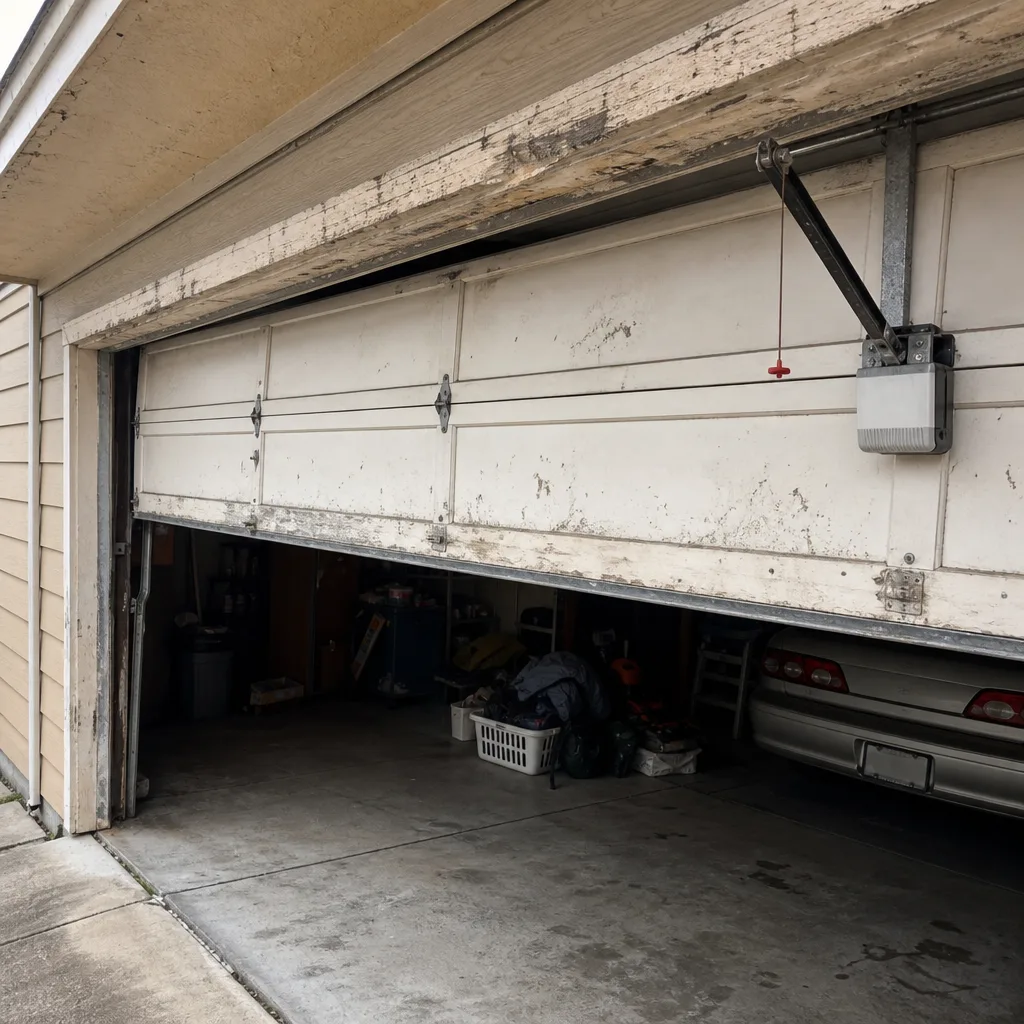 Before
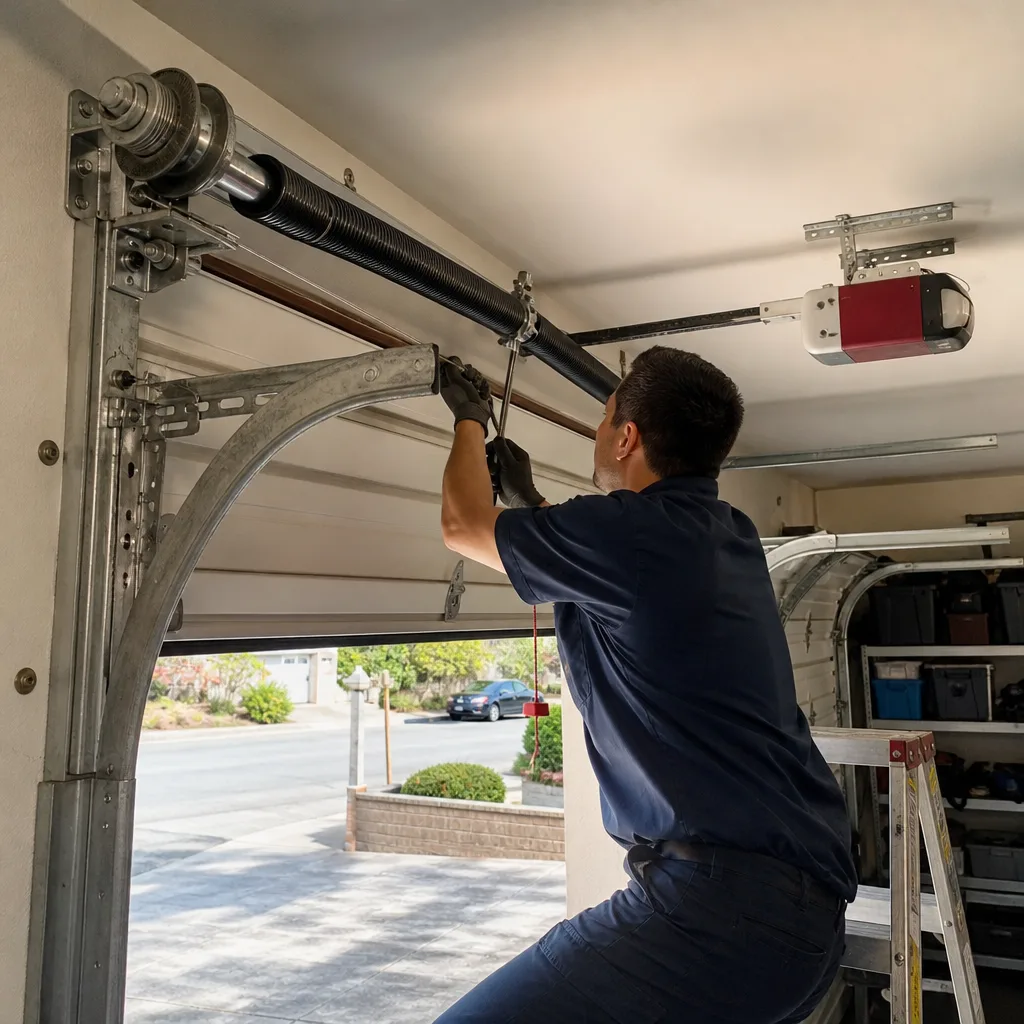 After
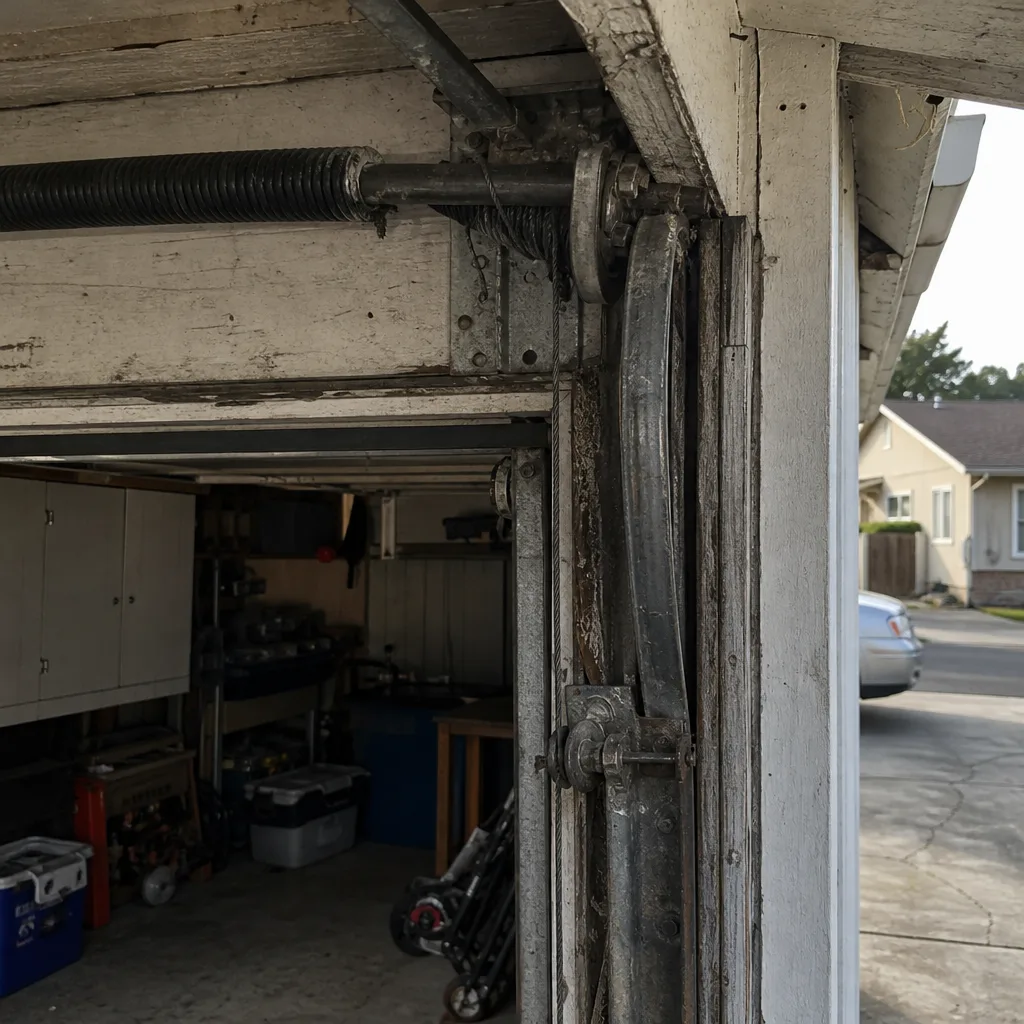 Before
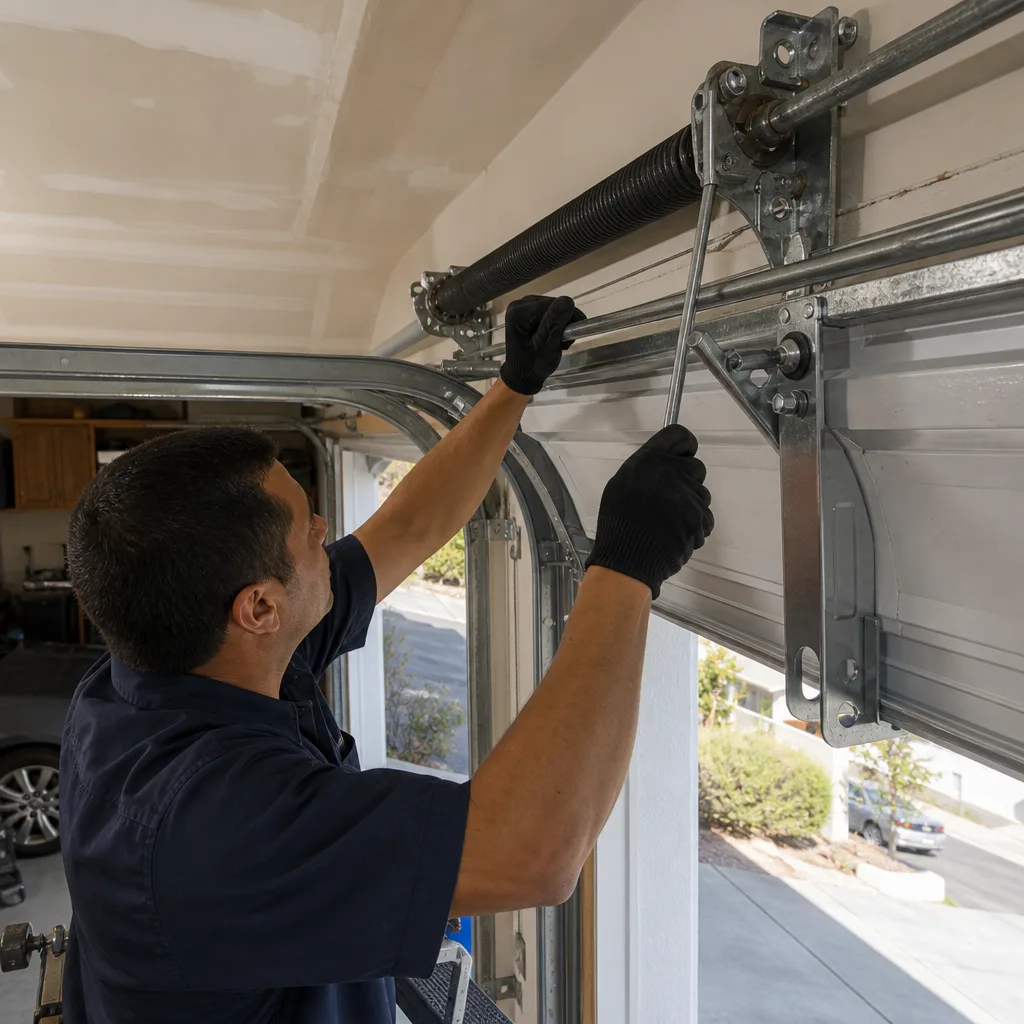 After
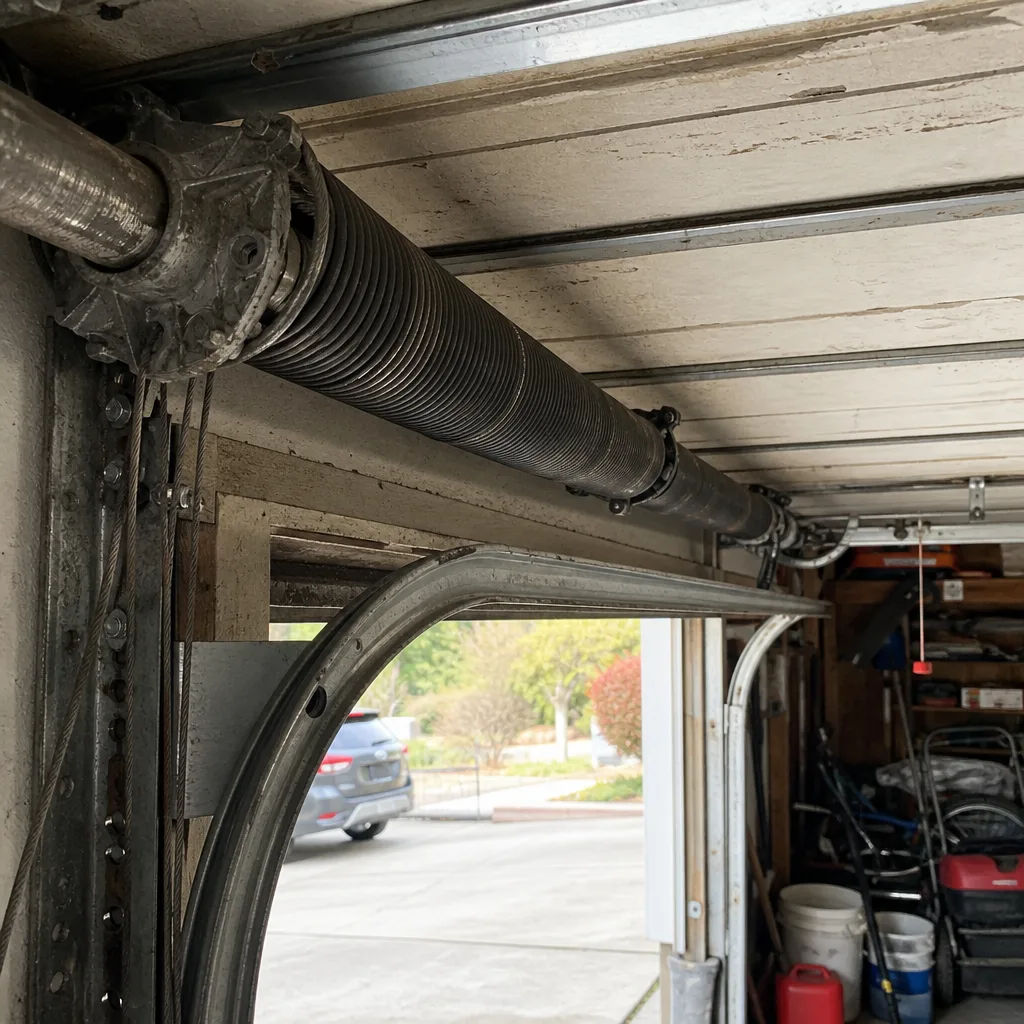 Before
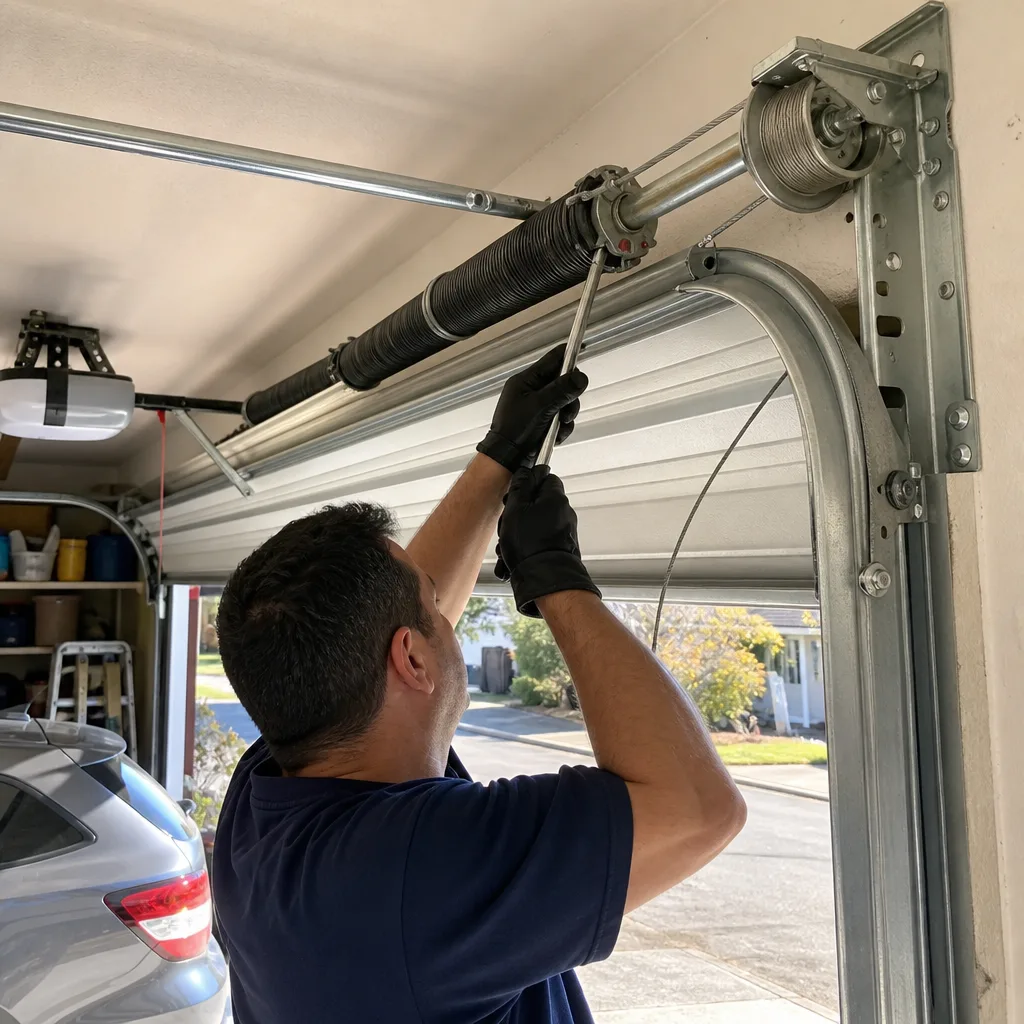 After
Common Mistakes to Avoid
Most of the expensive garage door repairs we handle in Castro Valley could have been smaller repairs if the warning signs had been caught earlier. The door that made a grinding noise for three months, then snapped a spring. The opener that worked harder and harder for a year, then burned out its motor. The roller that seized and dragged a perfectly good track out of alignment. These outcomes share a common thread: the warning sign was visible or audible for weeks, and the homeowner either didn’t recognize it or hoped it would resolve itself. It doesn’t resolve itself. It compounds.
The Bottom Line
Your garage door is a mechanical system with a finite number of wear points, and every one of them gives you warning before it fails. The springs show a gap before they snap. The rollers squeal before they seize. The opener strains before it burns out. The track rubs before it bends. Learning to recognize these signals, and acting on them promptly, is the difference between a minor repair and a major replacement. For Castro Valley homeowners, the variable is the climate, but the principles hold everywhere: pay attention to noise, movement, and visible wear. When something changes, don’t wait. Diagnose before you quote, fix it right, and keep the door moving. For more guides & resources on maintaining your garage door, explore our blog.
Written by the team at Compass Garage Door Repair, serving Castro Valley since 2018. We’re the brand-agnostic specialist for residential garage doors and openers, trained and experienced on LiftMaster, Chamberlain, Genie, Clopay, Amarr, Wayne Dalton, Craftsman, and Raynor systems. Learn more on our Compass Garage Door Repair home page.