
Last updated November 2, 2026
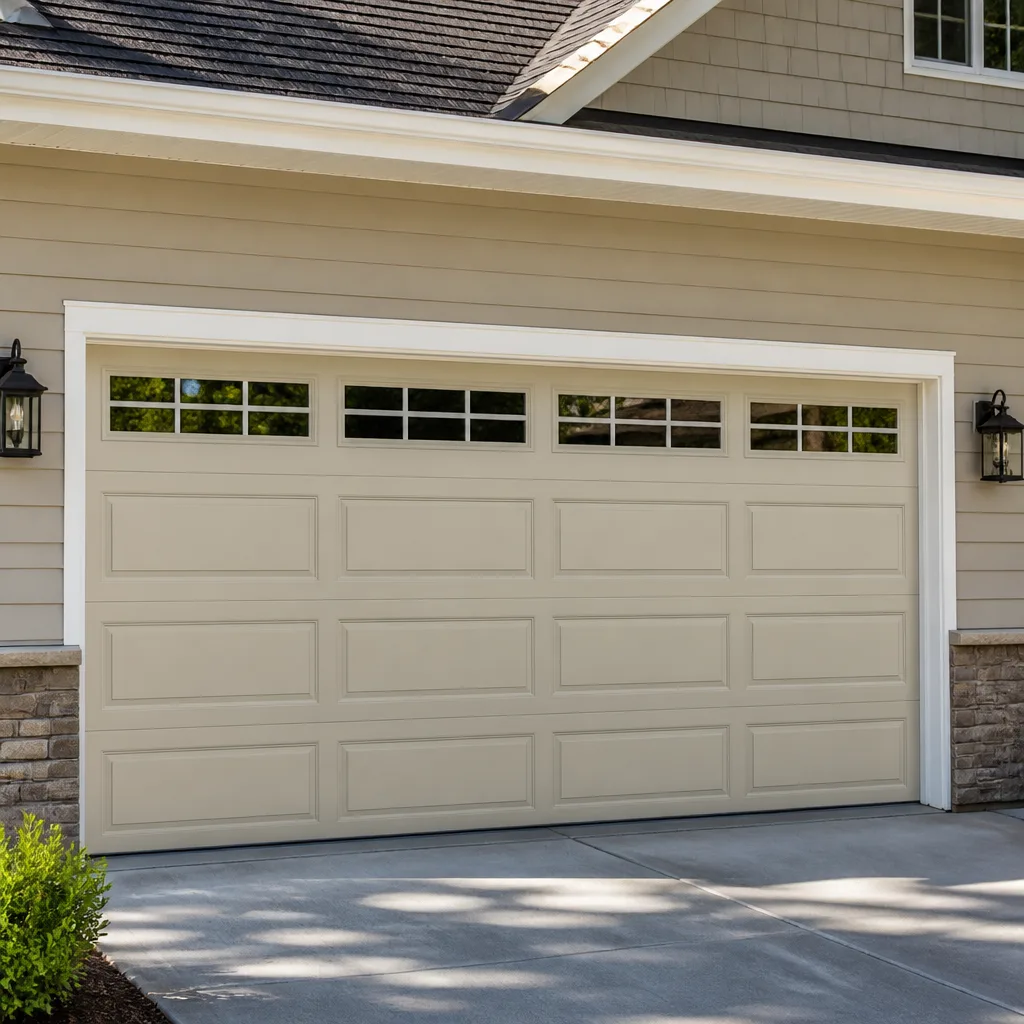 Raised-panel steel
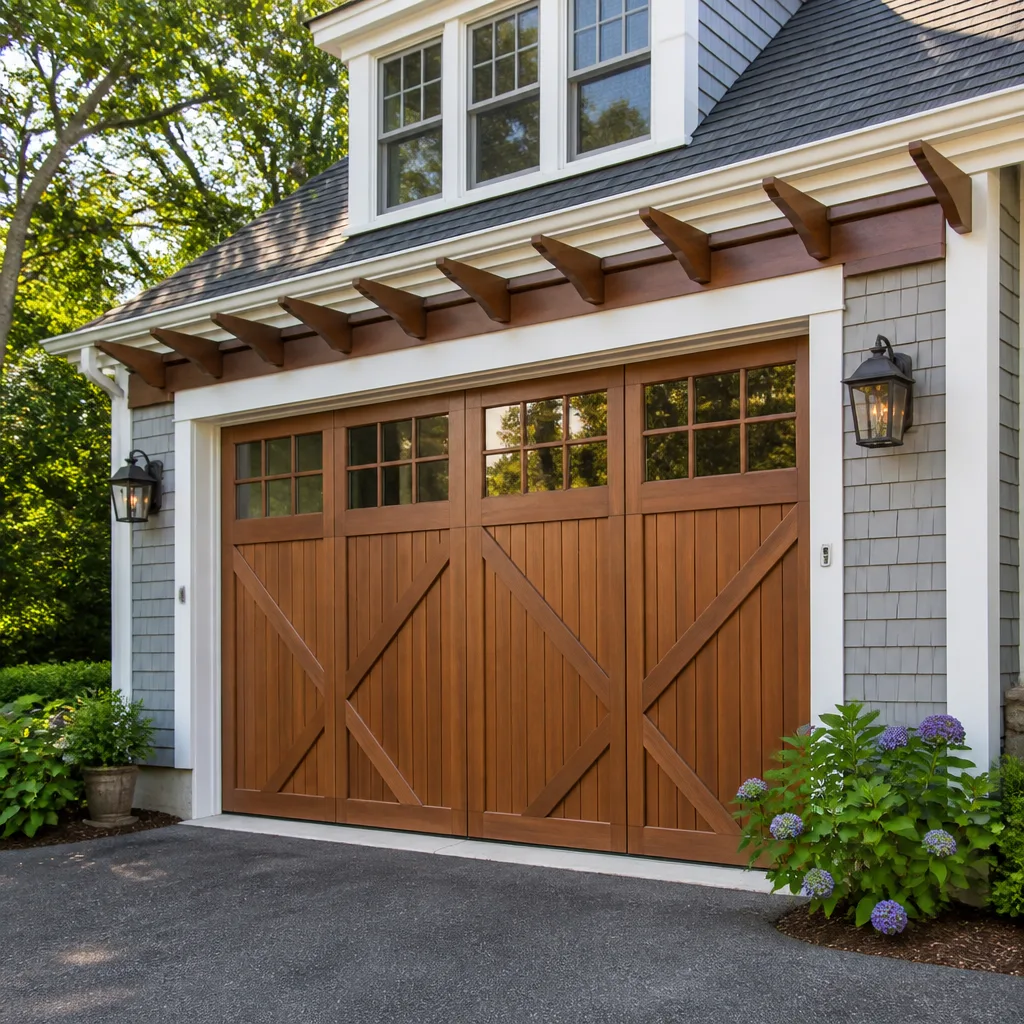 Carriage house
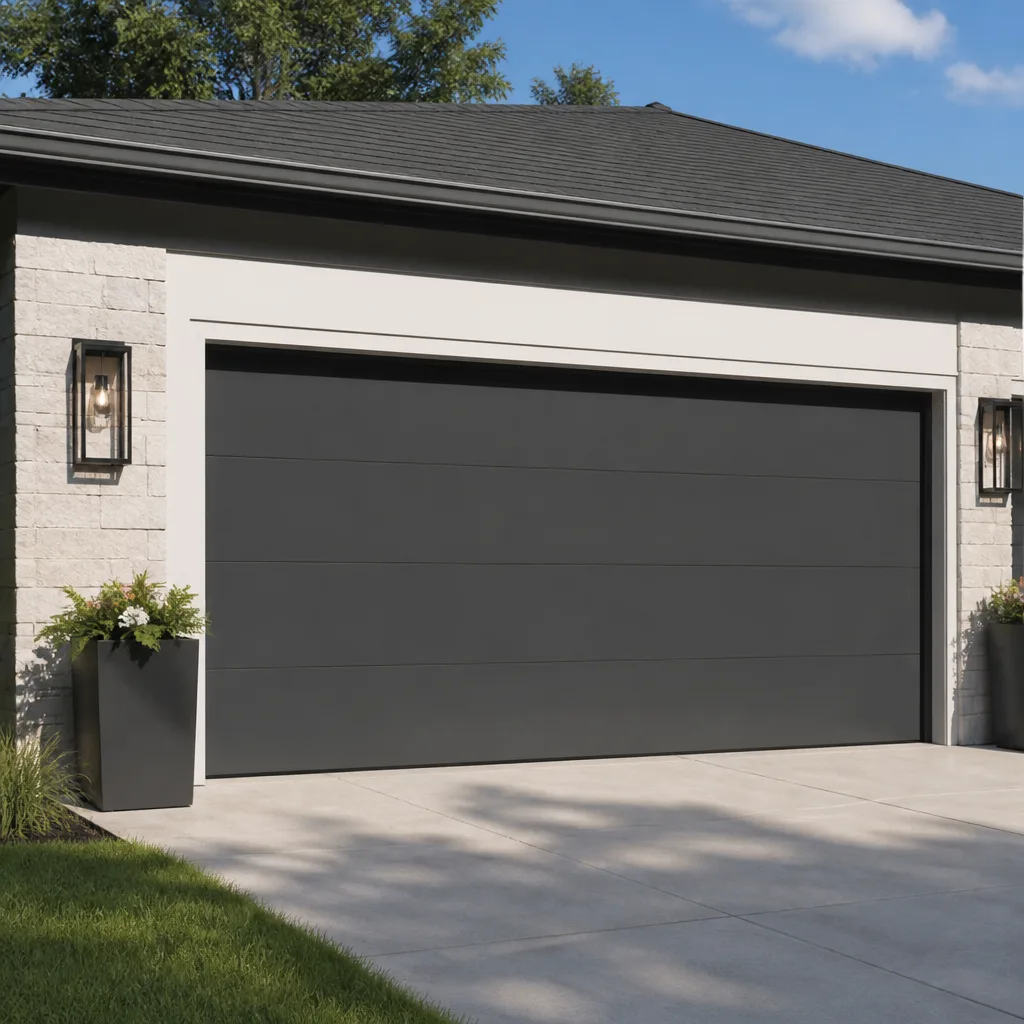 Modern flush
 Full-view glass
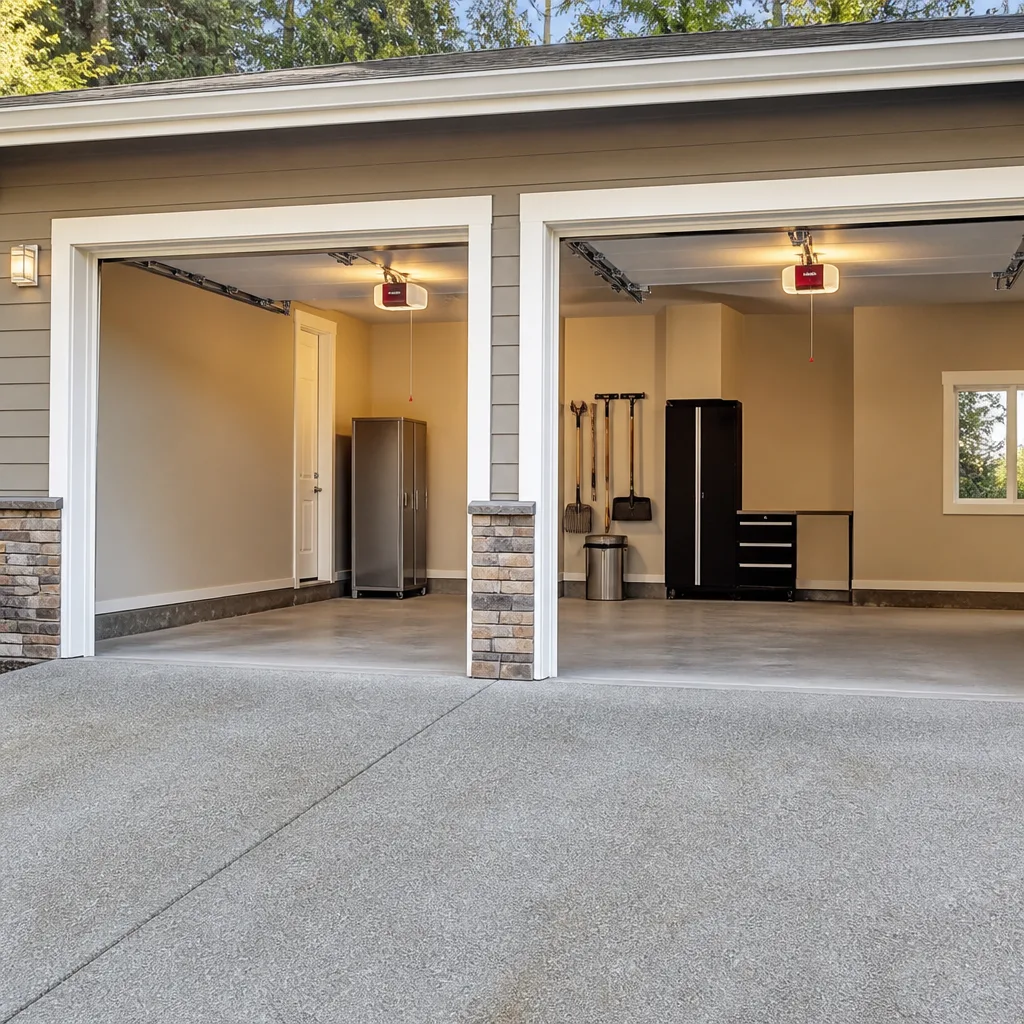 LiftMaster openers
 Chamberlain openers
Full 25-point door and opener safety check with every visit - springs, cables, rollers, tracks, and your LiftMaster or Chamberlain opener included
You get a price before we start. It does not change when the truck arrives.
Get your free estimateGarage Door Emergency Preparedness Guide for Castro Valley Homes
Here’s a number most Castro Valley homeowners don’t think about until it’s too late: a standard garage door weighs between 130 and 400 pounds. During the Loma Prieta earthquake in 1989, garages across the East Bay were among the first parts of homes to fail, twisting tracks and jamming doors shut. When that happens, or when a PSPS outage kills your opener, your garage stops being an entry point and becomes a locked vault holding your car, your tools, and sometimes your only exit route. This guide walks you through the specific emergencies Castro Valley is statistically most likely to face, and exactly how to prepare your door, your opener, and yourself before the ground shakes or the power drops; for ongoing maintenance tips, see our Garage Door Repair Maintenance Checklist for Castro Valley Homeowners.
Styles & brands we work with
- Raised-panel steel
- Carriage house
- Modern flush
- Full-view glass
- LiftMaster openers
- Chamberlain openers
Quick Answer
Garage door emergency preparedness for Castro Valley homes means three things: knowing how to manually release your opener when power fails, confirming your door has seismic bracing appropriate for this area’s earthquake risk, and having a plan to secure the door if it won’t close after an emergency. The manual release is a red cord hanging from the opener rail; pull it once and you can lift the door by hand. After any earthquake, inspect the tracks, cables, and brackets before operating the door, and if the power is out, switch to manual operation rather than waiting for the opener to reboot.
Table of Contents
- How to Manually Open Your Garage Door During a Power Outage
- Seismic Bracing for Castro Valley Garage Doors: What the Code Requires
- What to Inspect After an Earthquake Before You Touch the Door
- Battery Backup Openers: What Works During a PSPS Event
- How to Temporarily Secure a Door That Won’t Close
- The 15-Minute Garage Door Emergency Prep Checklist
- Common Mistakes to Avoid
- When to Call a Professional
- Frequently Asked Questions
- The Bottom Line
How to Manually Open Your Garage Door During a Power Outage
The red cord hanging from your opener rail is the single most important piece of emergency equipment in your garage, and most Castro Valley homeowners have never pulled it. Here’s the procedure for the two most common opener brands found in Castro Valley garages:
For Chamberlain and LiftMaster Openers (the majority of Castro Valley homes)
- Confirm the door is fully closed. If it’s open, the release can send it crashing down.
- Locate the red emergency release cord hanging from the opener rail. It’s usually about 2 feet above the top of the door.
- Pull the cord straight down and toward the garage door. You should hear a click and see the release mechanism disengage from the trolley.
- Lift the door manually using the handles. A properly balanced door should feel heavy but manageable, around 20-30 pounds of lifting force.
- To re-engage, pull the cord again toward the opener motor while lifting the door slightly until you hear the trolley reconnect. On newer Chamberlain models, the opener will re-engage automatically the next time it runs.
For Genie Openers
- Genie’s release cord is typically red with a plastic handle shaped to fit a hand grip.
- Pull straight down and toward the garage door. Some older Genie models require a firm tug.
- Lift the door with both hands. If it’s heavy or won’t move, stop and call a technician; the springs may need attention.
- To re-engage, press the wall control once (on newer models) or pull the cord toward the opener while lifting the door.
When the Cord Is Stuck
We’ve seen this more times than we can count in Castro Valley garages. If the red cord won’t budge, it usually means the trolley is under tension because the opener tried to run after the power came back briefly, or the door has shifted slightly out of alignment. Do not yank harder; that risks snapping the release mechanism. Instead, press the wall button once (even without power, some models release the trolley), then try the cord again with a smooth pull. If it still won’t release, the issue isn’t the power; it’s a mechanical bind. For step-by-step diagnostics, see our Garage Door Repair Troubleshooting: Common Problems and How to Fix Them; a state-licensed technician can also resolve it and show you the right amount of force for your specific opener model.
Practice this once a season. Pull the release during daylight, lift the door a couple of feet, lower it, and re-engage. The first time you do this shouldn’t be at midnight with the wind picking up. This is the core skill every household member should learn, and it takes less than 5 minutes to master.
Seismic Bracing for Castro Valley Garage Doors: What the Code Requires
Castro Valley sits roughly 5 miles from the Hayward Fault, and the California Residential Code has specific provisions designed to keep garage doors from becoming falling hazards during a seismic event. For the full regulatory picture, read Garage Door Permits, Codes & Inspections in CA: What You Need to Know; here’s what the code actually says, and what it means for your door assembly.
The Reality of Seismic Requirements
California building code (CBC Section R301.2.2) designates Castro Valley as Seismic Design Category D, which means residential garage doors must be positively connected to the surrounding wall framing to resist lateral movement. In practical terms, this translates to:
- Perforated steel angle brackets (commonly called seismic brackets) bolting the vertical track to the wall at maximum 24-inch intervals
- Track hardware (bolts, nuts, anchors) that meets specific shear capacity ratings per the door manufacturer’s engineering documents
- Galvanized or stainless hardware in any location with potential for moisture contact, which matters in Castro Valley’s wet winters
Most residential doors installed in Castro Valley after 2007 include seismic bracing from the factory. Doors older than that, or doors installed by handymen rather than a licensed garage door company, frequently don’t have the proper brackets. We regularly see older Castro Valley doors where the track is held by standard two-hole brackets that slide up and down, which means they were never fitted for seismic loading. If the bracket slots allow the track to move independently of the wall during a quake, the door can pull away from the track entirely.
How to Check if Your Door Has Seismic Brackets
- Open the garage door halfway and look at the vertical track on both sides of the opening.
- Count the brackets connecting the track to the wall framing. You should see one every 24 inches or less.
- Look at the bracket holes. Seismic brackets have round holes sized for specific bolts; standard brackets have elongated slots. If you see slotted holes, the bracket allows play.
- Check the top corner where the horizontal track meets the vertical. Seismic bracing often includes a diagonal strut or additional plate here.
- If you have a Clopay or Amarr door, the manufacturer’s tag on the left vertical track lists the seismic compliance details. Match it against your visual inspection.
Doors in Castro Valley that were built as part of tract housing in the 1960s through the 1980s often need retrofit bracing. A retrofit kit typically runs $120 – $200 installed through a local company, and it’s one of the more cost-effective home hardening projects you can do in this area. For comparison, a complete garage door installation in Castro Valley with seismic bracing from the start is now standard on every quote we write.
What to Inspect After an Earthquake Before You Touch the Door
In the first minutes after a quake, your instinct will be to open the garage door and get outside to assess damage. Resist that instinct until you’ve done a two-minute visual check. Here’s what to look for:
The 5-Point Post-Earthquake Inspection
- Check the door’s vertical alignment: Stand back and confirm the door is still parallel with the opening. If one side is sitting higher or lower by more than half an inch, the door has shifted.
- Look at the cables on both sides: Both lift cables should be taut and seated in their pulleys. A loose cable or one that’s spooled over itself means the spring tension was compromised.
- Examine the track on both sides for obvious bends, kinks, or areas where the track buckled toward the center of the opening.
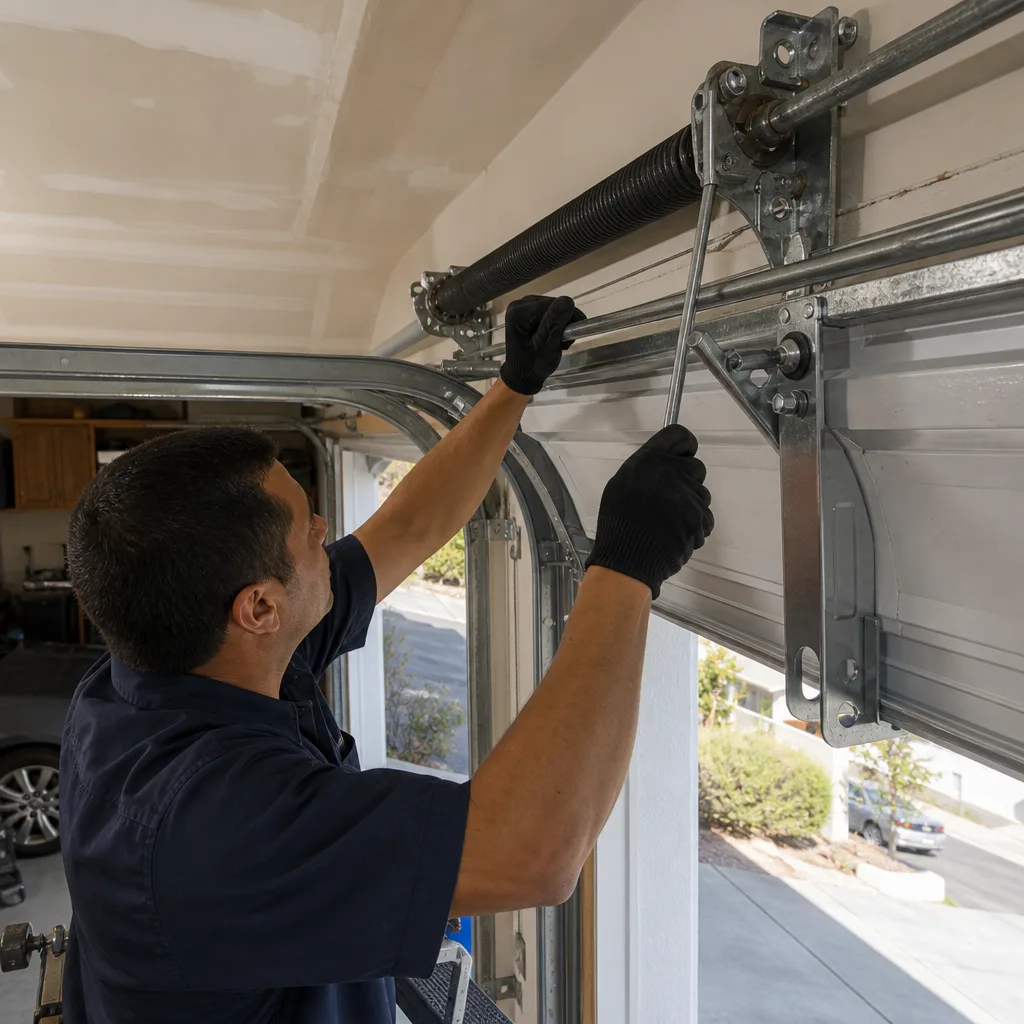
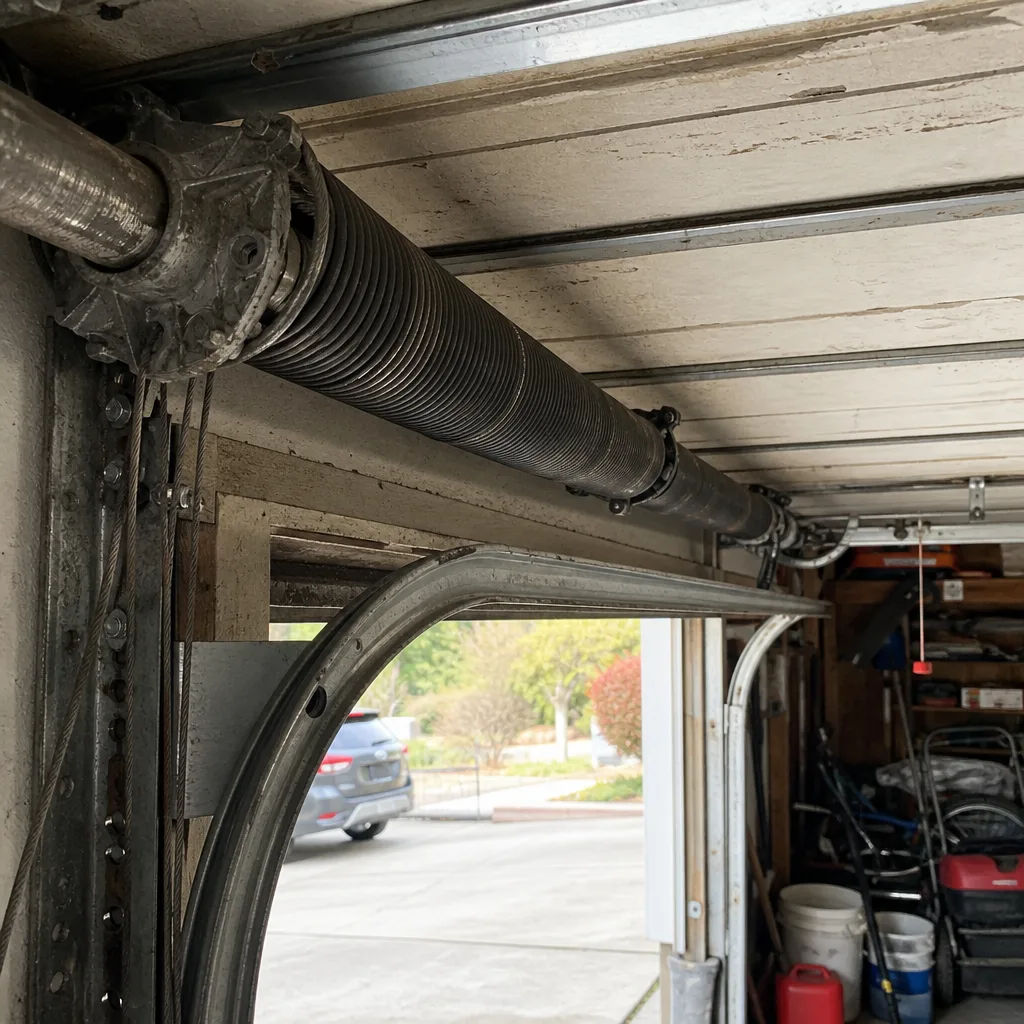
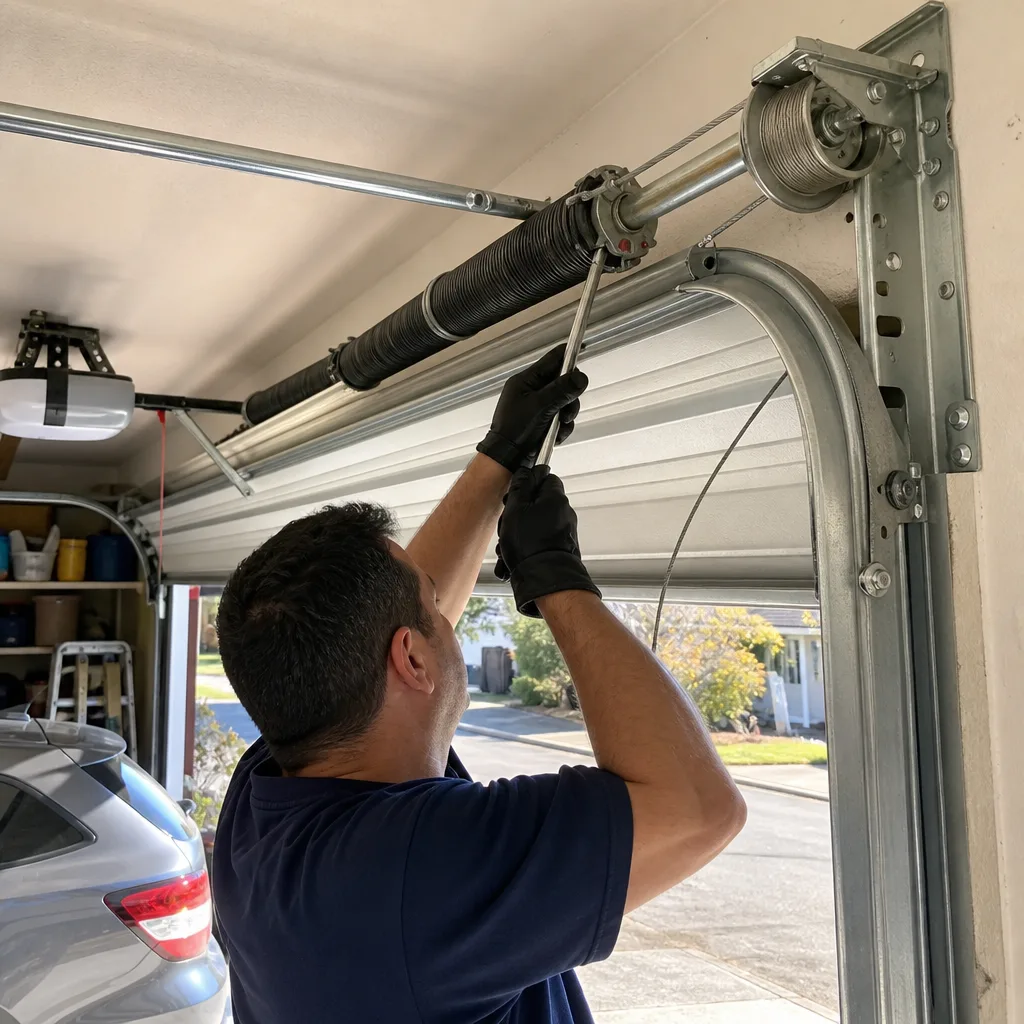
- Check the spring assembly: Torsion springs (mounted above the door) should be intact with no visible gaps or separation. Extension springs (running along the horizontal tracks) should be connected and not visibly stretched.
- Test the manual lift: Pull the red release cord and try to lift the door by hand. It should be heavy but slide reasonably smoothly. If it binds, stop.
Two Red Flags That Mean the Door Stays Closed
First, if the differential between the two sides of the door exceeds 1 inch, the door has racked. Operating it in that condition will almost certainly strip a gear or further damage a compromised track. Second, if either cable is off its pulley or visibly frayed where it passes through the pulley, the door’s balance system is holding on by threads. Tampering with a door in this state, especially the springs, is genuinely dangerous; the tension in a torsion spring can be enough to cause severe injury or death if it releases improperly. Leave the door closed, exit through another route, and schedule a professional evaluation. In Castro Valley, where most homes have an exterior door leading from the house to the yard, you’re not trapped even if the garage stays closed.
After a significant event, we recommend a full 21-point safety inspection on any garage door system, particularly in Castro Valley neighborhoods with older homes like those along Lake Chabot Road or in the Vannoy area, where door assemblies were often installed before current seismic standards existed.
Battery Backup Openers: What Works During a PSPS Event
Pacific Gas & Electric’s Public Safety Power Shutoff program has become a recurring reality for Castro Valley homeowners, and in many homes, the garage door opener is the single largest power draw that lacks any built-in redundancy. Here’s what actually works if the power goes down for 24, 48, or 72 hours.
Built-In Battery Backup: What’s Available
- LiftMaster models with an integrated battery: Several LiftMaster openers, including the 8550WLB and 8360WLB, ship with a maintenance-free battery inside the head unit. Real-world runtime is 20 – 30 open/close cycles over 24 – 48 hours with moderate use. That translates to roughly 2-3 days of typical entering and leaving if you use the door once each way daily.
- Chamberlain models with integrated backup: Chamberlain’s newer DC-motor openers (most models sold since 2018) accommodate a plug-in backup unit that activates automatically when line power drops. The install is relatively simple for a homeowner, but it requires drilling a specific location on the opener chassis, so follow the manufacturer’s template carefully.
- Genie’s Battery Backup: Genie’s integrated and add-on backup systems (available on their recent Mach Force and Aladdin Connect-equipped models) provide similar performance; expect 20+ cycles per charge.
What to Realistically Expect in Castro Valley
During the October 2019 PSPS event, many Castro Valley homeowners we spoke with tried to use garage door openers on batteries for days at a time. The most common complaint wasn’t battery failure; it was door imbalance. An opener that’s been compensating for a weakening spring works harder on every cycle, and a battery backup doesn’t have the torque to muscle through a door that’s beginning to bind. If you want your backup system to actually work when you need it, the door itself has to be balanced. We recommend a professional balance check once a year; it’s a 20-minute service call that most garage door repair companies in Castro Valley include as part of a general tune-up.
One more point: do not plug your garage door opener into a portable power station or generator unless the opener’s manual explicitly supports it. Square-wave inverter output from cheap generators can damage the opener’s logic board and motor. If you’re using a generator for other things, leave the door opener out of it and use the manual release.
How to Temporarily Secure a Door That Won’t Close
A door that won’t close leaves a 9-foot-wide hole in your home, and after an emergency, that’s the last thing you want. Whether the power is out and the door is stuck in the open position, or a broken spring means you can’t lower it, here’s how to protect the opening until a technician can fix it.
Option 1: Disable the Opener and Manually Lower the Door
- Pull the red release cord to decouple the door from the opener trolley.
- Lower the door slowly using the handle or by gripping the door at its bottom edge. Move both hands along the bottom edge as the door descends to control the speed.
- Once fully closed, insert a pair of vise grips or a clamp onto the track, roughly 6 inches below the bottom roller on each side. This prevents the door from being lifted manually from outside.
Option 2: When the Spring Is Broken and You Can’t Lower the Door
If a spring has snapped, the door is held only by the opener or by nothing at all; a broken spring means the door’s entire weight is dead weight. Do not try to lower a door with a broken spring by hand; it can come down with enough force to crush whatever is in its path. Instead:
- If the door is open and stuck: use a step ladder to place 2×4 lumber under the door edges to prevent it from falling, then close the door behind you and use a different route out of the house.
- If the door is closed and the spring broke while the door was closed: the door is secure. Leave it alone. Schedule a repair; the door will not operate safely until the spring is replaced.
- If you have a door that’s twisted or partially in the track: call for same-day service, and keep people and pets out of the garage until it’s fixed.
We’ve seen Castro Valley homeowners nail plywood over a stuck-open garage door in a pinch. It works and it’s not against any code, but it’s a temporary bandage. In Castro Valley’s windy fall months, a single sheet of plywood can become a sail unless it’s anchored into framing, not drywall.
The 15-Minute Garage Door Emergency Prep Checklist
Here’s the complete prep plan, designed to be done in one sitting. Do this once, then repeat the first three items once a season. For additional preparedness resources, explore our more guides & resources.
- Test the manual release (5 minutes): Close the door, pull the red cord, lift the door by hand, lower it, and re-engage. Have every household member do this at least once.
- Locate and label the release cord (1 minute): If the red cord is hard to see, wrap a piece of bright tape around the handle or add a lightweight flag. In an emergency, visibility matters.
- Inspect the springs and cables visually (3 minutes): Look at the torsion spring above the door. Any gap wider than 1/16 inch between coils needs attention. Check both cables for fraying or rust.
- Verify seismic brackets (2 minutes): Count the track brackets and check for slotted versus round holes, as covered in the section above.
- Install or test battery backup (2 minutes): If you have a backup battery, test it by unplugging the opener and running a full open-close cycle. If you don’t and you live in an evacuation-risk area, this is worth adding.
- Write down your technician’s number (2 minutes): Put it on the door jamb or your emergency contact list. During a regional event, phones get busy quickly. Note that Compass Garage Door Repair can be reached at (855) 356-4948.
One note on timing: this checklist assumes a functioning door and opener. If anything feels off during the manual release test – excessive weight, grinding, uneven movement – stop and call for a professional tune-up. A well-maintained door is the first line of defense in any garage emergency.
Common Mistakes to Avoid
- Testing the manual release while the door is open: If the door is open when you pull the red cord, the release can disengage mid-travel and slam the door down. Always test with the door closed.
- Yanking hard on a stuck release cord: In older Castro Valley homes with worn trolley mechanisms, pulling violently often damages the release mechanism entirely. A stuck cord usually points to a deeper issue that needs professional attention.
- Using the opener after an earthquake without inspecting the door: We’ve seen openers strip their internal gears when the door’s balance was already off from a seismic shift. The cost of the inspection is always less than the cost of a new opener motor.
- Spraying lubricant into the tracks or on the rollers to fix a grinding noise: Lubricant attracts dust and turns into a paste in Castro Valley’s dry summers. The noise usually means the rollers or hinges are worn, not dry.
- Assuming the power will come back soon and using the door manually for days: Every manual cycle without the opener adds wear to a system designed for electric operation. If your power has been out for more than a day, disconnect the opener and use the door sparingly.
- Securing a stuck-open door with rope or bungee cords to the track: Rope stretches, bungees snap, and neither stops a determined intruder. Use clamps or a physical bar prop, and get the door fixed.
- Waiting until an evacuation warning to figure out the manual release: This is the big one. During the 2020 SCU Lightning Complex, we talked to Castro Valley residents who had lived in their homes for decades and had never touched the emergency release. Practice now.
When to Call a Professional
Some garage door problems are sensory; you can hear and feel them. Others are structural, and those need a trained eye. Call a professional for: broken springs or cables (never attempt to replace a torsion spring yourself; the stored energy can be lethal), any post-earthquake misalignment or binding, openers that run but won’t move the door, doors that are visibly sagging or appear to be pulling away from the track, and any situation where you’re not certain the door will behave predictably. A good technician will diagnose before they quote, so you’re never paying for work you don’t need. Compass Garage Door Repair offers free estimates for Castro Valley homeowners, and we’ll walk you through exactly what’s wrong before any work is authorized or billed. Call (855) 356-4948.
Frequently Asked Questions
A single torsion spring replacement in Castro Valley typically ranges from $180 to $320 installed, depending on spring size and door weight; a pair runs $280 to $450. Spring prices vary by door weight and brand (Clopay and Amarr doors sometimes use proprietary spring sizes). The price is quoted and agreed before any work starts. Call (855) 356-4948 for an exact quote; estimates are free.
Emergency repair calls in Castro Valley are typically handled same-day, especially for doors stuck open or inoperable after a power outage or earthquake. Our team covers Castro Valley and the broader East Bay. Call (855) 356-4948 and we’ll tell you honestly whether same-day service is available.
No. The price you’re quoted is the price you pay, and it’s confirmed in writing before any work begins. If the problem turns out to be more complex than the initial diagnosis, we stop, explain what we found, and provide a new quote before proceeding. No surprises on the invoice.
Yes, our technicians stock common rollers, hinges, cables, springs, and opener parts for the major brands including LiftMaster, Chamberlain, Genie, Clopay, and Amarr, so most repairs are completed on the first visit. For uncommon door sizes or custom components, we can typically source them within one business day.
A properly balanced garage door requires about 20 to 30 pounds of lifting force, regardless of the door’s total weight. If it feels significantly heavier or wants to drop when you let go, the springs aren’t doing their job. Book a balance check; it’s a quick and inexpensive way to catch a failing spring before it snaps.
That’s not the power outage doing it; it’s a misaligned sensor, a failing logic board, or ghost signals from a neighbor’s remote. Disconnect the opener (pull the release cord) and call a technician. A door that opens unexpectedly is both a security risk and a sign that the opener needs attention.
The Bottom Line
Garage door emergency preparedness in Castro Valley comes down to three habits: knowing your manual release, checking your door’s seismic bracing, and respecting the fact that a garage door is the largest moving object in your home, under tension, at the exact point in the house most vulnerable to earthquake and power-related emergencies. Do the 15-minute checklist, practice the red cord release seasonally, and when a real emergency hits, you’ll move faster than your neighbors who are figuring it out in the dark. For anything beyond a simple manual release, a professional evaluation is the best investment you can make in your home’s safety. Reach the team at Compass Garage Door Repair at (855) 356-4948 for a free estimate, or visit our Compass Garage Door Repair home page to learn more about what we do.
Written by the team at Compass Garage Door Repair, serving Castro Valley since 2018.
See the difference
 Before
 After
 Before
 After
 Before
 After