
Last updated November 2, 2026
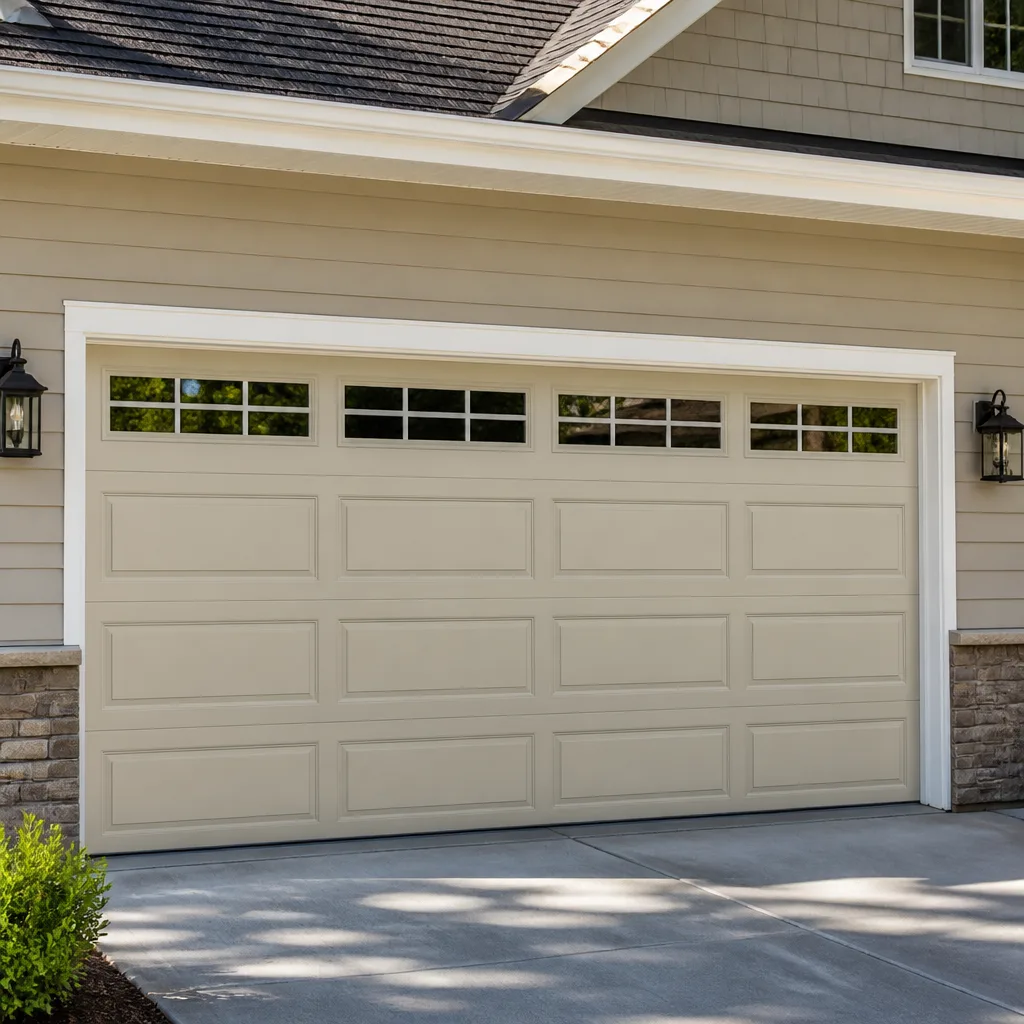 Raised-panel steel
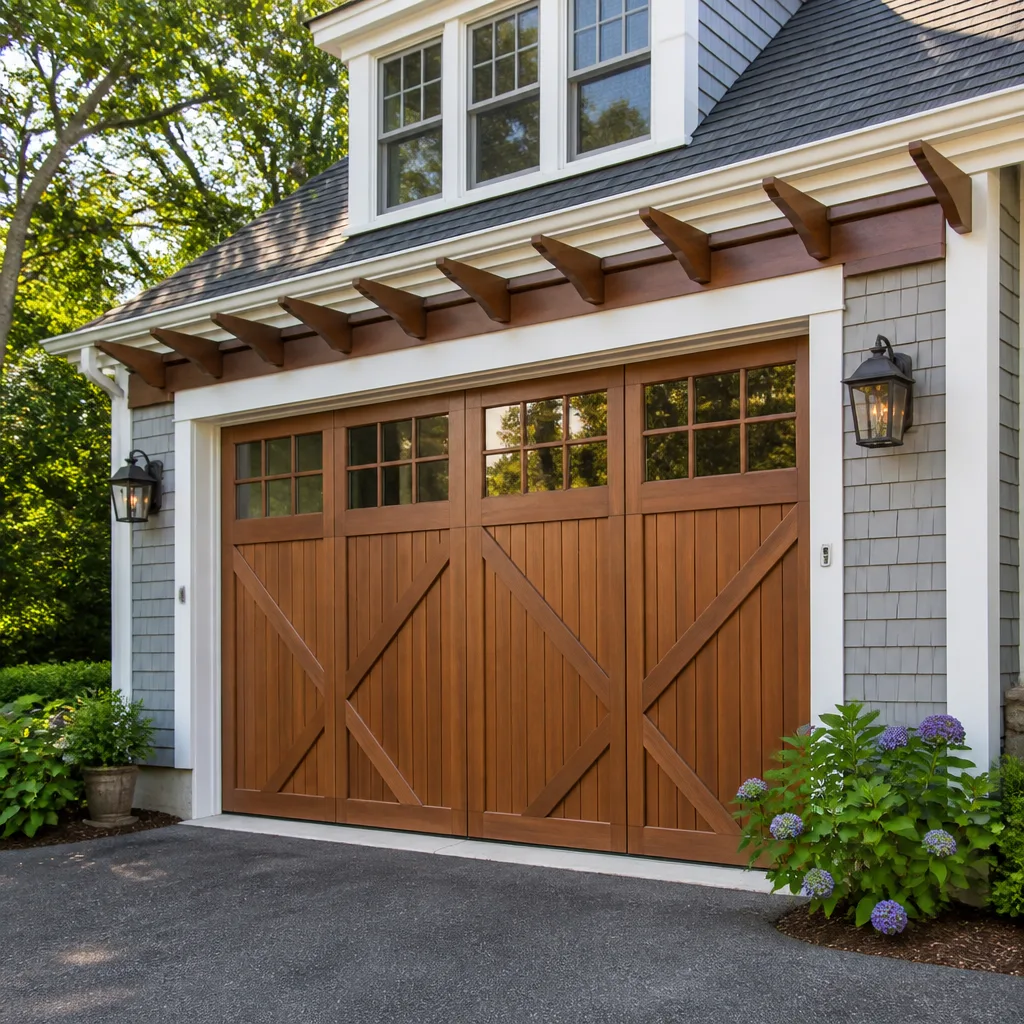 Carriage house
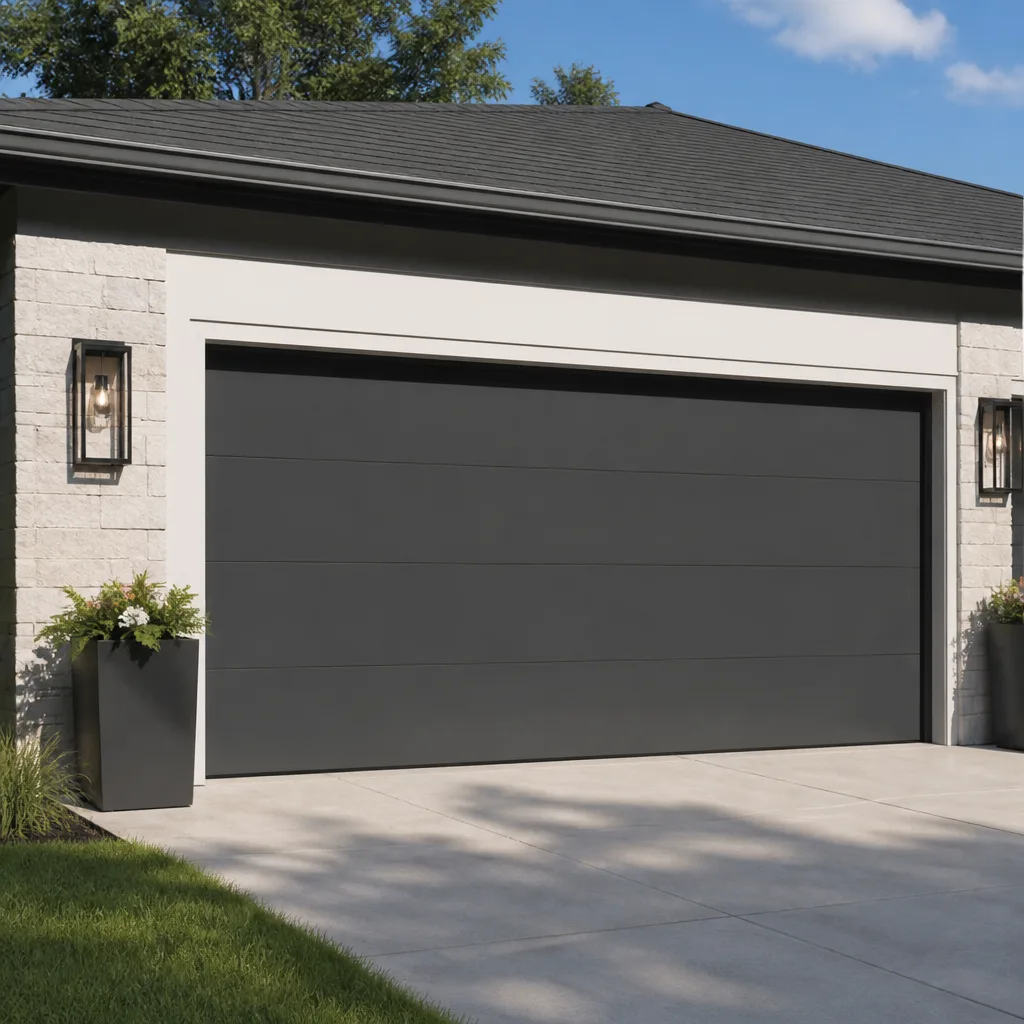 Modern flush
 Full-view glass
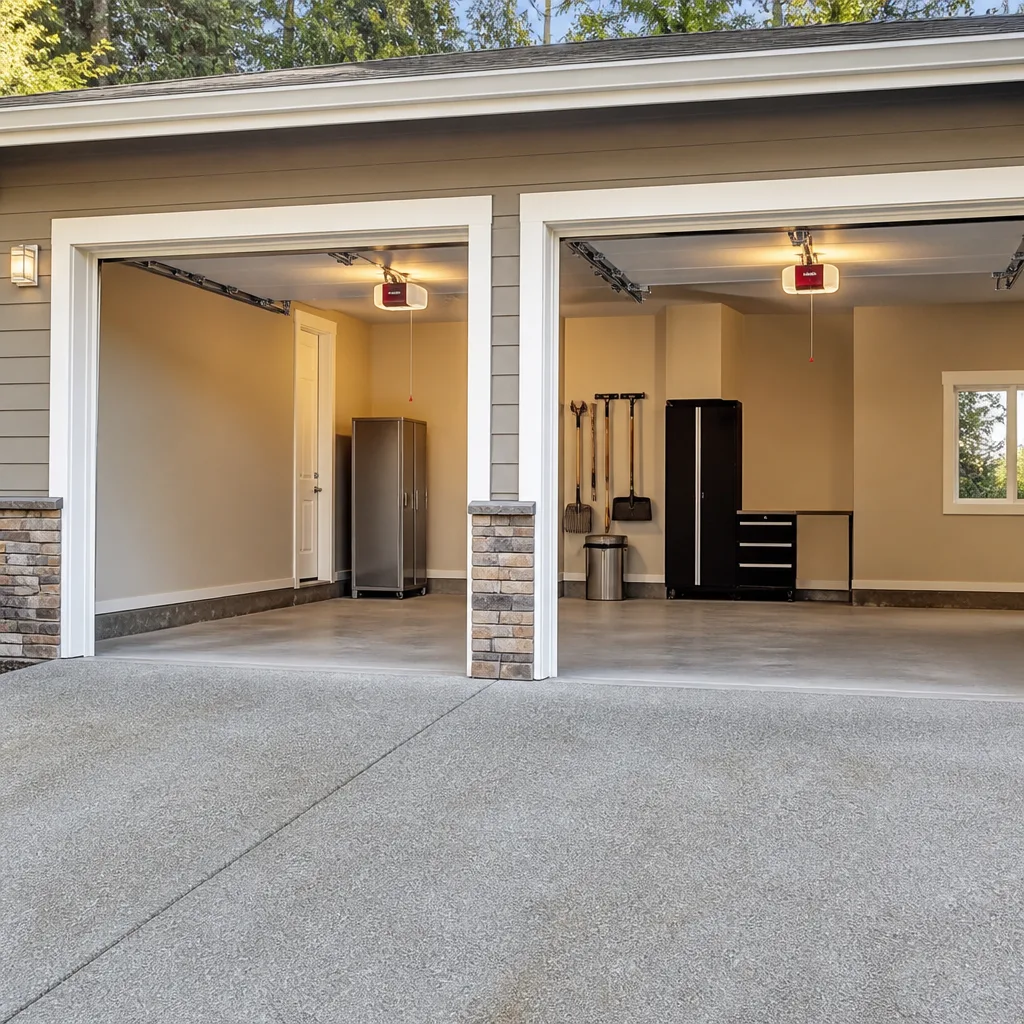 LiftMaster openers
 Chamberlain openers
Full 25-point door and opener safety check with every visit - springs, cables, rollers, tracks, and your LiftMaster or Chamberlain opener included
You get a price before we start. It does not change when the truck arrives.
Get your free estimateHow to Hire a Garage Door Contractor in Castro Valley: A Step-by-Step Guide
Most homeowners in Castro Valley will hire a garage door contractor exactly once or twice in their lives, which means they walk into the process blind. Meanwhile, the East Bay market is quietly split three ways: licensed specialists who work only on garage doors, general handymen who know enough to be dangerous, and brand-tied dealers whose paychecks depend on selling you a whole new system when a $200 repair would do. The difference usually surfaces a year or two later, when a cheap spring breaks early or a misaligned track starts chewing up rollers. This guide walks through the exact vetting process we’d recommend to a neighbor, including the five questions to ask before anyone touches your door, what a legitimate written estimate should contain, and the two line items that reliably signal you’re being overcharged. By the end, you’ll know how to separate a real garage door technician from someone who’s just good at quoting.
Styles & brands we work with
- Raised-panel steel
- Carriage house
- Modern flush
- Full-view glass
- LiftMaster openers
- Chamberlain openers
Quick Answer
To hire a garage door contractor in Castro Valley, verify their California contractor license classification first, confirm they’re brand-agnostic rather than tied to a single manufacturer, ask the five diagnostic questions covered below, and require a written estimate that itemizes parts by cycle rating and brand. Then check that their reviews describe actual garage door work, not general home repair. A specialist who can explain your door’s spring system before quoting is the one you keep.
Table of Contents
- Understand the Castro Valley Garage Door Market
- California Contractor Licensing: What the Classifications Actually Mean
- Brand-Agnostic Specialist vs. Dealer Rep: How to Tell Them Apart
- Five Questions to Ask Before Any Technician Opens Their Toolbox
- What a Legitimate Written Estimate Should Include
- Two Line Items That Signal an Inflated Quote
- How to Verify Reviews Are Tied to Actual Garage Door Work
- Common Mistakes to Avoid
- When to Call a Professional
- Frequently Asked Questions
- The Bottom Line
Understand the Castro Valley Garage Door Market
Castro Valley sits in a unique spot for garage door work. It’s unincorporated Alameda County, which means some permitting and code enforcement flows through county channels rather than a city hall down the street. More importantly, the housing stock is older on average than what you’ll find over the hill in Dublin or San Ramon. Mid-century homes in Castro Valley neighborhoods like Palomares Hills, Baywood, and the flatlands along Redwood Road often have garage doors that were installed when the house was built, or replaced once in the 1990s. That matters because spring systems and openers from that era have very different failure profiles than the smart-enabled systems going into newer builds.
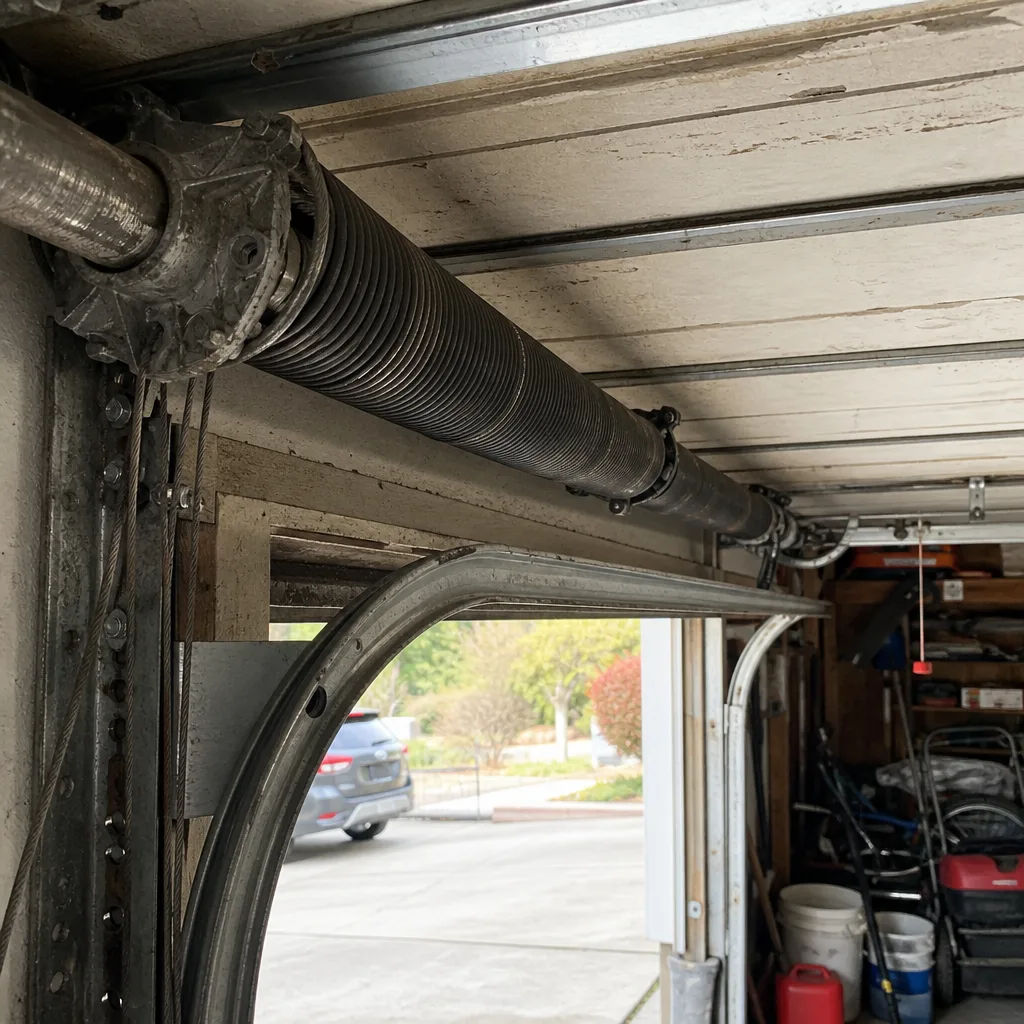
The local climate also plays a role homeowners rarely connect to their garage door. Castro Valley gets meaningful temperature swings between the hot inland afternoons and the cool bay-influenced mornings. Those swings cause metal torsion springs to expand and contract thousands of times beyond their normal cycle count. Add the dust from the dry hillsides during late summer, and you have a recipe for rollers and hinges that wear out faster than the national average would suggest. A contractor who has worked Castro Valley for years understands this. A handyman from Hayward doing his third garage door job this month might look at the same door and miss the signs of accelerated spring fatigue entirely.
Then there’s the quiet reality of the East Bay service market: subcontracting is common. When you call a large home services platform or a general contractor, the person who shows up may be a day laborer with a truck and a toolkit, not a garage door technician. They’re dispatched by an algorithm, not trained by a specialist. The garage door is the largest moving object in your home, and the torsion spring assembly holds enough tension to seriously injure an untrained person. You don’t want the algorithm’s choice. You want someone whose entire professional focus is this one piece of equipment. That’s the standard this guide is built around, and it’s why we recommend Garage Door Repair in Castro Valley specialists who do nothing else.
California Contractor Licensing: What the Classifications Actually Mean
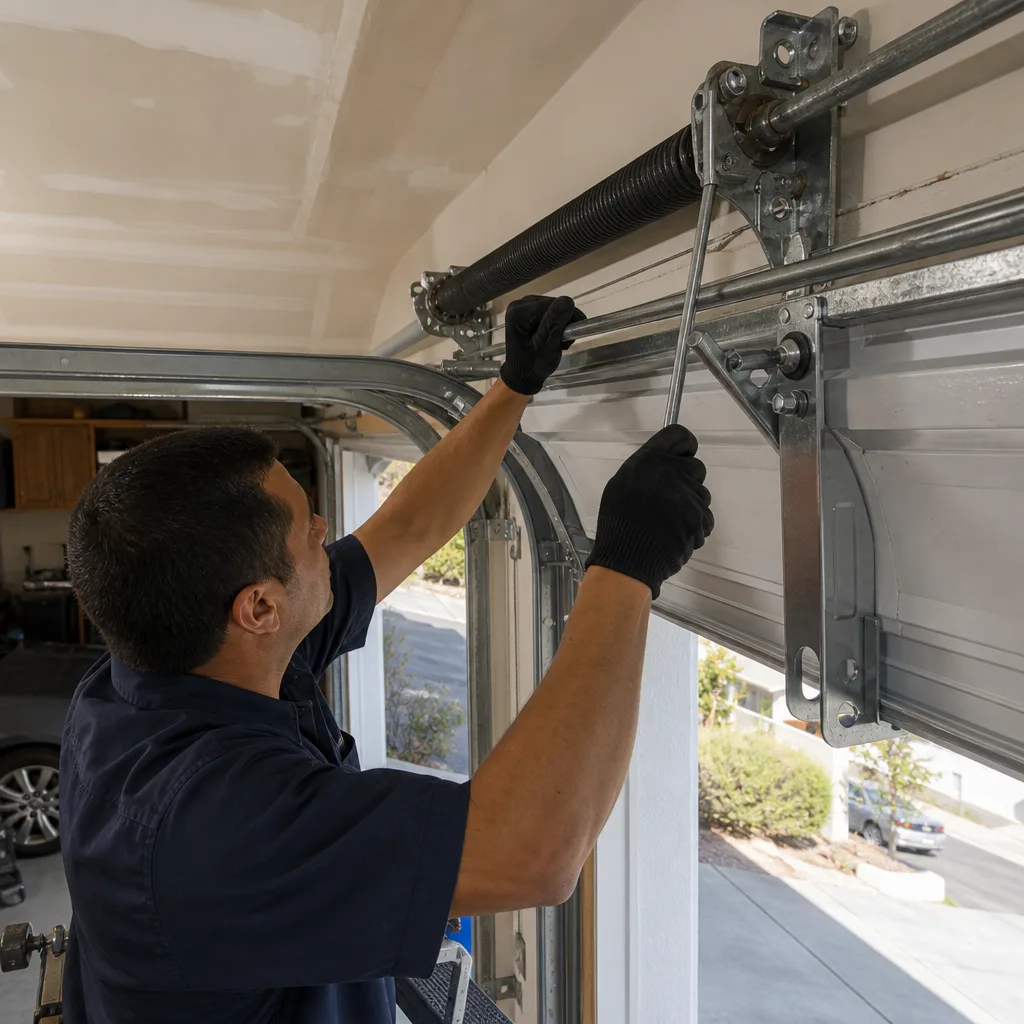
California’s Contractors State License Board (CSLB) issues licenses in 44 different classifications, and here’s the first thing most homeowners don’t realize: there is no “garage door” classification. Garage door work falls under one of a few broader categories, and knowing which one your contractor holds tells you a lot about their depth. The most relevant classifications are C-61/D-28 (Door and Gate Contractors), B (General Building Contractor), and sometimes C-17 (Glazing Contractor) for glass-panel doors. A C-61/D-28 license is specific to doors and gates, including garage doors, their tracks, springs, and openers. A B license is a general building license that technically covers garage door work as part of broader construction, but doesn’t prove any specialized training in torsion systems or opener electronics.
This distinction matters when you’re comparing quotes in Castro Valley. A general building contractor is perfectly capable of hanging a new door during a remodel. But when a spring under 200 pounds of tension snaps, a general builder is not automatically the right person to handle it. They might be. Their license doesn’t require them to prove garage door expertise. A C-61/D-28 holder, by contrast, passed an exam that covers door-specific trade knowledge. You can verify any California contractor’s license status in about 90 seconds on the CSLB website. Look up the license number, confirm it’s active, check the classification, and look at the bond and insurance information on file. If someone working your garage door in Castro Valley can’t produce a license number that checks out, end the conversation there. No exceptions.
The second layer is worker’s compensation insurance. In California, garage door companies with employees are required to carry workers’ comp. If the technician on your property gets injured and the company doesn’t have coverage, the liability can fall on you. A legitimate contractor will have this documentation available without hesitation. A legitimate contractor also won’t object to you asking. The ones who get defensive about licensing questions are usually the ones with something to hide. Ask before they step into your garage, not after the work starts.
Brand-Agnostic Specialist vs. Dealer Rep: How to Tell Them Apart
This is the distinction that separates an informed homeowner from an easy upsell target. The garage door industry has two fundamentally different business models working the same residential streets. The first is the brand-tied dealer. This is a company that has a franchise agreement or authorized dealer arrangement with a single manufacturer, most often one of the big national brands. The dealer’s technician is trained on that brand, stocked with that brand’s parts, and in many cases compensated in a way that rewards system replacement over component repair. When you call a brand-tied dealer about a failing opener, the diagnostic conclusion often arrives at “the whole door is old, you should replace everything” regardless of what’s actually wrong. That’s not malicious. It’s just the shape of their business model. Their job is to sell you a door they don’t need to repair.
The second model is the brand-agnostic specialist. This is a company like Compass Garage Door Repair home technicians who are trained and experienced across multiple manufacturers, from door makers like Clopay, Amarr, and Wayne Dalton to opener brands like LiftMaster, Chamberlain, and Genie. The diagnostic question for an agnostic specialist isn’t “which brand do we sell?” but “which system is already in your garage, and what’s failing on it?” That’s a critical difference in incentive structure. A brand-agnostic technician can look at a Craftsman opener from 2012, identify a failing capacitor or a stripped gear, and replace the component for a fraction of the cost of a new opener. Then that same technician can service a Raynor door and a Wayne Dalton torsion system in the same afternoon without breaking stride.
You can identify a dealer rep within the first five minutes of an estimate conversation. Listen for phrases like “this brand is what we recommend for all our customers” or “it’s not worth repairing systems this old.” A brand-agnostic specialist talks about your existing equipment first. They ask what year the door was installed, whether the opener is chain or belt drive, and whether you’ve noticed any specific symptoms. They diagnose before they quote. That diagnostic-first sequence is the single best indicator that you’re talking to someone whose income doesn’t depend on talking you into a full replacement.
Five Questions to Ask Before Any Technician Opens Their Toolbox
Before any contractor touches your garage door in Castro Valley, ask these five questions. They’re designed to be quick, non-confrontational, and blindingly revealing. A real specialist answers them instantly and specifically. Someone who’s guessing hesitates or gets vague.
- “What spring system do I have, and what’s its cycle rating?” This is the single most informative question in garage door contracting. Torsion springs are rated for 10,000, 20,000, or 25,000 cycles, where one cycle is a full open and close. A technician who opened the door, looked at the springs, and counted the coils should be able to tell you what’s installed and roughly how many cycles remain. If they can’t answer this, they haven’t actually inspected the door. Walk away.
- “Are you licensed for this specific work, and can I see the number?” As covered above, California has no garage door-specific license, but a C-61/D-28 is the closest match. Write down the number and verify it on the CSLB website while they’re still there. A legitimate contractor will volunteer this. The ones who deflect are the ones you don’t want touching a 400-pound door.
- “Which parts will you use, and what brand are they?” Cheap springs and off-brand rollers wear out faster. A specialist who stocks Clopay, Amarr, and Wayne Dalton parts, along with LiftMaster and Genie opener components, can tell you exactly which manufacturer’s parts are going into your repair and why. If the answer is “whatever the supply house has,” that’s a red flag.
- “Will you itemize the estimate by part and labor?” A legitimate written estimate separates parts from labor and lists the specific components being replaced. A handyman often quotes a lump sum and can’t explain what’s inside it. The itemized version protects you from paying $400 for a $40 spring. It also gives you a document to compare against a second quote.
- “What’s your warranty, and what does it actually cover?” Springs break. Openers fail. Parts wear out. A real contractor stands behind their work with a written warranty, not a verbal assurance. Ask what happens if the spring breaks again in six months. If the answer is anything other than “we replace it,” that’s a signal about how much they trust their own work.
These five questions take four minutes to ask. They’ll eliminate most of the wrong candidates before money changes hands. In our experience serving Castro Valley homes, the homeowners who ask these questions get better outcomes, fewer return visits, and fairer prices. The ones who skip them are gambling with the repair lottery.
What a Legitimate Written Estimate Should Include
A real garage door estimate is a document, not a text message. It should arrive with enough detail that you can hand it to a second contractor and say “match this.” Here’s what belongs on the page.
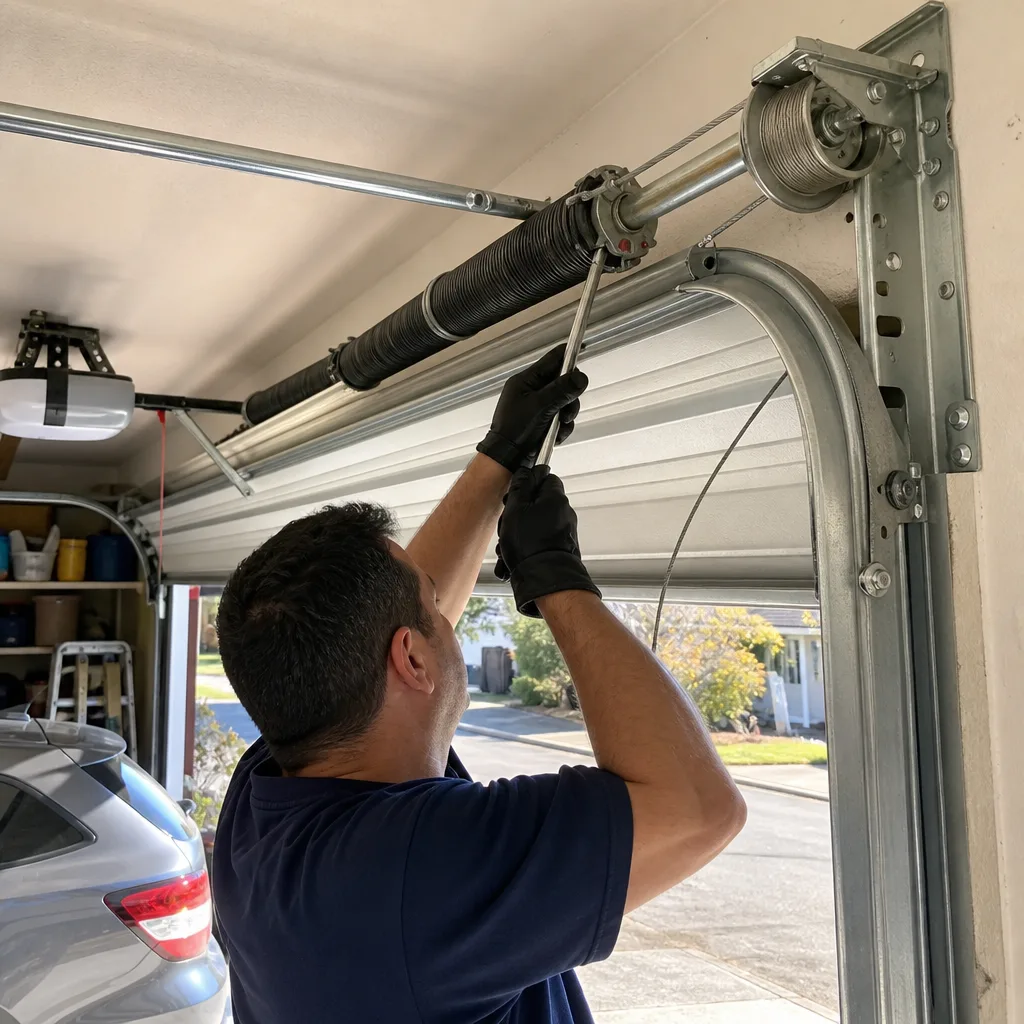
First, the estimate identifies the specific door and opener. That means the manufacturer name, the model if it’s visible, and the approximate age. Second, it itemizes each component being replaced or repaired, with the brand and grade specified. A spring replacement estimate should say “two Clopay torsion springs, rated 25,000 cycles” or “one Amarr extension spring, rated 10,000 cycles.” Vague language like “spring replacement, hardware as needed” is a blank check. Third, the estimate separates labor from parts. Labor for a spring replacement typically runs $75 to $150 in the East Bay. Parts for a quality spring set run $40 to $120 per spring depending on grade. When someone quotes you $500 for a spring replacement with no breakdown, you’re not paying for a premium spring. You’re paying for opacity.
Fourth, the estimate includes a scope note about what’s excluded. Does the quote include lubricating the rollers and hinges? Does it include balancing the door after the spring goes in? A technician who plans to do the job right will list these steps. One who plans to swap the spring and drive away won’t. Fifth, there’s a clear timeline for the work, whether that’s same-day or scheduled. For repair work, the garage door industry standard in the East Bay is same-day or next-day dispatch. For new installations, expect a different cadence. A Garage Door Installation in Castro Valley is measured and ordered, and a legitimate contractor will schedule a free measure and provide a written price before any work begins. Sixth, the estimate states the payment terms and warranty period in writing. Everything quoted and agreed before work starts is the standard you should hold, because it’s the standard that protects you.
Two Line Items That Signal an Inflated Quote
There are two specific line items that appear on inflated garage door quotes with surprising regularity, and once you know what they look like, you’ll spot them instantly.
The first is “miscellaneous hardware” or “standard hardware kit” priced over $100. Here’s what that phrase actually means when a technician writes it: a handful of bolts, brackets, and washers that cost $10 to $20 at any supply house in Hayward or San Leandro. A legitimate itemized estimate lists these components individually or includes them in the labor line. Lumping them into a six-figure misc line item is how an unscrupulous contractor pads a quote by $80 to $150 without triggering a question. If you see “hardware kit” with no description and a three-figure price, ask what’s in it. If the answer is vague, get another estimate.
The second is “track alignment and lubrication” listed as a separate $150 to $300 line item on top of a repair quote. Track alignment is part of the repair when the repair involves the door’s operation. A technician who replaces rollers and charges separately to align the track they just worked on is double-billing you for the same job. Lubrication is a five-minute step using a $10 can of white lithium grease. It belongs inside the labor, not as a standalone line at luxury pricing. When you see these two items priced the way described here, the contractor is pricing you as a markup opportunity rather than a customer. Get a second quote, and don’t be surprised if the second one comes in 30% lower for the same work.
How to Verify Reviews Are Tied to Actual Garage Door Work
Online reviews are useful but they’re also easy to manipulate. A Castro Valley homeowner checking reviews can do a few things to filter out noise and find the signal. First, search for the company name plus “garage door” in the review text itself. On Google, you can use the search-within-reviews function that appears on a business listing. If a company has 200 five-star reviews but only four mention garage doors, what you’re looking at is a general handyman operation with a broad service footprint and thin garage door depth. The reviews are real, but they’re not evidence of garage door expertise.
Second, look for reviews that describe specific symptoms and specific parts. “Spring snapped at 6:30 a.m. and they were here by 9” is a review written by someone with an actual garage door emergency. “Great service, very friendly” is a review written by someone who might be talking about house painting. Third, search Yelp and Google for the company name plus “Castro Valley” specifically. A service that operates mostly in Fremont or Oakland may not know the older Castro Valley housing stock well. The homes up by Lake Chabot and down by the BART station have different garage configurations, and local familiarity matters for same-day repair work.
Fourth, check the review dates for patterns. A burst of 20 reviews in one week, followed by silence for six months, is a sign of a reviews campaign or a promotion that bought reviews with discounts. Organic review patterns are steady and sporadic. Fifth, read the negative reviews carefully. Not to scare yourself off, but to see how the company responds. A company that responds to a one-star review with a specific, accountability-taking comment is a company that will respond when something goes wrong on your job. A company that ignores critical reviews or argues with customers is showing you exactly what your warranty experience will look like. This is how you read reviews in the East Bay market like someone who’s been doing this for a decade, not like someone clicking stars.
Common Mistakes to Avoid
- Choosing based on price alone. The lowest quote on a spring replacement is often the lowest-grade spring. A 10,000-cycle spring costs 30% less than a 25,000-cycle spring and fails two and a half times sooner. You’ll pay for it twice.
- Not verifying the license before the technician arrives. In Castro Valley’s mix of county-level oversight and unincorporated jurisdiction, unlicensed operators slip through more often than you’d think. Check the CSLB before the appointment, not after the bill.
- Accepting a verbal estimate with no line items. A verbal quote can’t be compared and can’t be enforced. If they won’t write it down, they’re not planning to be held to it.
- Hiring a general handyman for torsion spring work. Springs under tension are genuinely dangerous. A specialist who does this work weekly is not the same as a handyman who watched a YouTube tutorial. The injury risk is real and well documented.
- Calling a dealer when you want a repair. If your opener is clicking but not moving, a dealer rep is structurally incentivized to replace the system. A brand-agnostic technician will diagnose the specific component and repair it if it’s repairable. Know which business model you’re calling.
- Ignoring the opener when the door is the symptom. Sometimes the door is fine and the opener is failing. A company that only works on doors will replace your rollers and leave you with the same problem. A full-scope specialist handles both, so you’re not paying for a diagnosis that misses the actual cause. This is exactly what Garage Door Opener Repair in Castro Valley work should look like, door and opener in one call.
- Not asking about the warranty before the work starts. Every spring and every opener eventually fails. The warranty on a quality installation is the difference between a one-time repair and a recurring expense. Get it in writing.
When to Call a Professional
A garage door is not a DIY-friendly system. The torsion spring assembly holds enough stored tension to break bones or cause serious injury if it releases unexpectedly. If your spring has snapped, if the door is off its tracks, if the cables are fraying, or if the opener is sparking or making grinding noises, stop using the door and call a professional. These are not adjustment jobs. These are repair jobs handled by trained technicians with the right tools and the right caution. If your door is simply noisy or slightly off-balance, a professional inspection is still the right first move, because a $120 service call that catches a failing roller early beats a $400 emergency repair after the door jumps its tracks. Compass Garage Door Repair offers free estimates in Castro Valley, call (855) 356-4948 and we’ll come diagnose the issue before any work is quoted.
Frequently Asked Questions
Verify the California contractor license, confirm the company works on multiple brands rather than selling one, and require a written, itemized estimate before work begins. Then check reviews specifically for garage door mentions rather than general service praise. Those three steps will filter out most of the unreliable operators in the East Bay.
In the Castro Valley and East Bay market, a torsion spring replacement typically runs $180 to $340 including parts and labor, an opener repair runs $150 to $300 depending on the component, and a full opener replacement runs $450 to $800 installed. These ranges assume quality parts and licensed labor. Call (855) 356-4948 for an exact quote, estimates are free.
A handyman in California can legally perform limited work under $500 in value without a contractor license, but garage door spring and track repair is specifically risky work that falls outside what most legitimate handymen will touch. The tension in a torsion spring is not a beginner-level hazard. Hire a licensed specialist for anything involving springs, cables, or track realignment.
No. A reputable contractor quotes the price before work starts and sticks to it. If a technician arrives, looks at the door, and starts adding fees for “unexpected complexity,” that’s a quote renegotiation tactic. The price should be agreed in writing before the toolbox opens. Ask this question directly: “Is this price locked once I approve it?”
Many do for common repairs like spring and roller replacement, because those parts are stocked on the service truck. If your spring snapped this morning, there’s a good chance a company like Compass can have a technician at your Castro Valley home the same day. Call (855) 356-4948 and we’ll give you a straight answer on availability.
A competent contractor should be familiar with the most common residential brands: Clopay, Amarr, Wayne Dalton, and Raynor for doors, and LiftMaster, Chamberlain, Genie, and Craftsman for openers. If a contractor says they only work on one brand, you’re talking to a dealer, not a specialist. That’s fine if you want a new door from that brand, but it’s the wrong call for a repair on your existing equipment.
The Bottom Line
Hiring a garage door contractor in Castro Valley comes down to incentive structure and verification. A brand-agnostic specialist diagnoses your existing system before quoting, because their business is built on repair not replacement. A dealer rep or general handyman is structurally more likely to upsell or misdiagnose. Verify the license, ask the five questions, require the itemized estimate, and screen the reviews for actual garage door work. Do those four things and you’ll get a fair price, a correct diagnosis, and a door that stays on track. For more guides & resources, visit our blog. Skip them and you’re rolling dice on the largest moving object in your home. The choice costs four minutes of questions. It’s that simple.
Written by the team at Compass Garage Door Repair, serving Castro Valley since 2018.
See the difference
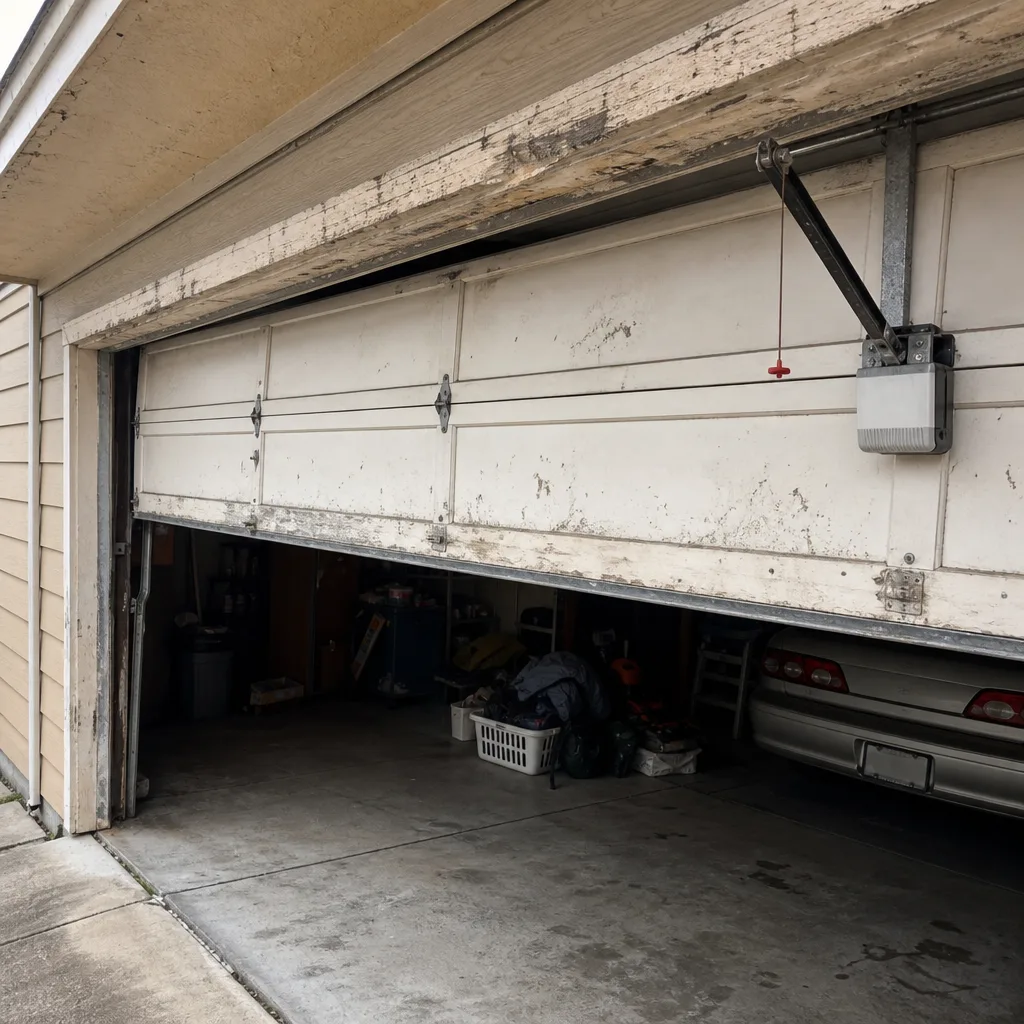 Before
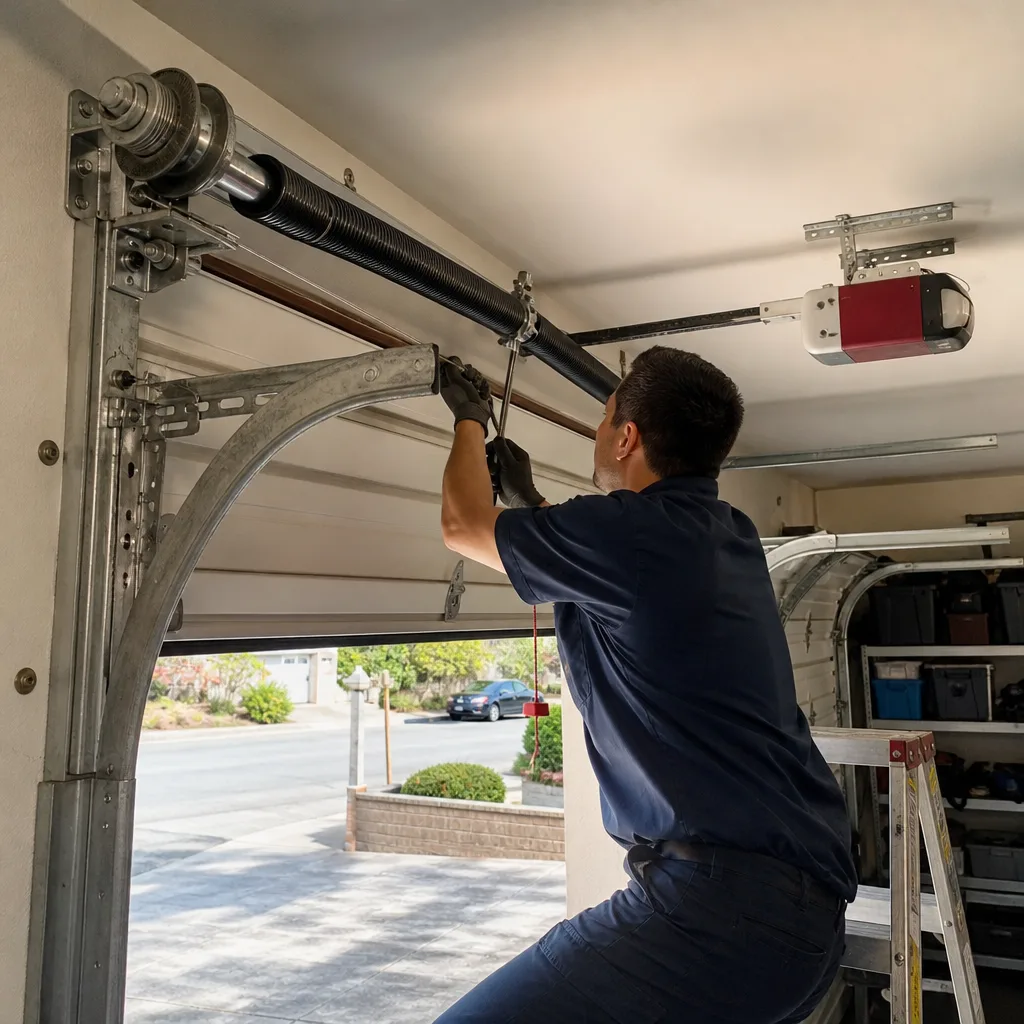 After
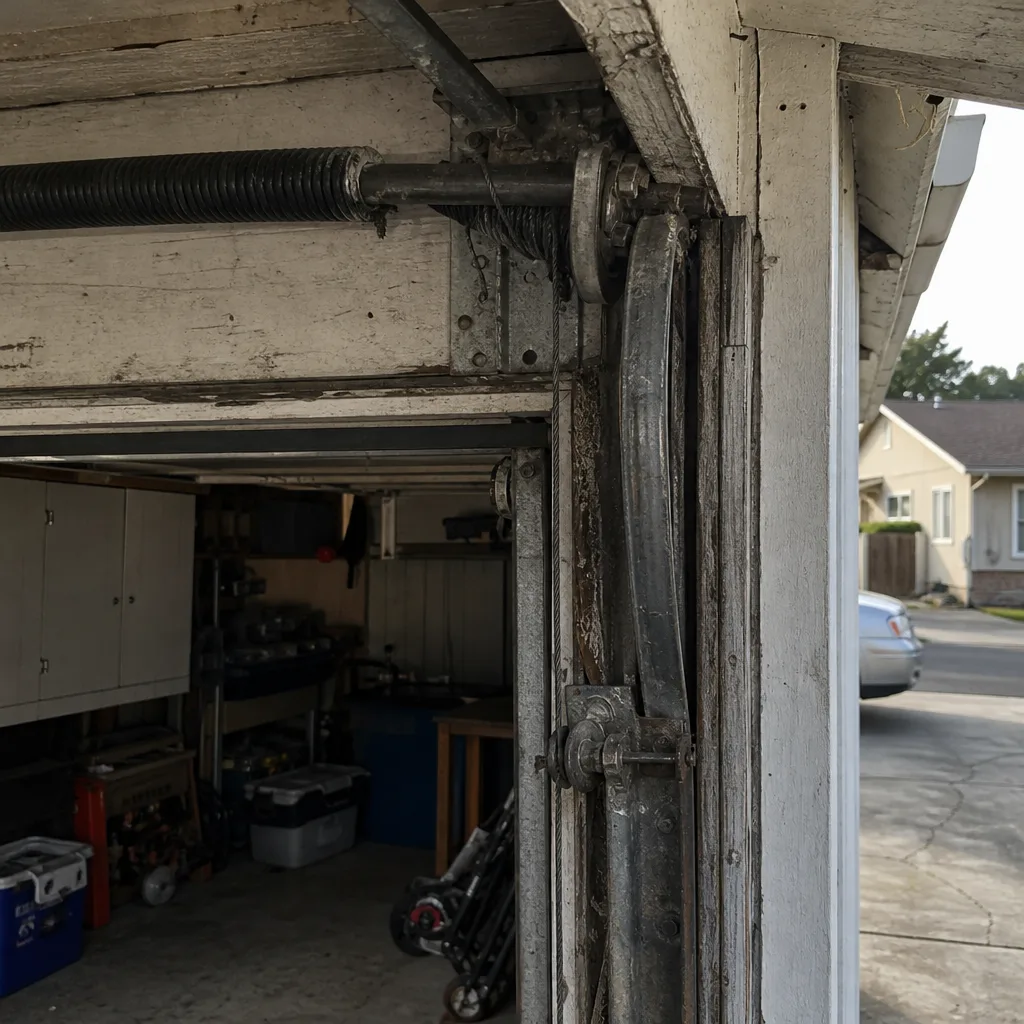 Before
 After
 Before
 After